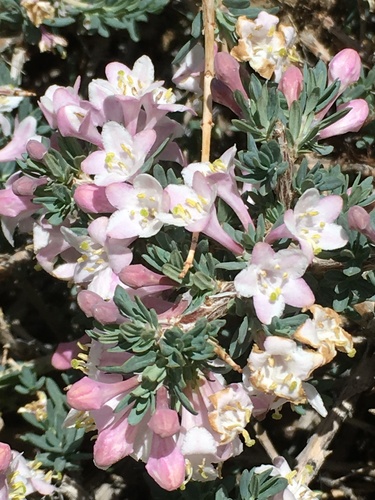
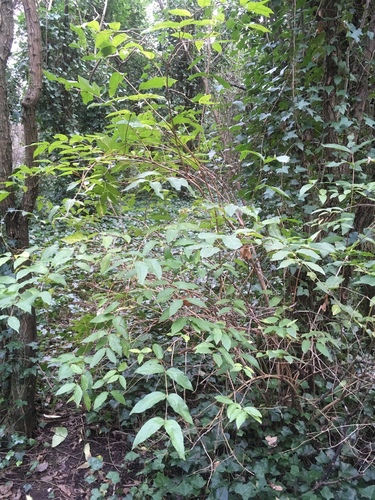
Lonicera alpigena
Linn.
Alpine honeysuckle
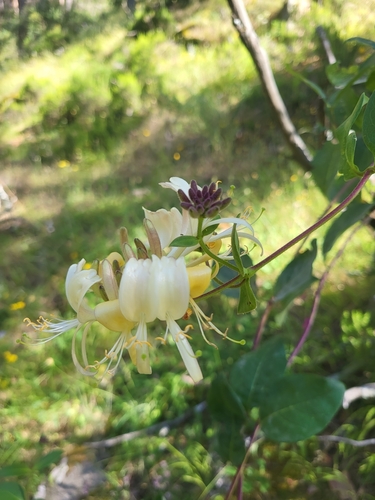
iNaturalist· cc-by-nc
(c) eliegaget, some rights reserved (CC BY-NC), uploaded by eliegaget
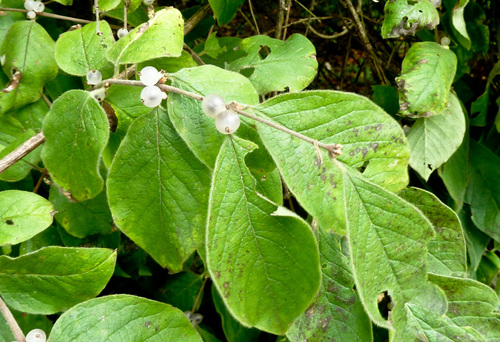
iNaturalist· cc-by-nc
(c) chiarimax, some rights reserved (CC BY-NC)
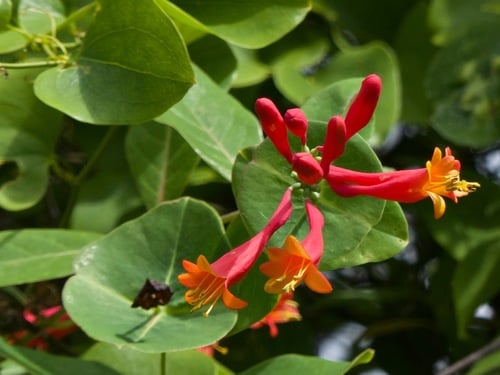
iNaturalist· cc-by-nc
(c) Konrad and Roland Greinwald, some rights reserved (CC BY-NC), uploaded by Konrad and Roland Greinwald
Summary
Source: WikipediaLonicera alpigena L., known as alpine honeysuckle, is a species of honeysuckle native to mountain forests of Central and Southern Europe. It is sometimes cultivated as an ornamental plant outside its native range. It is a deciduous shrub up to 2 m high, and in late summer, bears conspicuous brilliant red inedible fruits superficially resembling cherries. L. glehnii F. Schmidt, which is native to Sakhalin, Kurile Islands, Hokkaido and Honshu, is sometimes considered as a geographically disjunct subspecies of alpine honeysuckle, L. alpigena L. subsp. glehnii (F. Schmidt) H. Hara.
Description
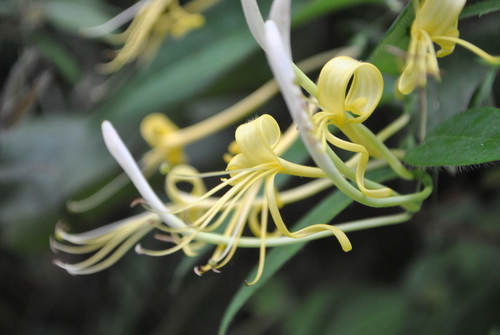
A low shrub. It grows 120-240 cm tall. The leaves are shiny dark green on the upper surface. They are more pale and hairy underneath. They are oval to sword shaped. The small flowers are is pairs at the end of the stalk. They have a long tube and are yellow. The fruit are shiny red berries. They are 12-13 mm across.
Edible Uses
The ripe fruit are eaten.
Traditional Uses
The ripe fruit are eaten.
This uses section is brief — help expand it
Distribution
It is a temperate plant. It grows best in full sun. It suits hardiness zones 5b-7b.
Where It Grows
Asia, Europe, India, Slovenia,
Synonyms
Also Known As
Mesin, Planinsko kosteničevje
References (3)
- http://www.botanic-gardens-ljubljana.com/en/plants
- Rawat, G.S., & Pangtey, Y.P.S., 1987, A Contribution to the Ethnobotany of Alpine Regions of Kumaon. J. Econ. Tax. Bot. Vol. 11 No. 1 pp 139-147
- Sp. pl. 1:174. 1753