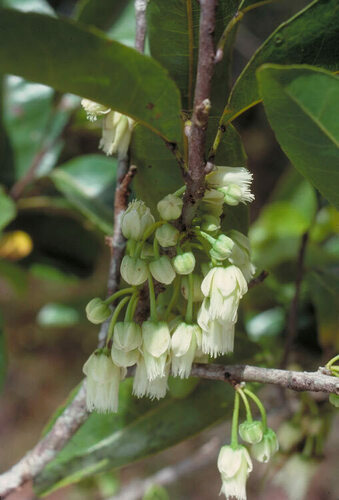
Elaeocarpus floribundus
Blume
Indian olive
iNaturalist· cc-by-nc-sa
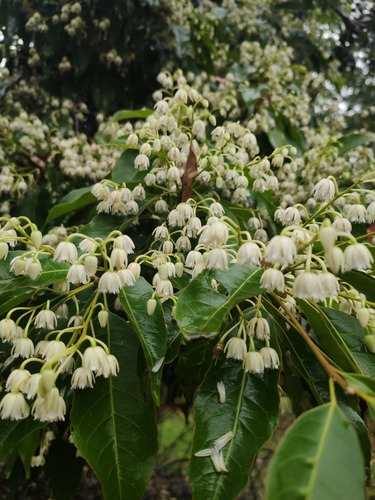
(c) Min Sheng Khoo, some rights reserved (CC BY-NC-SA)
iNaturalist· cc-by-nc-nd
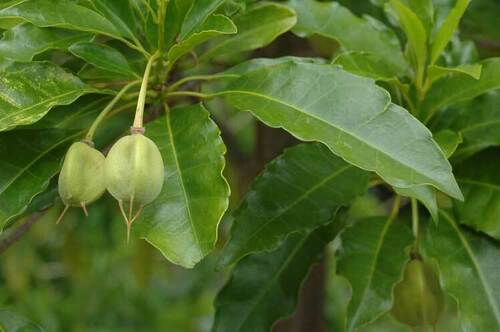
(c) loupok, some rights reserved (CC BY-NC-ND)
iNaturalist· cc-by-nc
(c) MSH Sourav, some rights reserved (CC BY-NC)
Description
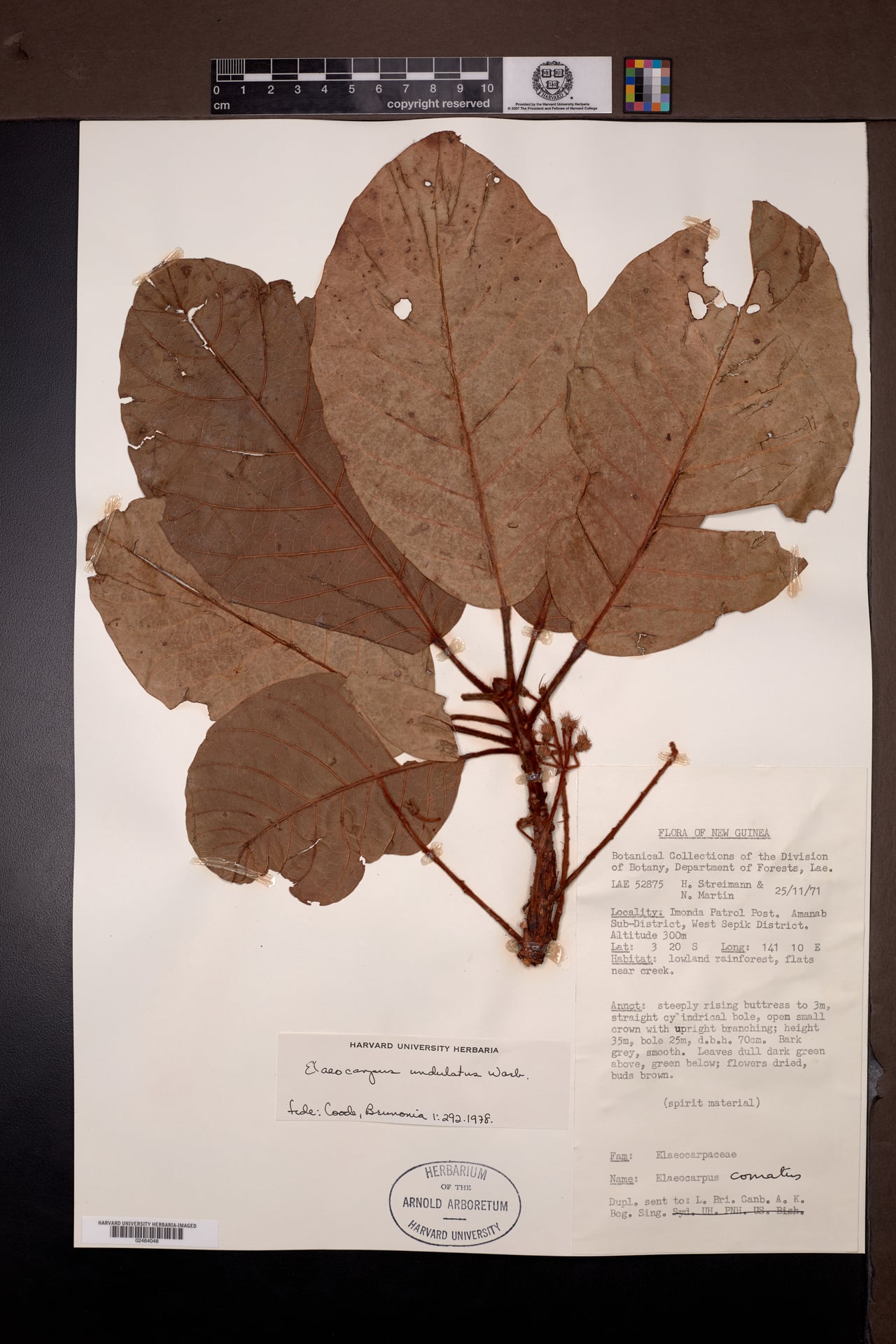
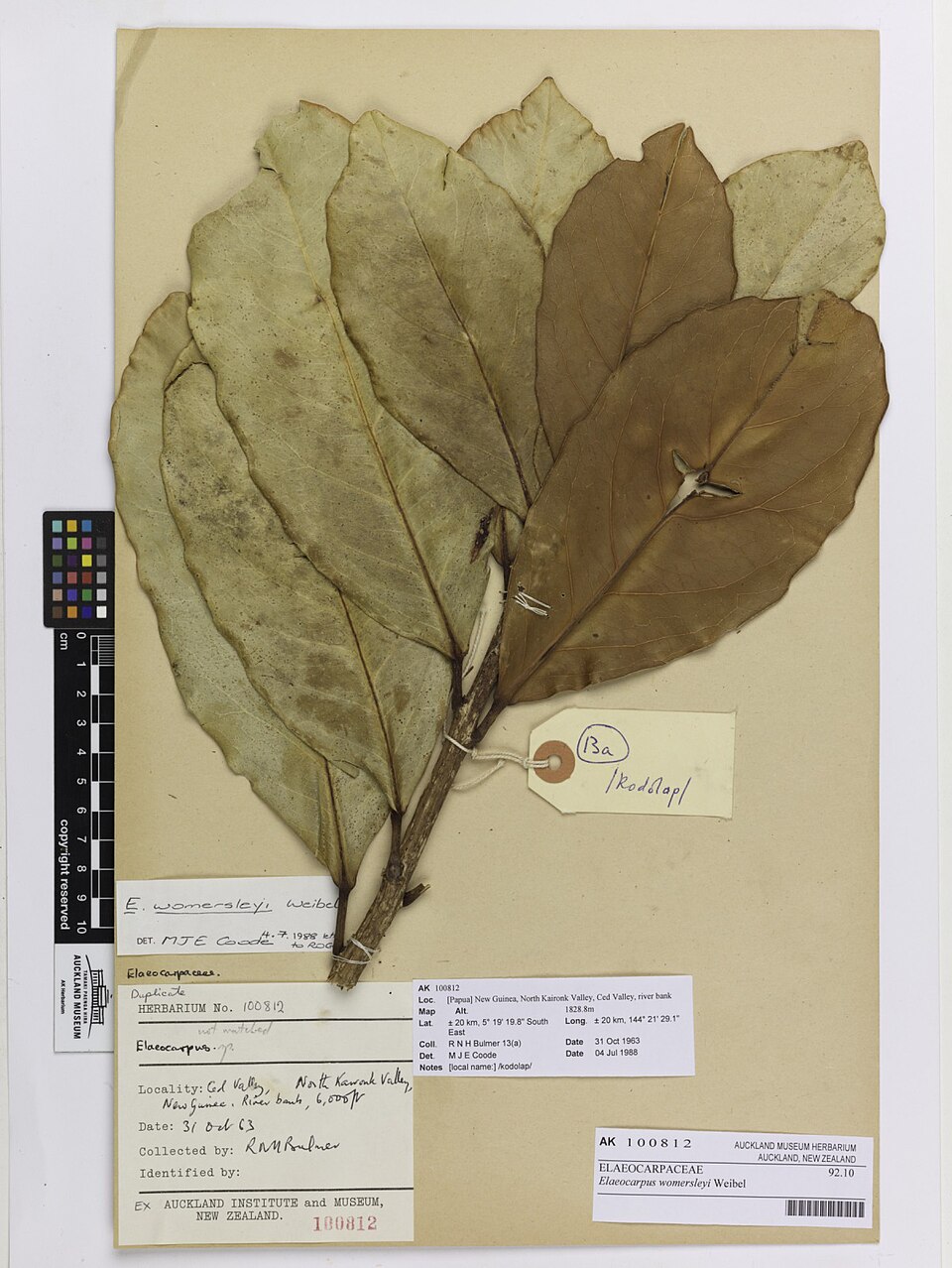
A tree. It can grow 10-30 m high. It keeps its leaves throughout the year. The leaves are alternate and simple. The leaves are oval and often rounded at the base. The leaves turn red before falling. The flowers are small and white. They are about 8 mm across. The fruit is fleshy and light green. It is about 2-5 cm long. Both ends of the fruit are pointed.
Edible Uses
The leaves are used as a vegetable. The fruit is eaten as a masticatory, both raw and cooked, with unripe fruit also used for pickles and chutney. The seeds are also edible and yield oil.
Traditional Uses
The leaves are used as a vegetable. The fruit is eaten as a masticatory. They are eaten raw as well as cooked. The unripe fruit are also used for pickles and chutney.
Medicinal Uses
An infusion of the bark and leaves is drunk as a tonic. An infusion of the bark and leaves is used as a mouthwash for inflamed gums. The bark and leaves are used in a poultice to treat ulcers. The fruits have medicinal value.
Distribution
A tropical plant. It grows in tropical Asia. It grows up to 900-1,650 m above sea level.
Where It Grows
Andaman Islands, Asia, Bangladesh, Himalayas, India, Indochina, Indonesia, Laos, Malaysia, Myanmar, Northeastern India, Philippines, SE Asia, Singapore, Thailand, Vietnam,
Cultivation
Usually found on well-drained, sandy to clay soils in the wild. We have no further specific information for this species, but members of this genus generally grow well in full sun to moderate shade, requiring a fertile, moist but well-drained soil.
Propagation
The seed of most species in this genus is covered by a hard, woody shell and can be very slow and erratic to germinate, sometimes taking 2 years or more. Filing down the shell, or cracking it (being very careful not to damage the seed) in order to allow the ingress of moisture can help to greatly speed up germination. Sow the seed in containers in light shade. When the seedlings are large enough to handle, prick them out into individual pots and grow them on until large enough to plant out, Cuttings of almost ripe shoots, in a sandy soil in a frame. The leaves should be left on the stem.. Many species strike readily from cuttings.
Other Uses
The heartwood is light-yellowish white to pink-brown and mauve, it is not distinctly demarcated from the sapwood. The texture is moderately fine and even, with straight to shallowly interlocked grain. The wood is soft to moderately hard; light in weight to moderately heavy; weak; not very durable. It seasons fairly slowly with slight end and surface checking; shrinkage is fairly low. It is easy to resaw and cross-cut; planing is easy and leaves a moderately smooth finish; nailing properties are good. A general purpose wood, it is suitable for purposes such as general planking, shuttering, boxes, crates, wooden pallets, match splints, veneer and plywood.
Production
In India the fruit are available October to March. In NE India May to December. A tree can yield 30-40 kg of fruit in a year.
Other Information
Fruit are sold in markets. It is a cultivated plant.
Notes
There are about 360 Elaeocarpus species mostly in the tropics.
Synonyms
Also Known As
Banghkri, Belphoi, Chorphon, Chuziechukru, Com hoa-nhieu, Empedu, Empeduk, Emperdok, Goroshi, Hahauwan, Irat, Japfai, Jalpai, Jalphai, Jalpui, Jolphai schein, Jolpi, Julpai, Kemesu, Kieshi, Kingkurad, Maboh, Mai-ma-mon-pan, Medang teja, Medang telur, Perdu, Renkinang, Rugged oil fruit, Sein-sar-blue-pan, Shikesi, Shikishi, Sungamerem, Tempawat, Theng koreng, Thitpwe, Thitya-hmwe, Zonmot
References (37)
- Ambasta, S.P. (Ed.), 2000, The Useful Plants of India. CSIR India. p 191
- Angami, A., et al, 2006, Status and potential of wild edible plants of Arunachal Pradesh. Indian Journal of Traditional Knowledge 5(4) October 2006, pp 541-550
- Arora, R. K., 2014, Diversity in Underutilized Plant Species - An Asia-Pacific Perspective. Bioversity International. p 69
- Baishya, S. Kr., et al, 2013, Survey of Wild Edible Fruits of Dhubri District, Assam, India. Plant Archives Vol 13 (1): 155-158
- BARC, 2016, State of Biodiversity for Food and Agriculture in Bangladesh. Bangladesh Agricultural Research Council.
Show all 37 references Hide references
- Brahma, S., et al, 2013, Wild edible fruits of Kokrajhar district of Assam, North-East India, Asian Journal of Plant Science and Research 3(6):95-100
- Burkill, I.H., 1966, A Dictionary of the Economic Products of the Malay Peninsula. Ministry of Agriculture and Cooperatives, Kuala Lumpur, Malaysia. Vol 1 (A-H) p 915
- Chai, P. P. K. (Ed), et al, 2000, A checklist of Flora, Fauna, Food and Medicinal Plants. Lanjak Entimau Wildlife Sanctuary, Sarawak. Forestry Malaysia & ITTO. p 166
- Chakraborty, S. & Chaturbedi, H. P., 2014, Some Wild Edible Fruits of Tripura- A Survey. Indian Journal of Applied research. (4) 9
- Chase, P. & Singh, O. P., 2016, Bioresources of Nagaland: A Case of Wild 4 Edible Fruits in Khonoma Village Forest. in J. Purkayastha (ed.), Bioprospecting of Indigenous Bioresources of North-East India. p 50
- Das, T. & Das, A. K., 2005, Inventorying plant biodiversity in homegardens: A case study in Barak Valley, Assam, North East India. CURRENT SCIENCE, VOL. 89, NO. 1, 10 JULY 2005
- Dobriyal, M. J. R. & Dobriyal, R., 2014, Non Wood Forest Produce an Option for Ethnic Food and Nutritional Security in India. Int. J. of Usuf. Mngt. 15(1):17-37
- Hazarika, B. et al. (2020). An overview of the unexplored underutilized fruit crops of Assam, India. Journal of Applied and Natural Science, 12(3): 442 - 453
- Hedrick, U.P., 1919, (Ed.), Sturtevant's edible plants of the world. p 287
- INFOODSUpdatedFGU-list.xls
- Jeeva, S., 2009, Horticultural potential of wild edible fruits used by the Khasi tribes of Meghalaya. Journal or Horticulture and Forestry Vol. 1(9) pp. 182-192
- Kumar, Y J. et al, 1987, Further Contribution to the Ethnobotany of Meghalaya: Plants used by "War jaintia" of Jaintia Hill District. Econ. Tax. Bot. Vol 11 No. 1 pp 65-
- Meitei, L. R., et al, 2022, An ethnobotanical study on the wild edible plants used by forest dwellers in Yangoupokpi Lokchao Wildlife Sanctuary, Manipur, India. Ethnobotany Research and Application 23:15
- Milow, P., et al, 2013, Malaysian species of plants with edible fruits or seeds and their evaluation. International Journal of Fruit Science. 14:1, 1-27
- Mozhui, R., et al, 2011, Wild edible fruits used by the tribals of Dimapur district of Nagaland, India. Pleione 5(1): 56 - 64.
- Murtem, G. & Chaudhrey, P., 2016, An ethnobotanical note on wild edible plants of Upper Eastern Himalaya, India. Brazilian Journal of Biological Sciences, 2016, v. 3, no. 5, p. 63-81.
- Partha, P., 2014, Ethnobotany of the Laleng (Patra) Community in Bangladesh. Journal of Pharmacognosy and Phytochemistry. 2(6):173-184
- Patiri, B. & Borah, A., 2007, Wild Edible Plants of Assam. Geethaki Publishers. p 18
- Paul, A., 2013, Minor and uncultivated fruits of Eastern India, 2nd International Symposium on Minor Fruits and Medicinal Plants
- Pfoze, N. L., et al, 2012, Assessment of Local Dependency on Selected Wild Edible Plants and fruits from Senapati district, Manipur, Northeast India. Ethnobotany Research & Applications 10:357-367
- Pfoze, N. L., et al, 2012, Survey and assessment of floral diversity on wild edible plants from Senapati district of Manipur, Northeast India. Journal of Biodiversity and Environmental Sciences. 1(6):50-52
- Pradheep, K., et al, 2016, Wild edible plants used by Konyak tribe in Mon district of Nagaland: Survey and inventorisation. Indian Journal of Natural Products and Resources. Vol 7(1) pp 74-81
- PROSEA (Plant Resources of South East Asia) handbook, Volume 2, 1991, Edible fruits and nuts.
- Sarma, H., et al, 2010, Updated Estimates of Wild Edible and Threatened Plants of Assam: A Meta-analysis. International Journal of Botany 6(4): 414-423
- Sawian, J. T., et al, 2007, Wild edible plants of Meghalaya, North-east India. Natural Product Radiance Vol. 6(5): p 416
- Schmidt-Vogt, D., 2001, Secondary Forests in Swidden Agriculture in the Highland of Thailand. Journal of tropical Forest Science 13(4): 748-767
- Shin, T., et al, 2018, Traditional knowledge of wild edible plants with special emphasis on medicinal uses in Southern Shan State, Myanmar. Journal of Ethnobiology and Ethnomedicine (2018) 14:48
- Singh, P.K., Singh, N.I., and Singh, L.J., 1988, Ethnobotanical Studies on Wild Edible Plants in the Markets of Manipur - 2. J. Econ. Tax. Bot. Vol. 12 No. 1 pp 113-119
- Slik, F., www.asianplant.net
- Wild edible plants of Himachal Pradesh
- World Checklist of Useful Plant Species 2020. Royal Botanic Gardens, Kew
- Zeven, A. C. & de West, J. M. J., 1982, Dictionary of cultivated plants and their regions of diversity. Wageningen. p 52