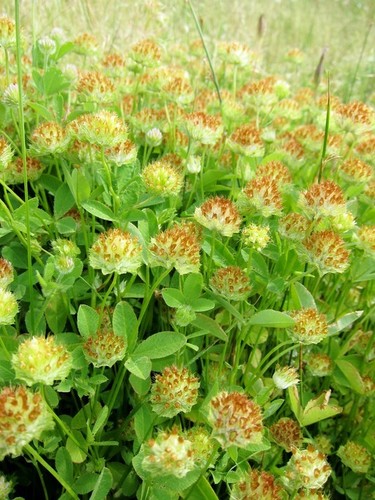
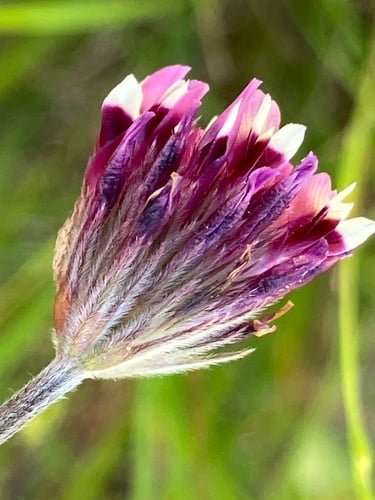
Bauhinia petersiana
Bolle
White bauhinia, Zambezi coffee
iNaturalist· cc-by-nc
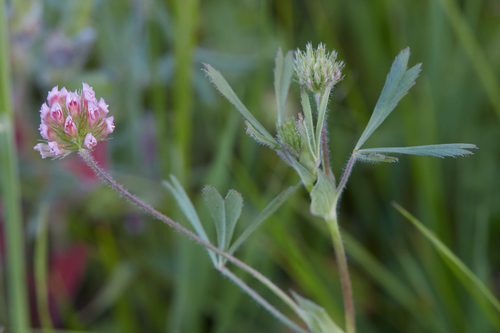
(c) Troos van der Merwe, some rights reserved (CC BY-NC), uploaded by Troos van der Merwe
iNaturalist· cc-by-nc
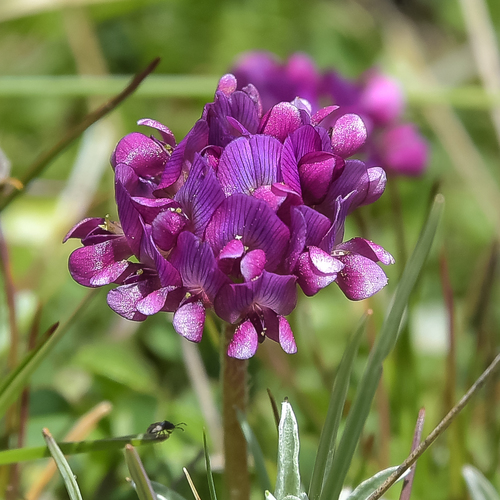
(c) Bart Wursten, some rights reserved (CC BY-NC), uploaded by Bart Wursten
iNaturalist· cc-by-nc
(c) Scamperdale, some rights reserved (CC BY-NC)
Summary
Source: WikipediaBauhinia petersiana, the Kalahari white bauhinia, is a species of shrubs from family Fabaceae and the subfamily Cercidoideae found in Angola, Botswana, Democratic Republic of Congo, Lesotho, Mozambique, Namibia, South Africa, Tanzania, Zambia and Zimbabwe. The species is 2 metres (6 ft 7 in) in height. The flower is up to 15 cm (5.9 in) wide, with five narrow white petals.
Description
An untidy spreading bush. It grows 3-4 m high. It can be 9 m high. The bark is dark and powdery and flakes off in strips. The leaves have lobes for almost half their length. The lobes are oval. They are 3.5-6 cm long and 3-8 cm wide. The base of the leaf is deeply lobed. The flowers are long and crinkled with white petals. Flowers are 8 cm long by 1-1.5 cm wide. The fruit is a large brown pod. These are 12-18 cm long by 3-6 cm wide. They split open rapidly forming a spiral.
Edible Uses
Edible Parts: Oil Root Seed Seedpod Edible Uses: Coffee Drink Oil Seed - cooked. Roasted and eaten like nuts, when they are considered a delicacy. The seeds can be harvested whilst immature - the whole green pod is briefly roasted and then the seeds removed and eaten. A meal made from the pounded seeds is eaten. The seeds can be eaten green, but ripe seeds are usually roasted, peeled, and pounded into a pleasant-tasting, coarse meal. The mature seeds are roasted and ground into a powder then used as a substitute for coffee. Immature seedpods - cooked. They can be roasted or boiled. Root - roasted. The core of the root is rejected and only the outer portion eaten. Mainly a famine food, it is seldom eaten at other times. An oil is obtained from the seed. The principal fatty acids in the seed oil are linoleic acid (45%), oleic acid (26%), palmitic acid (16%) and stearic acid (7%).
Traditional Uses
The ground seeds are sometimes used as a coffee substitute. The seeds are eaten green and ripe. Ripe seeds are roasted and peeled and pounded into a gritty meal. The nectar of the flowers is eaten The root is eaten raw and also baked and pounded.
Medicinal Uses
Antidiarrhoeal Antitussive Skin The leaves are boiled, the steam inhaled and the cooled-down liquid drunk to cure common cough. The pounded leaves, mixed with salt, are boiled and the warm liquid is sprinkled on wounds to promote healing. An infusion of the roots is used to treat dysmenorrhoea and female infertility. A decoction of the macerated roots is drunk as a remedy for diarrhoea. The roots and leaves contain tannins.
Known Hazards
Root is seldom eaten outside famine periods.
Distribution
A tropical plant. It grows in woodland and wooded grassland at medium and low altitudes. It is often on termite mounds. It grows from 120-1800 m altitude. It is more common in the lowlands. It is damaged by drought or frost. It needs well-drained soil. In Zimbabwe it grows in areas with a rainfall between 600-750 mm per year. It suits hardiness zones 10-12.
Where It Grows
Africa, Angola, Australia, Botswana, Central Africa, Congo, East Africa, Malawi, Mozambique, Namibia, South Africa, Southern Africa, Tanzania*, Zambia, Zimbabwe,
Cultivation
The plant can tolerate some frost and can be found in areas experiencing as little as 350mm of rain in a year. Requires a sunny position in a well-drained, preferably light, soil. Although many species within the family Fabaceae have a symbiotic relationship with soil bacteria, this species is said to be devoid of such a relationship and therefore does not fix atmospheric nitrogen.
Propagation
Seed - Cuttings Layering
Other Uses
Dye Fibre Oil String Tannin The bark fibres are used to make rope. A dye is obtained from the roots. Special Uses Carbon Farming Food Forest
Notes
There are about 250-350 Bauhinia species. Most are in the tropics. Also as Caesalpinaceae.
Nutrition
| Part | Moisture | kJ | kcal | Protein | Vit A | Vit C | Iron | Zinc |
|---|---|---|---|---|---|---|---|---|
| Seeds - coffee | 6.8 | 1552 | 371 | 22.9 | — | — | 3.9 | 2.9 |
| Pods | 40.5 | 1038 | 248 | 9.2 | — | 29.7 | 0.5 | — |
Synonyms
Also Known As
Chingando, Imondo, Koffiebeesklou, Michingando, Mpando, Mpandula, Mpapa, Muauwa, Mubondo, Mumwando, Mun’ando, Mupondo, Muuwa
References (29)
- Barwick, M., 2004, Tropical and Subtropical Trees. A Worldwide Encyclopedic Guide. Thames and Hudson p 48
- Bodkin, F., 1991, Encyclopedia Botanica. Cornstalk publishing, p 135
- Cundall, P., (ed.), 2004, Gardening Australia: flora: the gardener's bible. ABC Books. p 221
- Drummond, R. B., 1981, Common Trees of the Central Watershed Woodlands of Zimbabwe, National Herbarium Salisbury. p 72
- Etherington, K., & Imwold, D., (Eds), 2001, Botanica's Trees & Shrubs. The illustrated A-Z of over 8500 trees and shrubs. Random House, Australia. p 121
Show all 29 references Hide references
- Fowler, D. G., 2007, Zambian Plants: Their Vernacular Names and Uses. Kew. p 28
- Global Plants JSTOR
- Malaisse, F., 1997, Se nourrir en floret claire africaine. Approche ecologique et nutritionnelle. CTA., p 91.
- Mannheimer, C. A. & Curtis. B.A. (eds), 2009, Le Roux and Muller's Field Guide to the Trees and Shrubs of Namibia. Windhoek: Macmillan Education Namibia. p 146
- Mbuya, L.P., Msanga, H.P., Ruffo, C.K., Birnie, A & Tengnas, B., 1994, Useful Trees and Shrubs for Tanzania. Regional Soil Conservation Unit. Technical Handbook No 6. p 118
- Morley, B. & Everard, B., 1970, Wild Flowers of the World. Ebury press. Plate 54
- Palgrave, K.C., 1996, Trees of Southern Africa. Struik Publishers. p 283
- Peters, C. R., O'Brien, E. M., and Drummond, R.B., 1992, Edible Wild plants of Sub-saharan Africa. Kew. p 120
- W. C. H. Peters, Naturw. Reise Mossambique 6(1):24. 1861
- Pickering, H., & Roe, E., 2009, Wild Flowers of the Victoria Falls Area. Helen Pickering, London. p 71
- Plowes, N. J. & Taylor, F. W., 1997, The Processing of Indigenous Fruits and other Wildfoods of Southern Africa. in Smartt, L. & Haq. (Eds) Domestication, Production and Utilization of New Crops. ICUC p 186
- Rodin, 1985,
- Roux. J. P., 2003, Flora of South Africa.
- Scudder, 1962, 1971,
- Silberbauer, 1965, 1972, 1981,
- Story, 1958,
- USDA, ARS, National Genetic Resources Program. Germplasm Resources Information Network - (GRIN). [Online Database] National Germplasm Resources Laboratory, Beltsville, Maryland. Available: www.ars-grin.gov/cgi-bin/npgs/html/econ.pl (10 April 2000)
- van Wyk, Be, & Gericke, N., 2007, People's plants. A Guide to Useful Plants of Southern Africa. Briza. p 20
- van Wyk, Be., & Gericke, N., 2007, People's plants. A Guide to Useful Plants of Southern Africa. Briza. p 102
- van Wyk, Ben-Erik, 2019, The diversity and multiple uses of southern African legumes. Australian Systematic Botany, 2019, 32, 519–546
- Welcome, A. K. & Van Wyk, B.-E., 2019, An inventory and analysis of the food plants of southern Africa. South African Journal of Botany 122 (2019) 136–179
- Wiersema, J. H. & Leon, B., 2013, World Economic Plants. A Standard Reference CRC Press. 2nd Ed. p 95
- Williamson, J., 2005, Useful Plants of Malawi. 3rd. Edition. Mdadzi Book Trust. p 36
- www.zimbabweflora.co.zw 2011