Acacia longifolia
(Andrews) Willd.
Coast wattle, Sydney golden wattle
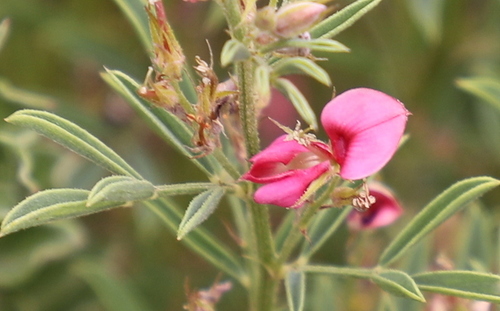
iNaturalist· cc-by-nc-sa
(c) Reiner Richter, some rights reserved (CC BY-NC-SA), uploaded by Reiner Richter
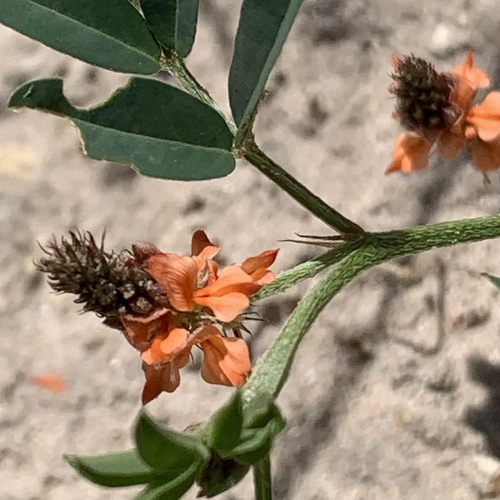
iNaturalist· cc-by-nc
(c) samfisch, some rights reserved (CC BY-NC), uploaded by samfisch
iNaturalist· cc-by-sa
(c) SAplants, some rights reserved (CC BY-SA)
Summary
Source: WikipediaAcacia longifolia is a species of Acacia native to southeastern Australia, from the extreme southeast of Queensland, eastern New South Wales, eastern and southern Victoria, southeastern South Australia, and Tasmania. Common names for it include long-leaved wattle, acacia trinervis, aroma doble, golden wattle, coast wattle, sallow wattle and Sydney golden wattle. It is not listed as being a threatened species, and is considered invasive in Portugal, New Zealand and South Africa. In the southern region of Western Australia, it has become naturalised and has been classed as a weed due to its out-competing indigenous species. It can grow very quickly, reaching 7–10 m in five to six years.
Description
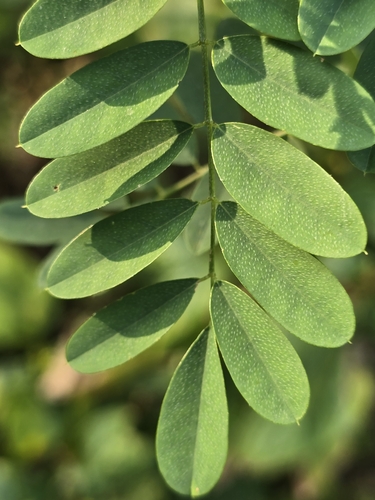
A shrub or small tree. It grows 5 m tall. There are prickles along the stem. The leaves are twice divided and there are 8-18 pairs of pinnae. There are up to 50 pairs of pinnules on each pinnae. The flowers are yellow. They are in large clusters at the ends of branches. The pods are flattened.
Edible Uses
The flowers, seeds, and seedpods are all edible. Flowers are cooked — rich in pollen, they are often used in fritters, and have a violet-like fragrance. Seeds are roasted and are starchy, though rather small and fiddly to gather. Acacia seeds are highly nutritious, containing approximately 26% protein, 26% available carbohydrate, 32% fibre, and 9% fat. The fat content is higher than most legumes, with the aril providing the bulk of the fatty acids; these are largely unsaturated, which is a health advantage though it presents storage problems as such fats readily oxidise. The mean total carbohydrate content of 55.8 ±13.7% is lower than that of lentils but higher than that of soybeans, while the mean fibre content of 32.3 ±14.3% exceeds that of other legumes such as lentils, which have a level of 11.7%. Energy content is high, averaging 1480 ±270 kJ per 100g. Wattle seeds are low glycaemic index foods — starch is digested and absorbed very slowly, producing a small but sustained rise in blood glucose and delaying the onset of exhaustion during prolonged exercise. Seedpods are also roasted; the pods grow up to 10cm long.
Traditional Uses
The seeds are eaten. The green seeds are steamed in the pod. The gum is edible. An edible grub often occurs in the roots.
This uses section is brief — help expand it
Medicinal Uses
None known.
Known Hazards
The seed of many Acacia species, including this one, is edible and highly nutritious, and can be eaten safely as a fairly major part of the diet. Not all species are edible, however, and some can contain moderate levels of toxins. Especially when harvesting from the wild, especial care should be taken to ensure correct identification of any plants harvested for food. Especially in times of drought, many Acacia species can concentrate high levels of the toxin Hydrogen cyanide in their foliage, making them dangerous for herbivores to eat.
Distribution
It is a subtropical and temperate plant. It occurs naturally in Australia in southern regions. It prefers a well drained soil. It needs an open sunny position. It can resist drought and frost. It is subject to insect attack and wind damage. It does well in moist acid soils. It suits hardiness zones 9-11. Melbourne Botanical Gardens. Tasmania Herbarium. Arboretum Tasmania.
Where It Grows
Africa, Argentina, Asia, Australia*, Britain, Brazil, Caribbean, Colombia, Dominican Republic, East Africa, Eswatini, Europe, France, Haiti, India, Indochina, Italy, Kenya, Mauritius, Mediterranean, New Zealand, North America, Portugal, Reunion, SE Asia, South Africa, Southern Africa, South America, Sri Lanka, Swaziland, Spain, St Helena, Tasmania*, Uruguay, USA, Vietnam, West Indies, Zimbabwe,
Cultivation
It is grown from seed. The seed need treatment to break the hard seed coat. Normally this is by putting the seeds in very hot water and letting the water cool down overnight then planting the seeds immediately.
Propagation
Seed is best sown as soon as it is ripe in a sunny position in a warm greenhouse. Stored seed should be scarified, pre-soaked for 12 hours in warm water, then sown in a warm greenhouse in March; germination takes 3–4 weeks at 25°C. Once seedlings are large enough to handle, prick them out into individual pots and grow on in a sunny greenhouse position through their first winter. Plant out in late spring or early summer after the last expected frosts, with some cold protection recommended for the first winter outdoors. Cuttings of half-ripe wood with a heel can be taken in July or August, potted individually in a frame, overwintered in a greenhouse, and planted out in late spring or early summer. A fair percentage take successfully.
Other Uses
A yellow dye is obtained from the flowers and a green dye from the seedpods. The plant's extensive root system helps prevent soil erosion and is used on sandy soils and steep banks. Trees are planted as a screen in Australia. This species is often grown as a rootstock for grafting lime-intolerant members of the genus. The wood is pale and tough.
Production
It is usually very fast growing.
Other Information
It is cultivated.
Notes
There are about 1,350 Acacia species. Over 1,000 occur in Australia. Also as Mimosaceae.
Nutrition
| Part | Moisture | kJ | kcal | Protein | Vit A | Vit C | Iron | Zinc |
|---|---|---|---|---|---|---|---|---|
| Seed | 5.9 | 1679 | 402 | 16.3 | — | — | 81.4 | 2.8 |
| Gum | — | — | — | — | — | — | — | — |
| Flower | — | — | — | — | — | — | — | — |
| Pods | — | — | — | — | — | — | — | — |
Synonyms
Also Known As
Acacia trinervis, Keo la-dai, Golden Rods, Sallow Wattle
References (29)
- Barwick, M., 2004, Tropical and Subtropical Trees. A Worldwide Encyclopedic Guide. Thames and Hudson p 4
- Bircher, A. G. & Bircher, W. H., 2000, Encyclopedia of Fruit Trees and Edible Flowering Plants in Egypt and the Subtropics. AUC Press. p 4
- Blamey, M and Grey-Wilson, C., 2005, Wild flowers of the Mediterranean. A & C Black London. p 79
- Bodkin, F., 1991, Encyclopedia Botanica. Cornstalk publishing, p 24
- Cherikoff V. & Isaacs, J., The Bush Food Handbook. How to gather, grow, process and cook Australian Wild Foods. Ti Tree Press, Australia p 44, 194
Show all 29 references Hide references
- Cronin, L., 1989, The Concise Australian Flora. Reed. p 127
- Cundall, P., (ed.), 2004, Gardening Australia: flora: the gardener's bible. ABC Books. p 77
- Dashorst, G.R.M., and Jessop, J.P., 1998, Plants of the Adelaide Plains & Hills. Botanic Gardens of Adelaide and State Herbarium. p 80
- Elliot, W.R., & Jones, D.L., 1982, Encyclopedia of Australian Plants suitable for cultivation. Vol 2. Lothian. p 78
- Etherington, K., & Imwold, D., (Eds), 2001, Botanica's Trees & Shrubs. The illustrated A-Z of over 8500 trees and shrubs. Random House, Australia. p 54
- Greig, D., 1996, Flowering Natives for Home Gardens. Angus & Robertson. p 35
- Grieg, D., 2002, A photographic guide to Wildflowers of South-eastern Australia. New Holland. p 60
- Hedrick, U.P., 1919, (Ed.), Sturtevant's edible plants of the world. p 20
- Holliday, I., 1989, A Field Guide to Australian Trees. Hamlyn. p 20
- Hussey, B.M.J., Keighery, G.J., Cousens, R.D., Dodd, J., Lloyd, S.G., 1997, Western Weeds. A guide to the weeds of Western Australia. Plant Protection Society of Western Australia. p 180
- Lazarides, M. & Hince, B., 1993, Handbook of Economic Plants of Australia, CSIRO. p 4
- Lord, E.E., & Willis, J.H., 1999, Shrubs and Trees for Australian gardens. Lothian. p 39
- Low, T., 1991, Wild Food Plants of Australia. Australian Nature FieldGuide, Angus & Robertson. p 41
- Paczkowska, G . & Chapman, A.R., 2000, The Western Australian Flora. A Descriptive Catalogue. Western Australian Herbarium. p 314
- Pham-Hoang Ho, 1999, An Illustrated Flora of Vietnam. Nha Xuat Ban Tre. p 822
- Plants for a Future database, The Field, Penpol, Lostwithiel, Cornwall, PL22 0NG, UK. http://www.scs.leeds.ac.uk/pfaf/
- Roa, J. A. G. & Boada, D. S. G., 2018, Fundación para el Fortalecimiento de la Fruticultura y Plantas Alimenticias no Convencionales en Colombia.
- Sp. pl. 4(2):1052. 1806
- Swaziland's Flora Database http://www.sntc.org.sz/flora
- Tasmanian Herbarium Vascular Plants list p 38
- Whiting, J. et al, 2004, Tasmania's Natural Flora. Tasmania's Natural Flora Editorial Committee PO Box 194, Ulverstone, Tasmania, Australia 7315 p 210
- World Checklist of Useful Plant Species 2020. Royal Botanic Gardens, Kew
- Young, J., (Ed.), 2001, Botanica's Pocket Trees and Shrubs. Random House. p 48
- Zeven, A. C. & de West, J. M. J., 1982, Dictionary of cultivated plants and their regions of diversity. Wageningen. p 65