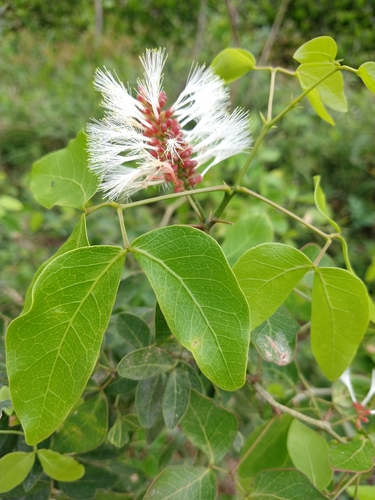
Bauhinia monandra
Kurz.
Butterfly Flower
iNaturalist· cc-by-nc-sa
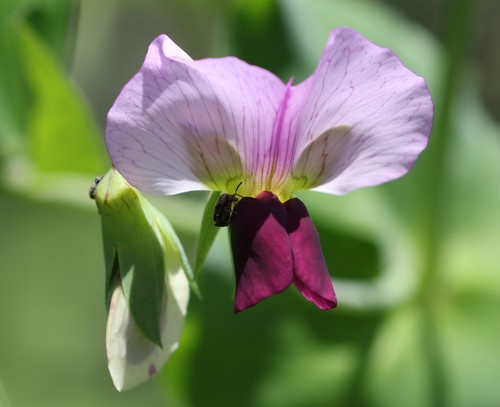
(c) Mauricio Mercadante, some rights reserved (CC BY-NC-SA)
iNaturalist· cc-by-nd
(c) Ventilago, some rights reserved (CC BY-ND)
iNaturalist· cc-by-nc
(c) csozanne, some rights reserved (CC BY-NC)
Summary
Source: WikipediaBauhinia monandra is a species of leguminous trees, of the family Fabaceae. Common names include pink bauhinia, orchid tree, and Napoleon's plume. The tree is native to Madagascar, where it is widespread in lowland humid forests and dry forests. It has naturalised in Myanmar, Australia, Christmas Island, the Caribbean, southern USA, Colombia, Brazil, and the Pacific Islands. The species is invasive in New Caledonia.
Description
A deciduous tree. It grows to 7 m tall and spreads to 4 m across. The stem is slender and erect. It often forms several stems. It has widely spreading branches. The leaves have 2 lobes and are yellowish-green. The flowers are pale pink with red dots and have 5 petals and one fertile stamen. Flowers are usually of one sex. They are orchid like and are 10 cm across. They occur around stalks on the end of branches. The flowers only have one stamen. Pods are 20 cm long.
Edible Uses
Young leaves - cooked and eaten as a vegetable. Young seedpods - cooked and eaten as a vegetable. The protein content of the seed was 33.09%, comparing fairly with soya beans (Glycine max) and groundnuts (Arachis hypogaea). The seeds also yield 21.45% soluble carbohydrates, comparing favorably with soybean 20.7% and peanut 24.6%. It also yields 3.25% fibre. The hydrogen cyanide content was 0.32 mg/100g; chronic exposure has been reported to cause neurological, respiratory, cardiovascular and thyroid debilities. The study concludes that the seeds are rich in nutrient and low in anti-nutritional compounds. If popularized, the plant may serve as a complimentary source of essential nutrients, provided toxicants are removed.
Medicinal Uses
The pods are pounded and boiled in water to provide a laxative drink. They are used as an astringent for treating diarrhoea and dysentery, and are also used as a remedy for fevers. A decoction of the root and bark is used in the treatment of leprosy and small pox. An anti-inflammatory ointment is made from the bark. The leaves have been used in the treatment of diabetes. Leaf extracts are used in the treatment of eye ailments. An acute and subacute toxicity study of a methanolic leaf extract showed relatively low toxicity on acute administration, but advised caution when used subacutely as remedy for diabetes. A study of the methanol extract of the dried leaves showed significant blood glucose reduction. A water fraction had hypoglycemic activity comparable to glibenclamide. Leaf extracts exhibited very potent antioxidant activity, compared with pure catechins used as positive controls.
Distribution
A tropical plant. It prefers a well composted, moist, well drained soil. It grows in areas with a rainfall between 900-2,000 mm per year. It does best in a protected sunny position. It is drought and frost tender. It suits hardiness zones 11-12.
Where It Grows
Africa, Angola, Asia, Australia, Bangladesh, Brazil, Burkina Faso, Burundi, Caribbean, Caroline Islands, Central America, Christmas Island, Congo DR, Cook Is., Cuba, Dominican Republic, East Africa, Fiji, Guiana, Haiti, Hawaii, India, Indochina, Indonesia, Ivory Coast, Leeward Is., Liberia, Madagascar*, Malaysia, Mali, Mariana Islands, Marquesas, Mexico, Mozambique, Myanmar, Nauru, Nigeria, Niue, Pacific, Papua New Guinea, PNG, Philippines, Puerto Rico, Rotuma, Samoa, Sao Tome and Principe, SE Asia, Sierra Leone, Somalia, South America, Sri Lanka, Tanzania, Thailand, Tonga, Trinidad-Tobago, USA, Vanuatu, Venezuela, Vietnam, West Africa, West Indies, Zambia, Zimbabwe,
Cultivation
Plants are grown from seed. Seed should be treated before sowing. It can be grown by air-layering or grafting.
Propagation
Seed - it has a hard seedcoat and benefits from scarification before sowing in order to speed up and improve germination. This can usually be done by pouring a small amount of nearly boiling water on the seeds (being careful not to cook them!) and then soaking them for 12 - 24 hours in warm water. By this time they should have imbibed moisture and swollen - if they have not, then carefully make a nick in the seedcoat (being careful not to damage the embryo) and soak for a further 12 hours before sowing. Up to 100% germination of treated seed can be expected, with sprouting commencing after about 4 days.
Other Uses
The pods and seeds are sources of black and blue dyes. The fibrous bark can be used for making cordage. The heartwood is brown; the sapwood whitish. The wood is hard. It is only used for fuel. The trees are sometimes used to make 'living fences' - they are pollarded and the long pliable branches are arranged into the framework of a fence. I am not sure if this means that the stems are cut from the tree and made into a fence, or if the new growth after the tree is pollarded is woven whilst still on the tree.
Other Information
It is not known if it is used for food in Papua New Guinea.
Notes
It is normally grown in gardens as an ornamental. There are about 250-350 Bauhinia species. Most are in the tropics. Also as Caesalpinaceae.
Synonyms
Also Known As
Butterfly Bauhinia, Flores mariposa, Jerusalem date, Mariposa, Mong-bo don-hung, Napolean's cocked hat, Napoleon's plume, Orchid tree, Pink butterfly tree, St Thomas’s Tree, Swedaw
References (21)
- Barwick, M., 2004, Tropical and Subtropical Trees. A Worldwide Encyclopedic Guide. Thames and Hudson p 48
- Bodkin, F., 1991, Encyclopedia Botanica. Cornstalk publishing, p 135
- Cooper, W. and Cooper, W., 2004, Fruits of the Australian Tropical Rainforest. Nokomis Editions, Victoria, Australia. p 96
- Ekman Herbarium records Haiti
- Etherington, K., & Imwold, D., (Eds), 2001, Botanica's Trees & Shrubs. The illustrated A-Z of over 8500 trees and shrubs. Random House, Australia. p 121
Show all 21 references Hide references
- Flora of Australia Volume 12, Mimosaceae (excl. Acacia) Caesalpiniaceae. Melbourne: CSIRO Australia (1998) p 161
- Hibbert, M., 2002, The Aussie Plant Finder 2002, Florilegium. p 39
- J. Asiat. Soc. Bengal, Pt. 2, Nat. Hist. 42(2):73. 1873
- Kew Plants of the World Online
- Llamas, K.A., 2003, Tropical Flowering Plants. Timber Press. p 198
- Lord, E.E., & Willis, J.H., 1999, Shrubs and Trees for Australian gardens. Lothian. p 48
- Lugod, G.C. and de Padua L.S., 1979, Wild Food Plants in the Philippines. Vol. 1. Univ. of Philippines Los Banos. p 44
- Martin, F.W. & Ruberte, R.M., 1979, Edible Leaves of the Tropics. Antillian College Press, Mayaguez, Puerto Rico. p 198
- Parham, B. E. V., 1972, Plants of Samoa. New Zealand Department of Scientific and Industrial Research. Information Series. No. 85 p 140
- Peekel, P.G., 1984, (Translation E.E.Henty), Flora of the Bismarck Archipelago for Naturalists, Division of Botany, Lae, PNG. p 216, 215
- Pham-Hoang Ho, 1999, An Illustrated Flora of Vietnam. Nha Xuat Ban Tre. p 853
- Plants of Haiti Smithsonian Institute http://botany.si.edu/antilles/West Indies
- Staples, G.W. and Herbst, D.R., 2005, A tropical Garden Flora. Bishop Museum Press, Honolulu, Hawaii. p 306
- Sukarya, D. G., (Ed.) 2013, 3,500 Plant Species of the Botanic Gardens of Indonesia. LIPI p 153
- Young, J., (Ed.), 2001, Botanica's Pocket Trees and Shrubs. Random House. p 131
- Yuncker, T.G., 1959, Plants of Tonga, Bernice P. Bishop Museum, Hawaii, Bulletin 220. p 135