Tricholoma terreum
(Schaeff. ex Fr.) Kummer
Morella, Cardella, Dirty tricholoma
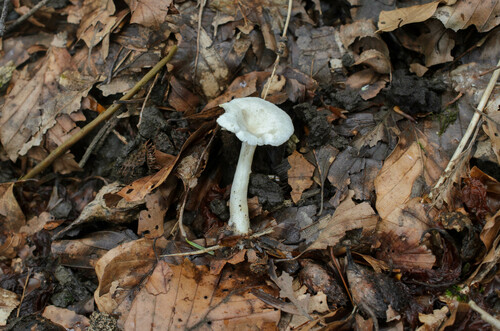
iNaturalist· cc-by-nc
(c) Christian Schwarz, some rights reserved (CC BY-NC), uploaded by Christian Schwarz
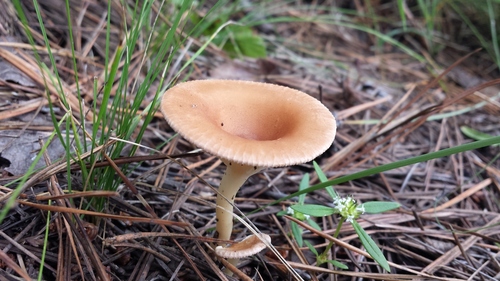
iNaturalist· cc-by-nc
(c) Marjan Kustera, some rights reserved (CC BY-NC), uploaded by Marjan Kustera
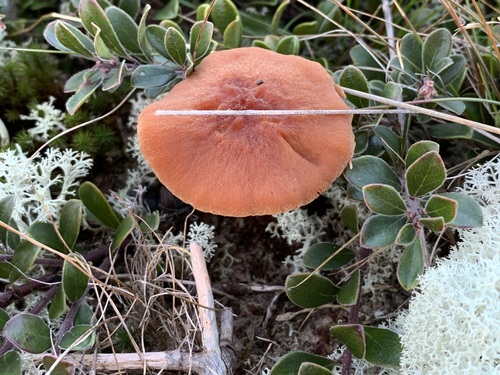
iNaturalist· cc-by-nc
(c) Damon Tighe, some rights reserved (CC BY-NC), uploaded by Damon Tighe
Summary
Source: WikipediaTricholoma terreum, commonly known as the grey knight or dirty tricholoma, is a grey-capped mushroom of the large genus Tricholoma. It is found in coniferous woodlands in Europe and North America, and has also been encountered under introduced pine trees in Australia and New Zealand. It is regarded as edible, but is toxic in extremely high quantities.
Description
A temperate edible mushroom in the family Tricholomataceae, sold in local markets.
This description is brief — help expand it
Edible Uses
The caps are stewed and used in sauces.
Traditional Uses
The caps are stewed and used in sauces.
This uses section is brief — help expand it
Distribution
It is a temperate plant.
Where It Grows
Alaska, Andorra, Armenia, Asia, Balkans, Bulgaria, Caucasus, China, Europe, Finland, Himalayas, Hungary, Italy, Jordan, Mediterranean, Middle East, Nepal, North America, Russia, Scandinavia, Sicily, Spain, Sweden, Turkey, Türkiye, USA,
Other Information
It is sold in local markets.
Synonyms
Also Known As
Sharqasunk mkohraguyn
References (18)
- Boa, E. R., 2004, Wild edible fungi and their importance to people. FAO Non Wood Forest Products Booklet 17
- Christensen, M., et al, 2008, Collection and Use of Wild Edible Fungi in Nepal. Economic Botany, 62(1), 2008, pp. 12–23
- Dabbour, I. R. & Takruri, H. R., 2002, Protein quality of four types of edible mushrooms found in Jordan. Plant Foods for Human Nutrition 57:1-11
- Demirbas, A., 2000, Accumulation of heavy metals in some edible mushrooms from Turkey. Food Chemistry 68: 415-419
- Denchev, C. M., et al, The wild edible mushrooms in Bulgaria. Bulgarian Academy of Science.
Show all 18 references Hide references
- Dongol, et al, 1995, Edible Mushrooms in Nepal
- Fan, L., et al, The Use of Edible Wild Plants and Fungi in Korean-Chinese Villages. Journal of Environmental Information Science 44-5 p 71-79
- Hall, I. R., et al, 2003, Edible and Poisonous Mushrooms of the World. Timber Press. p 176
- Kalac,P., 2009, Chemical composition and nutritional value of European species of wild growing mushrooms: A review. Food Chemistry 113 (2009) 9–16
- Kaufmann, B. et al, 1999, The Great Encyclopedia of Mushrooms. Konemann. p 92
- Lentini, F. and Venza, F., 2007, Wild food plants of popular use in Sicily. J Ethnobiol Ethnomedicine. 3: 15
- Pieroni, A., 1999, Gathered wild food plants in the Upper Valley of the Serchio River (Garfagnana), Central Italy. Economic Botany 53(3) pp 327-341
- Stoyneva-Gartner, M.P. & Uzunov, B.A., 2015, An Ethnobiological Glance on Globalization Impact on the Traditional Use of Algae and Fungi as Food in Bulgaria. J Nutr Food Sci 2015, 5:5
- Sun, L. et al, 2017, Comparison of Free Total Amino Acid Compositions and Their Functional Classifications in 13 Wild Edible Mushrooms. Molecules 2017, 22, 350
- Vetner, J., 2004, Arsenic content of some edible mushroom species. Eur. Food Res. Technol. 219: 71-74
- Vetner, J., 2005, Lithium content of some common edible wild-growing mushrooms. Food Chemistry 90:31-37
- www.plantnames.unimelb.edu.au
- Yildiz, A et al, 2005, Organic elements and protein in some macrofungi of south east Anatolia in Turkey. Food Chemistry 89: 605-609