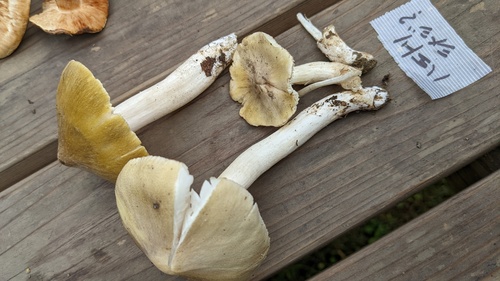
Tricholoma flavovirens
(Pers.: Fr.) Lund.
Man on horseback mushroom, Canary tricholoma
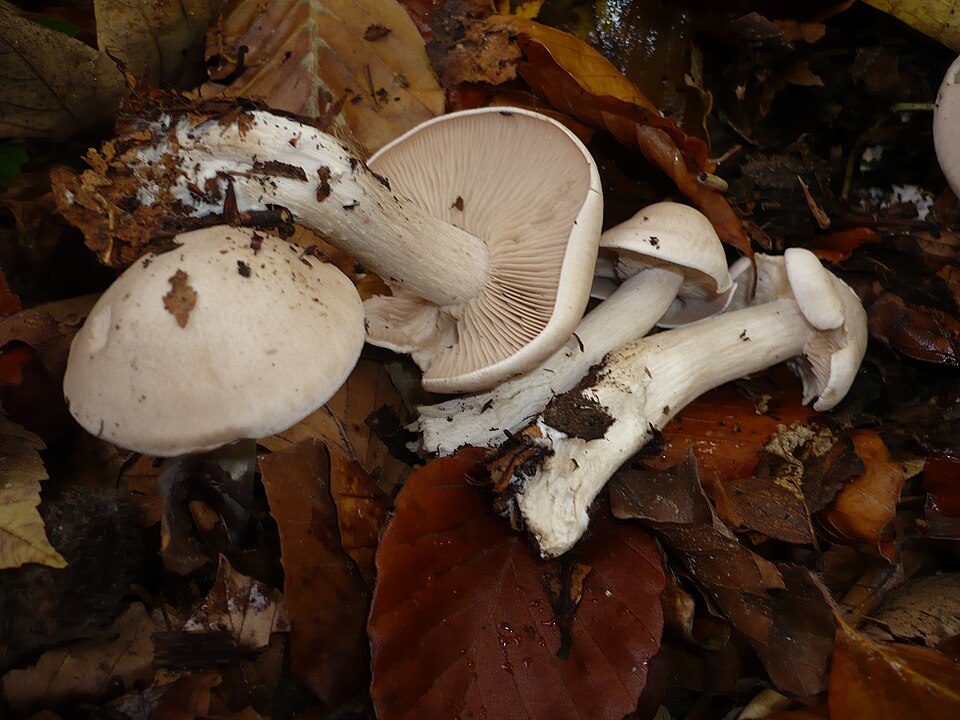
iNaturalist· cc-by
(c) Виктория Билоус, some rights reserved (CC BY)
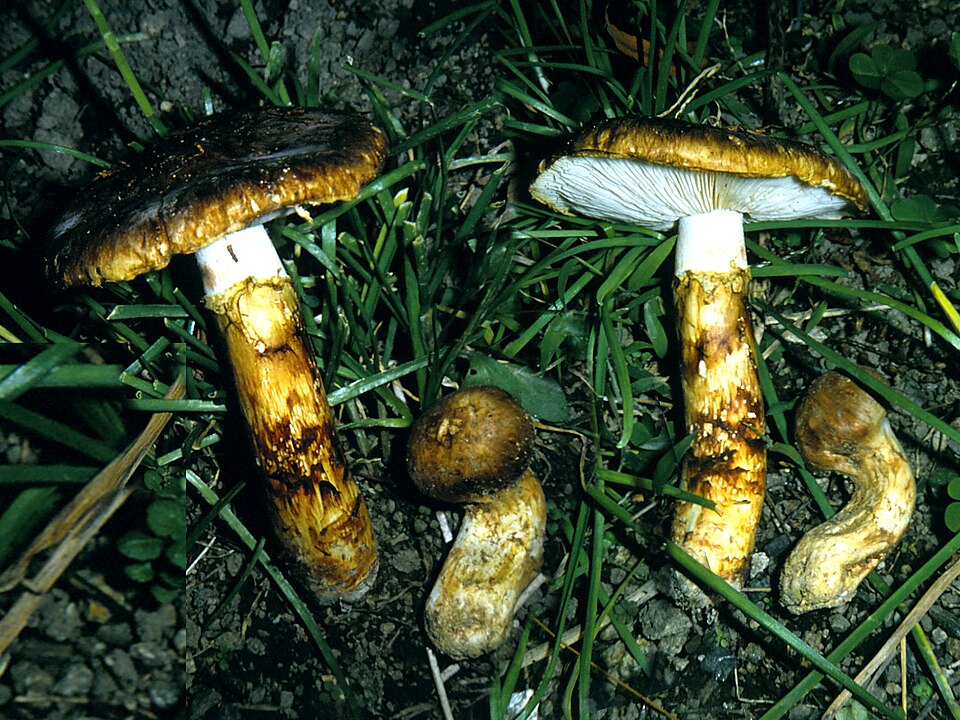
iNaturalist· cc-by
(c) Виктория Билоус, some rights reserved (CC BY)
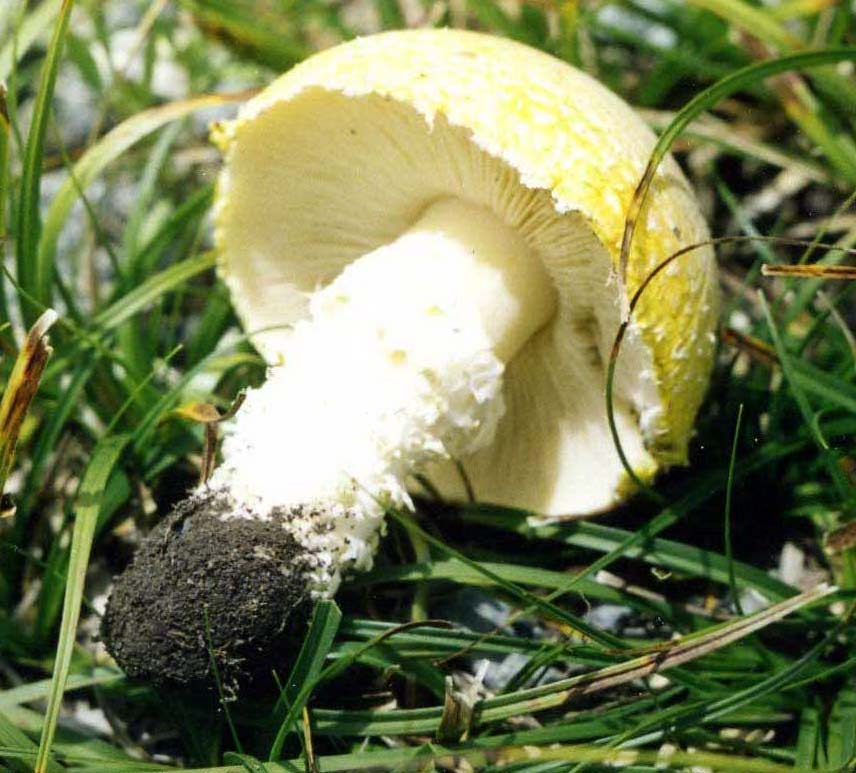
iNaturalist· cc-by
(c) Виктория Билоус, some rights reserved (CC BY)
Description
A temperate mushroom in the Tricholomataceae family found in California and other temperate regions.
This description is brief — help expand it
Edible Uses
The fruiting body (mushroom) is edible.
Known Hazards
This species was for a long time highly regarded as one of the tastier edible species (and by some authors still is) and was sold in European markets. Medieval French knights allegedly reserved this species for themselves, leaving the lowly bovine bolete (Suillus bovinus) for the peasants. Concern was first raised in southwestern France. People who have been poisoned have all had three or more meals containing T. equestre within the last two weeks prior to treatment. One to four days after their last meal containing the fungus, patients reported muscle weakness, sometimes accompanied by pain. This weakness progressed for another three to four days, accompanied by a feeling of stiffness and darkening of the urine. Periods of nausea, sweating and reddening of the face were also reported, with no fever present. There have been no reported cases of poisoning in North America, and there is speculation that the respective mushrooms may in fact be different species that are very similar in appearance. Molecular research shows that multiple species may have been identified as the synonym T. flavovirens on the West Coast. There are reports of deaths of patients being treated for T. equestre poisoning. The poison in this mushroom remains unknown. The mechanism of poisoning is suspected to be rhabdomyolysis, damaging of the cell membrane of skeletal muscle fibres. In this disorder, the oxygen-carrying muscular protein myoglobin is released and appears in urine, resulting in symptoms such as muscle pain and brownish coloration of the urine. A 2018 research study conducted in Poland with the recruitment of ten healthy volunteers who ate 300 grams per head (about twice the normal dose) of fried T. equestre in a single meal reported no consequences or alterations. However, a 2020 systematic review highlighted several studies indicating elevated plasma creatine kinase (CK) pro-inflammatory activities, in addition to its effect on other liver function biomarkers, underlining a cause for concern and suggests "not to harvest and consume this species". The same 2020 study registered the same level of plasma CK using different edible mushrooms. For example the same level obtained by T. equestre was also obtained by Boletus edulis.
Distribution
It is a temperate plant. California.
Where It Grows
Alaska, Asia, Balkans, Belarus, Bulgaria, Central America, China, Europe, Guatemala, Japan, Mexico, North America, Poland, Russia, Scandinavia, Sweden, USA,
Nutrition
| Part | Moisture | kJ | kcal | Protein | Vit A | Vit C | Iron | Zinc |
|---|---|---|---|---|---|---|---|---|
| Mushroom | — | — | 18.1 | — | — | — | — | — |
Synonyms
Also Known As
Nejo, Periquito, Youkoumo
References (8)
- Boa, E. R., Wild edible fungi and their importance to people. FAO Non Wood Forest Products Booklet 17
- Estrada-Martinez, E., et al, 2009, Contribucion al conocimiento etnomicologico de los Hongos Comestibles Silvestres de Mercados Regionales y Comunidades de la Sierra Nevada (Mexico). Intercienca Jan 2009 Vol. 34 No. 1
- Guild, B., 1979, The Alaskan Mushroom Hunter's Guide. Alaska Northwest Publishing Company. p 108
- Hall, I. R., et al, 2003, Edible and Poisonous Mushrooms of the World. Timber Press. p 316
- http://www.mykoweb.com/CAF/edible.html
Show all 8 references Hide references
- Kalac,P., 2009, Chemical composition and nutritional value of European species of wild growing mushrooms: A review. Food Chemistry 113 (2009) 9–16
- Kaye, G.C., 1986, Wild and Exotic Mushroom Cultivation in North America
- www.plantnames.unimelb.edu.au