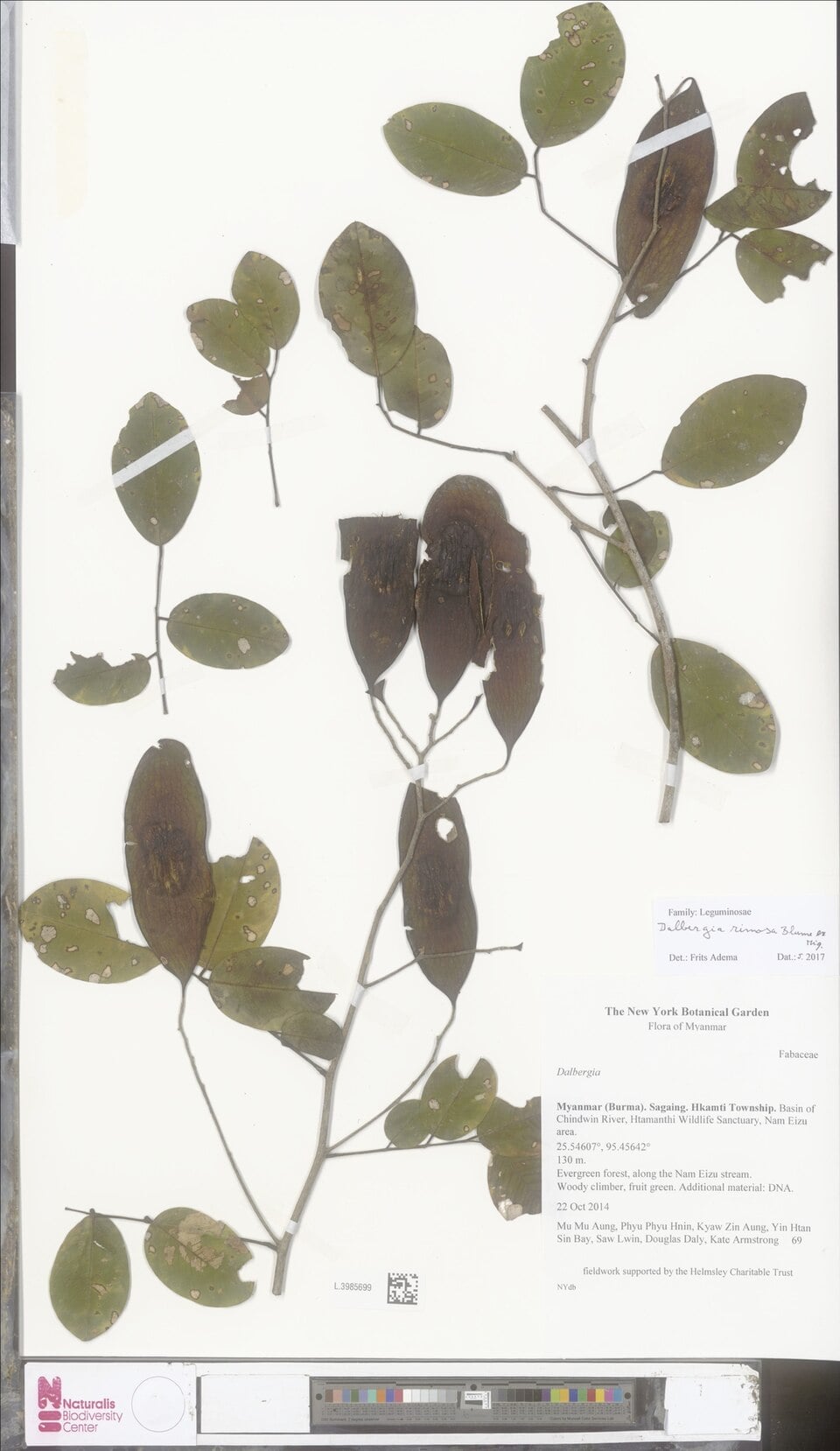
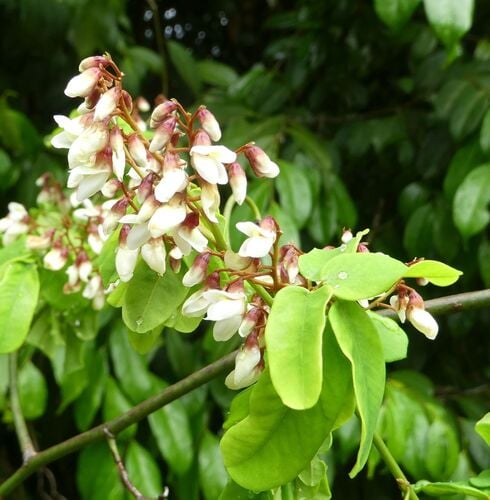
Bauhinia petersiana subsp. macrantha
Bolle, (Oliv.) Brummitt & J. H. Ross
Wild coffee beans, Kalahari bauhinia, Camel's foot
gbif· cc-by
Royal Botanic Gardens, Kew
gbif· cc-by
Royal Botanic Gardens, Kew
gbif· cc-by
Royal Botanic Gardens, Kew
Summary
Source: WikipediaBauhinia petersiana, the Kalahari white bauhinia, is a species of shrubs from family Fabaceae and the subfamily Cercidoideae found in Angola, Botswana, Democratic Republic of Congo, Lesotho, Mozambique, Namibia, South Africa, Tanzania, Zambia and Zimbabwe. The species is 2 metres (6 ft 7 in) in height. The flower is up to 15 cm (5.9 in) wide, with five narrow white petals.
Description
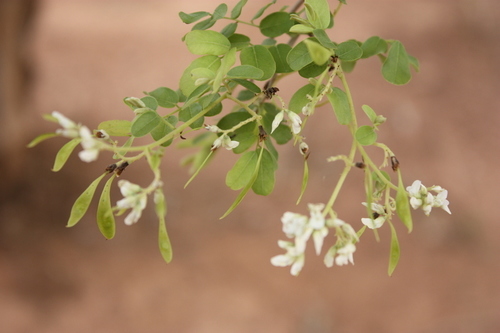
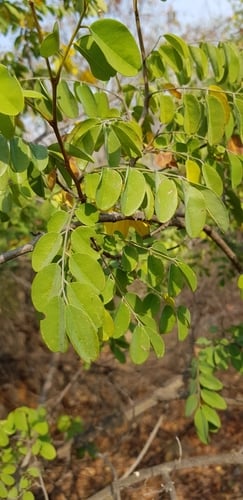
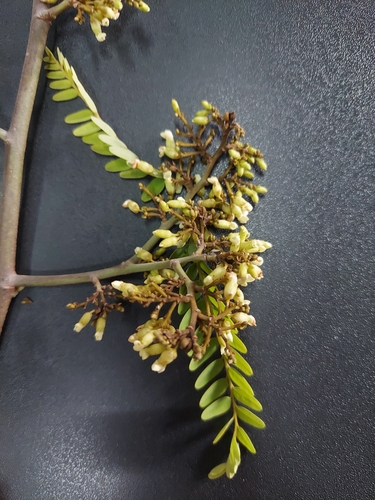
It is usually a shrub or semi-climber. It can be a tree 6 m tall. The leaves have 2 lobes and are 1.3-8 cm across. They are velvety with a rounded or notched base. The lobes join for about half the length of the leaf. The veins are 7 from the base and are red-brown. They are prominent underneath. The twigs are hairy. The flowers are large and white. They are 6.5 cm long and have a sweet smell. The pods are long and narrow. They can be 20 cm long by 4 cm wide. They are dark coloured and smooth. There are several shiny brown seeds inside. They are edible.
Edible Uses
The seeds of this plant are considered a delicacy in Botswana, where they are used as nuts. Ground and roasted seeds are often used for coffee. The unripe seeds are not harmful to humans and can be eaten. Botswanans also use the plants seeds for oil.
Traditional Uses
The seeds are used as a coffee substitute. The seeds are roasted and ground into flour. Young seeds can be roasted in the pods then eaten. The roasted root can be eaten. The young pods are boiled and eaten.
Distribution
A tropical plant. It grows in sand in the desert. It is not frost resistant. It thrives in hot, dry climates. It can tolerate extended drought. It needs well-drained soil. It grows between 550-1,800 m above sea level. It grows in areas with a rainfall between 350-1,000 mm per year. It can grow in arid places.
Where It Grows
Africa, Angola, Australia, Botswana, Central Africa, East Africa, Malawi, Mozambique, Namibia, South Africa, Southern Africa, USA, Zambia, Zimbabwe,
Cultivation
Plants can be grown from seeds. Seeds germinate fairly easily. The seeds are put in hot water and soaked overnight then planted. They germinate in 7-20 days. Seedlings can be transplanted at the 2 leaf stage. It is important not to damage the taproot. Plants can be cut back and will re-grow.
Production
It takes about 1,500 pods to produce 1 kg of meal.
Other Information
The pounded seeds are a staple food of the Bushmen. The nectar of the flowers is sucked out especially by children.
Notes
There are about 250-350 Bauhinia species. Most are in the tropics. Also as Caesalpinaceae.
Synonyms
Also Known As
Chingando, Mochopi, Mogotswe, Mohesi, Mohuthi, Motshopo, Mudianchefu, Mupondo, Mugutswe, Ngwa, Rag bush, Small white bauhinia, Tkguntkkowa, Umpondo
References (14)
- Bircher, A. G. & Bircher, W. H., 2000, Encyclopedia of Fruit Trees and Edible Flowering Plants in Egypt and the Subtropics. AUC Press. p 55 (As Bauhinia macrantha)
- Fl. trop. Afr. 2:289. 1871
- Flora Zambesiaca. http://apps.kew.org/efloras
- Fowler, D. G., 2007, Zambian Plants: Their Vernacular Names and Uses. Kew. p 28
- Fox, F. W. & Young, M. E. N., 1982, Food from the Veld. Delta Books. p 202 (As Bauhinia petersiana subsp. serpae)
Show all 14 references Hide references
- Jardin, C., 1970, List of Foods Used In Africa, FAO Nutrition Information Document Series No 2.p 24
- Larson, T. J., 1970, Hambukushu Ethno-botany. Botswana Notes and Records. Vol 13. (As Bauhinia macrantha)
- Leger, S., 1997, A Description of Today's Use of Plants in West Bushmanland (Namibia). German Development Service. PO Box 220035, 14061 Berlin, Germany. http://www.sigridleger.de/book/
- Palmer, E and Pitman, N., 1972, Trees of Southern Africa. Vol. 2. A.A. Balkema, Cape Town p 869
- Pickering, H., & Roe, E., 2009, Wild Flowers of the Victoria Falls Area. Helen Pickering, London. p 71
- Roodt, V., 1998, Trees & Shrubs of the Okavango Delta. Medicinal Uses and Nutritional value. The Shell Field Guide Series: Part 1. Shell Botswana. p 119
- Royal Botanic Gardens, Kew (1999). Survey of Economic Plants for Arid and Semi-Arid Lands (SEPASAL) database. Published on the Internet; http://www.rbgkew.org.uk/ceb/sepasal/internet [Accessed 21st April 2011]
- Ruiters-Welcome, A. K., 2019, Food plants of southern Africa. Ph.D. thesis. Univ. of Johannesburg p 56
- Venter, F & J., 2009, Making the most of Indigenous Trees. Briza. p 62