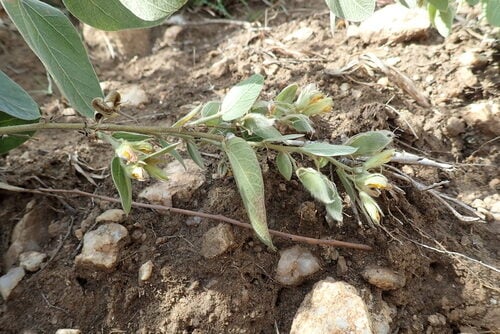
Sophora japonica
L. f.
Japanese Pagoda Tree, Yellow berry
iNaturalist· cc-by-nc
(c) thalliwell, some rights reserved (CC BY-NC)
iNaturalist· cc-by-nc
(c) jagodaplecinska, some rights reserved (CC BY-NC)
iNaturalist· cc-by-nc
(c) jagodaplecinska, some rights reserved (CC BY-NC)
Summary
Source: WikipediaFast-growing deciduous tree reaching 20 m tall, hardy to UK zone 5 and not frost tender. Flowers in September with seeds ripening in November. Hermaphroditic, insect-pollinated nitrogen-fixer. Grows in light sandy, medium loamy, or heavy clay soils with preference for well-drained conditions and nutritionally poor soil tolerance. Adapts to mildly acid through basic pH. Requires full sun, tolerates moist soil and drought, and resists atmospheric pollution.
Description
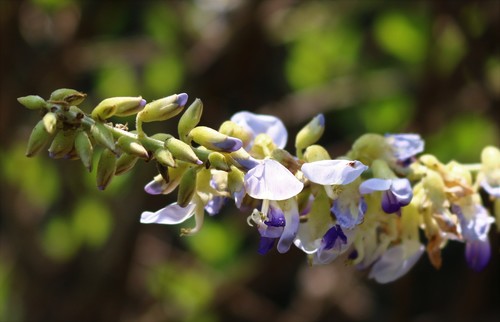
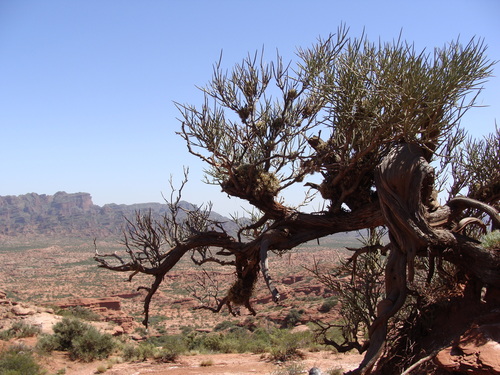
A tree which loses its leaves during the year. It grows 18-25 m tall and spreads 12-18 m wide. The trunk becomes twisted and knotted. The bark is grey-brown with prominent ridges. It loses its leaves during the year. The leaves are about 30 cm long and made up of up to 15 leaflets. They are dark green by slightly downy underneath. The flowers are white and pea-like There are 10 stamens. The flowers are in long clusters up to 26 cm long. The pods are like cylinders but with contractions along them. The pods are 5-10 cm long. The pods often remain hanging on the tree for a long time.
Edible Uses
Young leaves and flowers can be cooked and eaten, though the leaves must be boiled in three changes of water to remove their bitterness — a process that also removes most of their vitamins and minerals. The leaves are a rich source of rutin, containing significantly more than buckwheat (Fagopyrum esculentum), the usual commercial source. The ovaries, taken before the flowers open, contain up to 40% rutin. A tea can be brewed from the young leaves and flowers. An edible starch is also obtained from the seed.
Traditional Uses
The shoots are sun-dried, and boiled three times to remove the bitter element, before eating. The flowers are eaten. The flowers, fruit and leaves are used as a substitute for tea. The seeds are a source of starch.
Medicinal Uses
This species is widely used in Chinese medicine and is regarded as one of the 50 fundamental herbs. It ranked second in a study of 250 potential antifertility agents. It is used as a diuretic, emollient, febrifuge, and tonic. The flowers and buds are antibacterial, anticholesterolemic, anti-inflammatory, antispasmodic, haemostatic, and hypotensive. The ovaries, particularly just before flowering, are a rich source of rutin, which acts as a valuable hypotensive agent. Buds, flowers, and pods are prepared and used to treat internal haemorrhages, poor peripheral circulation, and internal worms, among other conditions; this remedy should not be given to pregnant women. The seedpods are abortifacient. The seed is emetic and haemostatic, used to treat haemorrhoids, haematuria, uterine bleeding, constipation, a stuffy sensation in the chest, dizziness, red eyes, headache, and hypertension; it should be used with caution as it is toxic. The leaves are laxative and are used in the treatment of epilepsy and convulsions. A decoction of the stems is used for piles, sore eyes, and skin problems.
Known Hazards
The plant contains cytisine, which resembles nicotine and is similarly toxic.
Distribution
It is a temperate plant. It is native to China. It tolerates drought and poor soils. It is frost hardy. It suits regions with hot dry summers. It needs a sunny position. It suits hardiness zones 5-9. Arboretum Tasmania.
Where It Grows
Asia, Australia, Central Asia, China*, India, Indochina, Indonesia, Japan, Korea, Mediterranean, North America, Pakistan, SE Asia, Slovenia, Taiwan, Tajikistan, Tasmania, USA, Vietnam,
Cultivation
Succeeds in a well-drained moderately fertile soil in full sun. Tolerates poor soils, atmospheric pollution, heat and, once established, drought. Hardy to about -25° when mature, but it can be damaged by severe frosts when it is young. A very ornamental and fast growing tree, it grows best in hot summers. It grows best in the warmer areas of the country where the wood will be more readily ripened and better able to withstand winter cold. Trees take 30 years to come into flower from seed., but they do not often ripen their seed in Britain. Cultivated in China for the rutin contained in its leaves and ovaries. Plants should be container-grown and planted out whilst young, older plants do not transplant well. Plants in this genus are notably resistant to honey fungus. This species has a symbiotic relationship with certain soil bacteria, these bacteria form nodules on the roots and fix atmospheric nitrogen. Some of this nitrogen is utilized by the growing plant but some can also be used by other plants growing nearby.
Propagation
Seed is best sown as soon as it is ripe in a greenhouse. Stored seed should be pre-soaked for 12 hours in hot (not boiling) water, then sown in late winter in a greenhouse. Prick out seedlings into individual pots as soon as they are large enough to handle, and grow them on under protected conditions for 2 years before planting out into permanent positions in early summer of the third year. Cuttings of young shoots with a heel can be taken in July or August in a frame. Air-layering is also an option.
Other Uses
A yellow dye is obtained from the seedpods and flowers, turning green when mixed with indigo. The wood is tough, light, strong, and of superior quality, used in carpentry.
Production
It is slow to reach flowering stage.
Notes
There are about 45-50 Sophora species. They grow mainly in the tropics and subtropics.
Nutrition
| Part | Moisture | kJ | kcal | Protein | Vit A | Vit C | Iron | Zinc |
|---|---|---|---|---|---|---|---|---|
| Seeds | 4.5 | 1731 | 414 | 16.4 | — | — | 4.8 | — |
| Shoots | — | — | — | — | — | — | — | — |
| Leaves | — | — | — | — | — | — | — | — |
| Flowers | — | — | — | — | — | — | — | — |
Synonyms
Also Known As
Chinese scholar tree, Enju, Hoe Nhatbon, Huaishu, Huai Tree, Japonska sofora, Umbrella tree, Wai-shue
References (26)
- Altschul, S.V.R., 1973, Drugs and Foods from Little-known Plants. Notes in Harvard University Herbaria. Harvard Univ. Press. Massachusetts. no. 1724
- Ambasta, S.P. (Ed.), 2000, The Useful Plants of India. CSIR India. p 585
- Blamey, M and Grey-Wilson, C., 2005, Wild flowers of the Mediterranean. A & C Black London. p 110
- Bodkin, F., 1991, Encyclopedia Botanica. Cornstalk publishing, p 937
- Bremness, L., 1994, Herbs. Collins Eyewitness Handbooks. Harper Collins. p 84
Show all 26 references Hide references
- Brickell, C. (Ed.), 1999, The Royal Horticultural Society A-Z Encyclopedia of Garden Plants. Convent Garden Books. p 968
- Burkill, I.H., 1966, A Dictionary of the Economic Products of the Malay Peninsula. Ministry of Agriculture and Cooperatives, Kuala Lumpur, Malaysia. Vol 2 (I-Z) p 2091
- Coombes, A.J., 2000, Trees. Dorling Kindersley Handbooks. p 200
- Cundall, P., (ed.), 2004, Gardening Australia: flora: the gardener's bible. ABC Books. p 1352
- Facciola, S., 1998, Cornucopia 2: a Source Book of Edible Plants. Kampong Publications, p 111
- Flora of Pakistan. www.eFloras.org
- Food Composition Tables for use in East Asia FAO http://www.fao.org/infoods/directory No. 330
- Hibbert, M., 2002, The Aussie Plant Finder 2002, Florilegium. p 292
- http://www.botanic-gardens-ljubljana.com/en/plants
- Hu, Shiu-ying, 2005, Food Plants of China. The Chinese University Press. p 484
- Jackes, D. A., 2007, Edible Forest Gardens
- Joyce, D., 1998, The Garden Plant Selector. Ryland, Peters and Small. p 119
- Little, E.L., 1980, National Audubon Society Field Guide to North American Trees. Alfred A. Knopf. p 529
- Lord, E.E., & Willis, J.H., 1999, Shrubs and Trees for Australian gardens. Lothian. p 72
- Mant. pl. 1:68. 1767
- Pham-Hoang Ho, 1999, An Illustrated Flora of Vietnam. Nha Xuat Ban Tre. p 877
- Plants for a Future database, The Field, Penpol, Lostwithiel, Cornwall, PL22 0NG, UK. http://www.scs.leeds.ac.uk/pfaf/
- READ,
- UPHOF,
- Valder, P., 1999, The Garden Plants of China. Florilegium. p 330
- Van Sam, H. et al, 2008, Uses and Conservation of Plant Species in a National Park. A case study of Ben En, Vietnam. Economic Botany 62:574-593