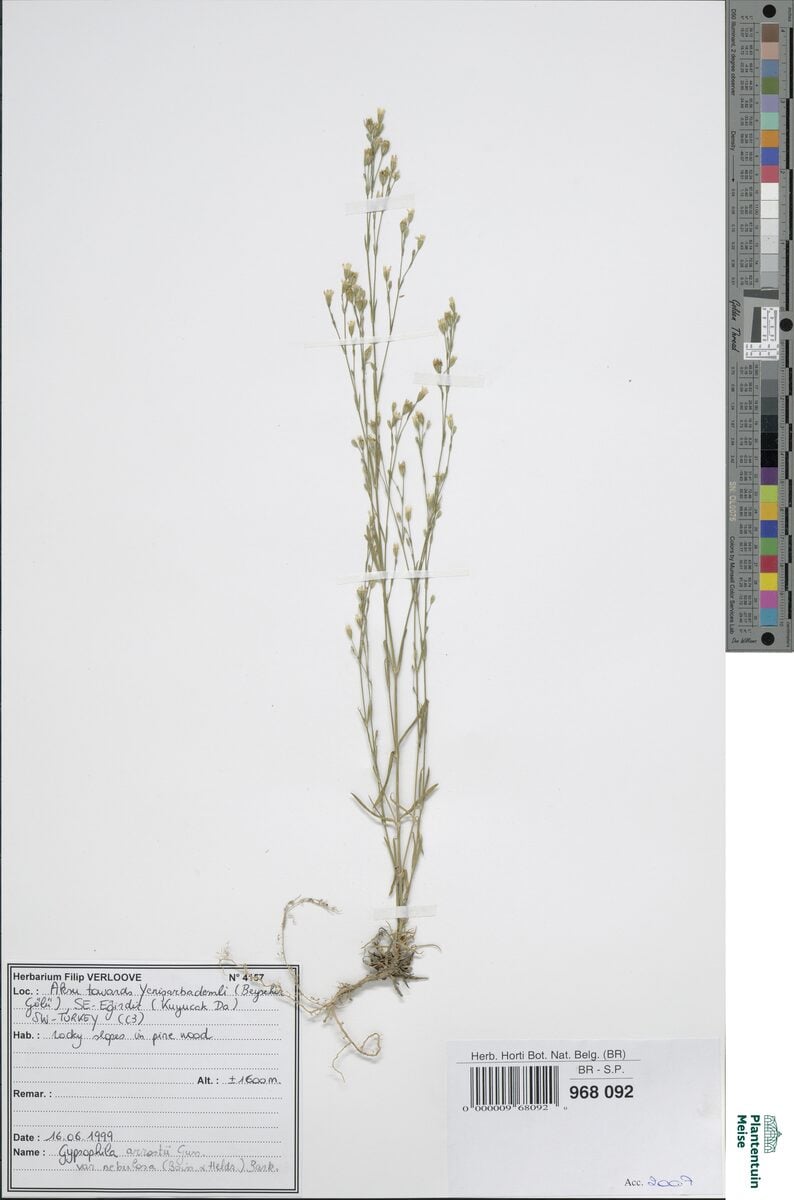
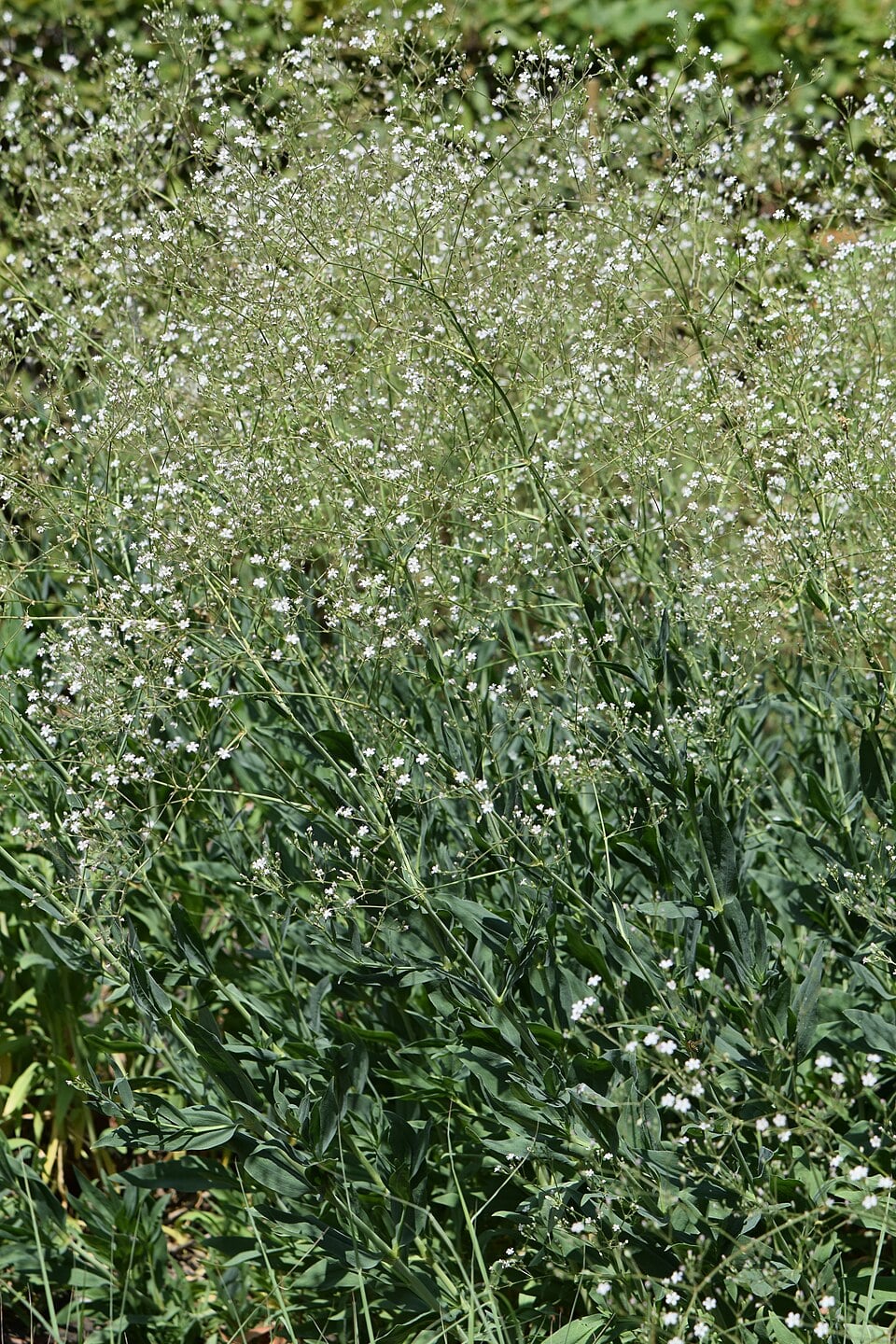
Silene latifolia subsp. alba
(Mill.) Greuter & Burdet
White campion, White cockle, Evening campion
gbif· cc-by-nc
lebedeva_na
gbif· cc-by-nc
alexfamilyteam
gbif· cc-by-nc
alexfamilyteam
Summary
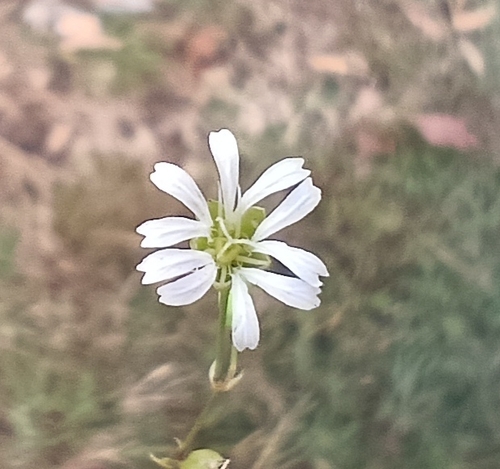
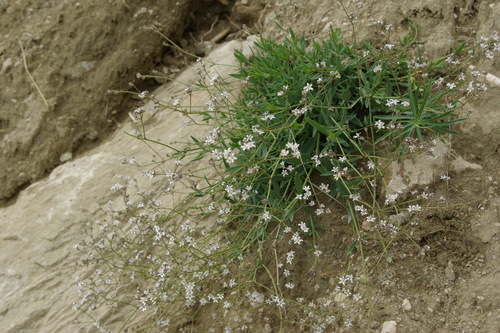
Source: WikipediaSilene latifolia, commonly known as white campion, is a dioecious flowering plant in the family Caryophyllaceae, native to most of Europe, Western Asia and northern Africa. It is a herbaceous annual, occasionally biennial or a short-lived perennial plant, growing to between 40–80 centimetres tall. It is also known in the US as bladder campion but should not be confused with Silene vulgaris, which is more generally called bladder campion. The appearance depends on the age of the plant; when young they form a basal rosette of oval to lanceolate leaves 4–10 cm long, and when they get older, forked stems grow from these, with leaves in opposite pairs. The flowers grow in clusters at the tops of the stems, 2.5–3 cm diameter, with a distinctive inflated calyx and five white petals, each petal deeply notched; flowering lasts from late spring to early autumn. The entire plant is densely hairy. Occasional plants with pink flowers are usually hybrids with red campion (Silene dioica).
Description
A herb that keeps growing from year to year. It grows 1m high. The stems are slender and branched. The leaves are sticky and hairy. The flowers are white and bell-shaped. They have 5 bi-lobed petals.
Edible Uses
The young leaves are eaten in vegetable soups and prepared boiled or stewed.
Traditional Uses
The young leaves are eaten in vegetable soups, boiled and stewed.
This uses section is brief — help expand it
Distribution
It is a temperate plant. It suits hardiness zones 6-11. Tasmania Herbarium.
Where It Grows
Asia, Australia, Central Asia, China, Europe*, Italy, Luxembourg, Mediterranean, North America, Romania, Tasmania, USA,
Synonyms
Also Known As
Beli slizek, Boccon di pecora, Orecchiella
References (9)
- Blamey, M and Grey-Wilson, C., 2005, Wild flowers of the Mediterranean. A & C Black London. p 46 (As Silene latifolia)
- Facciola, S., 1998, Cornucopia 2: a Source Book of Edible Plants. Kampong Publications, p 74 (As Silene alba)
- http://www.botanic-gardens-ljubljana.com/en/plants
- Paoletti, M.G., Dreon, A.L., and Lorenzoni, G.G., 1995, Pistic, Traditional Food from Western Friuli, NE Italy. Economic Botany 49(1) pp 26-30
- Pieroni, A., 1999, Gathered wild food plants in the Upper Valley of the Serchio River (Garfagnana), Central Italy. Economic Botany 53(3) pp 327-341
Show all 9 references Hide references
- Pieroni, A., et al, 2012, "We are Italians!": The Hybrid Ethnobotany of a Venetian Diaspora in Eastern Romania. Human Ecology 40:435-451 (As Silene alba)
- Rivera, D. et al, 2006, Gathered Mediterranean Food Plants - Ethnobotanical Investigations and Historical Development, in Heinrich M, Müller WE, Galli C (eds): Local Mediterranean Food Plants and Nutraceuticals. Forum Nutr. Basel, Karger, 2006, vol 59, pp 18–74
- Tasmanian Herbarium Vascular Plants list p 20
- Willdenowia 12:189. 1982