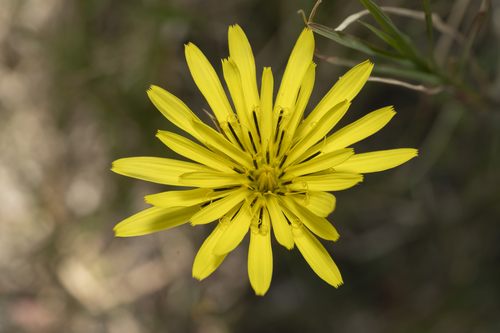
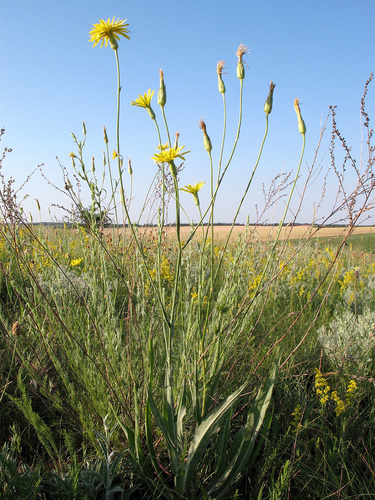
Pyrrhopappus carolinianus
(Walt.) DC.
Carolina desert chicory
iNaturalist· cc-by-nc
(c) J. Richard Abbott, some rights reserved (CC BY-NC), uploaded by J. Richard Abbott
iNaturalist· cc-by-nc
(c) Suzanne Cadwell, some rights reserved (CC BY-NC), uploaded by Suzanne Cadwell
iNaturalist· cc-by-nc
(c) Chuck Sexton, some rights reserved (CC BY-NC), uploaded by Chuck Sexton
Summary
Source: WikipediaPyrrhopappus carolinianus, commonly called Carolina desert-chicory or Texas dandelion, is in the genus Pyrrhopappus of the family Asteraceae, native throughout Eastern and South Eastern United States. It is an annual found in mostly open grasslands and wet roadsides. P. carolinianus can bloom from spring to frost with the heads facing the sun throughout the day. P. carolinianus has been observed growing in habitats such as the edges of marshes, sandpine-oak woodlands, and savannas.
Description
Annual or biennial herb reaching 0.9 m tall with hermaphrodite flowers. Tolerates light sandy, medium loamy, and heavy clay soils across a range of pH levels from mildly acidic to mildly alkaline. Grows in semi-shade or full sun and prefers moist conditions.
Edible Uses
The root is edible and is harvested in autumn.
Traditional Uses
The sweet roots are used as food.
This uses section is brief — help expand it
Medicinal Uses
None known.
Distribution
It is a temperate plant.
Where It Grows
Canada, North America, USA,
Propagation
Seed.
Other Uses
None known.
Synonyms
Also Known As
Leafy-stemmed dandelion
References (2)
- Kermath, B. M., et al, 2014, Food Plants in the Americas: A survey of the domesticated, cultivated and wild plants used for Human food in North, Central and South America and the Caribbean. On line draft. p 730
- Moerman, D. F., 2010, Native American Ethnobotany. Timber Press. p 457