Fraxinus americana
L.
White Ash
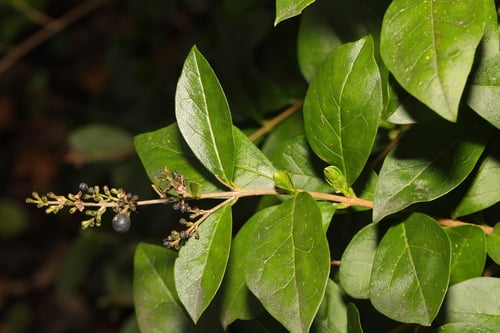
iNaturalist· cc-by-nc
(c) William Van Hemessen, some rights reserved (CC BY-NC), uploaded by William Van Hemessen
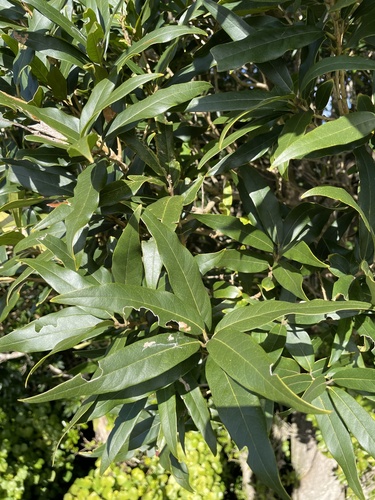
iNaturalist· cc-by-nc
(c) William Van Hemessen, some rights reserved (CC BY-NC), uploaded by William Van Hemessen
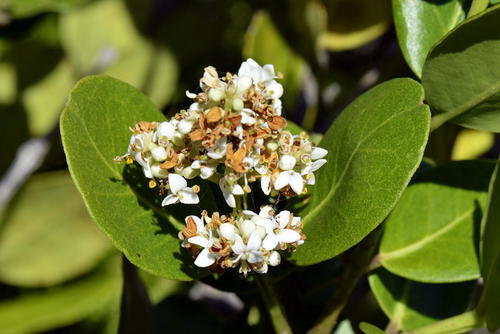
iNaturalist· cc-by-nc
(c) William Van Hemessen, some rights reserved (CC BY-NC), uploaded by William Van Hemessen
Description
Fraxinus americana is a deciduous Tree growing to 25 m (82ft) by 15 m (49ft) at a fast rate. See above for USDA hardiness. It is hardy to UK zone 3 and is not frost tender. It is in flower from April to May, and the seeds ripen in September. The species is dioecious (individual flowers are either male or female, but only one sex is to be found on any one plant so both male and female plants must be grown if seed is required). and is pollinated by Wind. The plant is not self-fertile. Suitable for: light (sandy), medium (loamy) and heavy (clay) soils. Suitable pH: mildly acid, neutral and basic (mildly alkaline) soils and can grow in very alkaline soils. It can grow in semi-shade (light woodland) or no shade. It prefers dry or moist soil. The plant can tolerates strong winds but not maritime exposure. It can tolerate atmospheric pollution.
Edible Uses
A bitter tasting syrup is drawn from the tree. The report gives no more details and does not directly say that the syrup was used as food. It was quite possibly only used medicinally.
Medicinal Uses
Aphrodisiac Astringent Bitter Stings Tonic. The bark is astringent, emmenagogue and a bitter tonic. An infusion is used to promote menstruation. It has also been used as a wash to treat skin sores, itches and vermin on the scalp. The inner bark is diaphoretic, diuretic, emetic and strongly laxative. It is used as a tea to remove bile from the intestines, as a tonic after childbirth and to relieve stomach cramps and fevers. It is chewed and applied as a poultice to sores. The leaves are used to soothe the itching caused by mosquito bites and bee stings. The seeds are thought to be aphrodisiac.
Distribution
Eastern N. America - Nova Scotia to Florida, west to Nebraska and Texas.
Where It Grows
NORTHERN AMERICA: Canada (Québec (south), Nova Scotia, Ontario (south), Prince Edward Island, New Brunswick), United States (Connecticut, Indiana, Maine, Massachusetts, Michigan, New Hampshire, New Jersey, New York, Ohio, Pennsylvania, Rhode Island, Vermont, West Virginia, Illinois, Iowa, Kansas (east), Minnesota, Missouri, Nebraska (east), Oklahoma, Wisconsin, Alabama, Arkansas, Delaware, Florida (north), Georgia, Kentucky, Maryland, Mississippi, North Carolina, South Carolina, Tennessee, Virginia, Texas (east))
Cultivation
Prefers a deep loamy soil, even if it is on the heavy side. Most members of this genus are gross feeders and require a rich soil. Succeeds in exposed positions and in alkaline soils. Tolerates atmospheric pollution. Young plants tolerate forest shade. One of the most valuable hardwood timber trees in N. America, saplings grow slowly at first, but the growth rate speeds up over the next 50 years. This species is planted on a small scale, mainly in E. Europe, as a timber tree. It has the potential as a forestry tree in Britain, succeeding under conditions that are too dry or frosty for the native ash, F. excelsior. A very ornamental tree, it is often confused in cultivation with F. pennsylvanica. Dioecious. Male and female plants must be grown if seed is required. Male trees usually flower heavily each year, but female trees only flower heavily every 2 - 3 years.
Propagation
The seed is best harvested green - as soon as it is fully developed but before it has fully dried on the tree - and can then be sown immediately in a cold frame. It usually germinates in the spring. Stored seed requires a period of cold stratification and is best sown as soon as possible in a cold frame. Prick out the seedlings into individual pots when they are large enough to handle and grow them on in a cold frame for their first winter. Plant them out into their permanent positions or a nursery bed in late spring or early summer of the following year. If you have sufficient seed then it is possible to sow it directly into an outdoor seedbed, preferably in the autumn. Grow the seedlings on in the seedbed for 2 years before transplanting either to their permanent positions or to nursery beds.
Other Uses
Dye Repellent Shelterbelt Wood. The leaves are said to repel rattlesnakes and have been worn on the feet of people travelling in rattlesnake country. There are some doubts over the efficacy of this. A yellow dye is obtained from the bark. Wood - strong, hard, heavy, tough, elastic, close grained, moderately durable. It weighs 41lb per cubic foot, seasons well, takes a good polish and is shock resistant. One of the most valuable of the North American timbers, it is much used for tool handles, hockey sticks, baseball bats, the interior of buildings, musical instruments, furniture, woodenware etc. As a fuel it is comparable in quality to such excellent species as oak (Quercus spp) and hickory (Carya spp).