Cryptocarya massoy
(Oken) Kosterm.
Massoy, Mossoia bark
gbif· cc0
President and Fellows of Harvard College
gbif· cc0
President and Fellows of Harvard College
gbif· cc0
President and Fellows of Harvard College
Summary
Source: WikipediaCryptocarya massoy (also simply massoy or massoi) is a tree native to New Guinea. Its bark was traded across the Indonesian archipelago.
Description
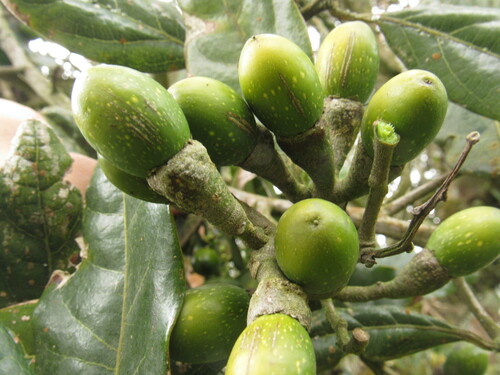
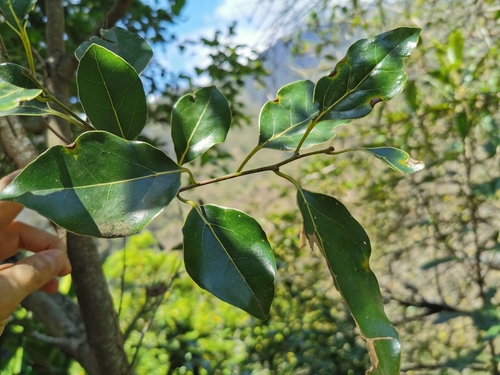
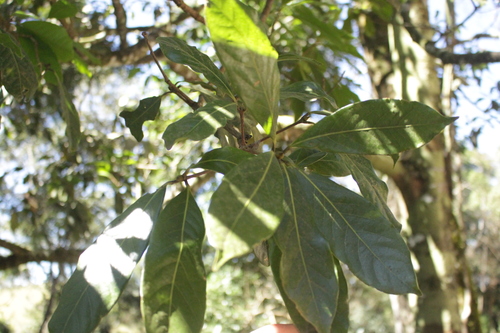
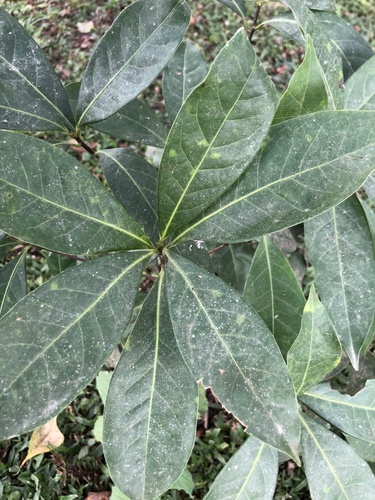
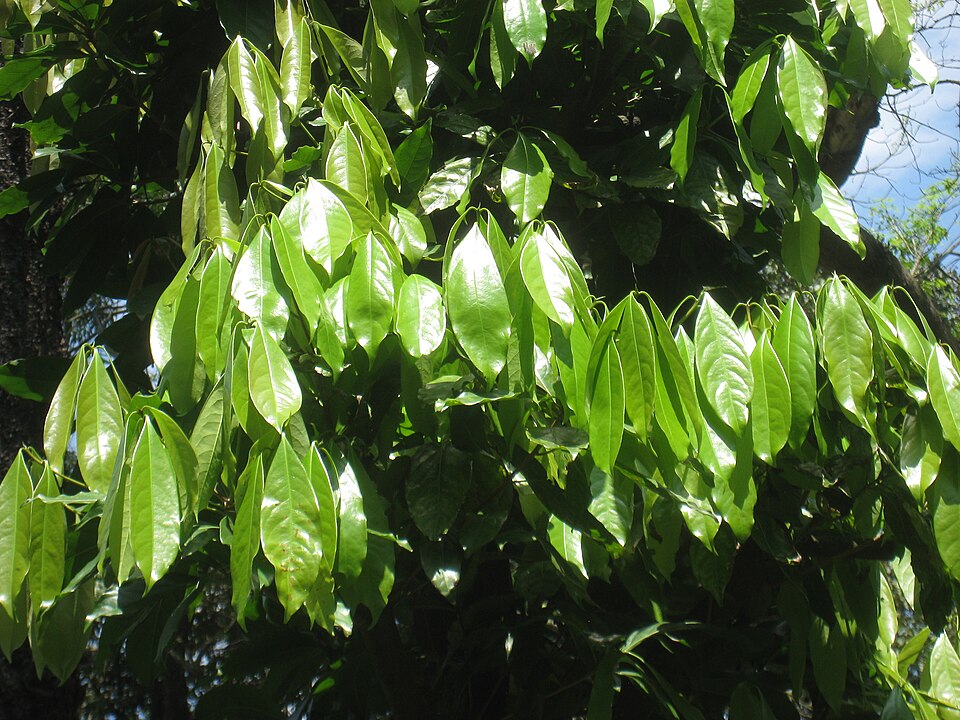
A tree. It grows 25-60 m tall. The trunk can be 30 cm across. The bark has a sweet scent. The leaves are simple and oval but taper to the tip. They can be alternate or in rings. The flowering shoots are 10 cm long and emerge from the base of the leaf. The flowers are in panicles and are white and have a scent. The fruit is fleshy and has one seed.
Edible Uses
The bark is used as a spice and can serve as an alternative to clove or a cinnamon substitute.
Traditional Uses
It can be an alternative to clove and a cinnamon substitute.
This uses section is brief — help expand it
Medicinal Uses
The bark is used as a lotion. It is an essential ingredient in some herbal medicines in Java, where it has many uses, including preventing cramps during pregnancy, being used to stimulate recovery and restore vitality after childbirth, for woman after childbirth, to improve odour, as a tonic, and antispasmodic.
Distribution
It is a tropical plant. It grows in lowland and mountain rain-forests between 400-1,000 m above sea level.
Where It Grows
Asia, Indonesia, Malaysia, New Guinea, SE Asia,
Cultivation
Plants can be grown from seeds.
Other Uses
An essential oil is obtained from the bark. An essential oil is obtained from the fruit. It is used in perfumery. The ground bark is used as a dye fixative in Javanese batiks. The wood is a good quality hardwood. Many Cryptocarya species that grow large enough are utilized for their timber, very often with several species being lumped together indiscriminately. Most species do not have very detailed individual descriptions of their timber - the following is a general description for the species. The heartwood is pinkish brown, grayish brown, reddish brown, or chocolate brown; it is not clearly differentiated from the somewhat lighter-coloured sapwood. The texture is rather fine to medium; the grain usually straight; lustre low; sometimes with an aromatic odour when freshly cut but without any distinctive odour or taste when dry. A silica content of up to 0:82% has been reported for some species. Some species are reported to be easy to season, whilst others have a tendency to warp and split. The wood is generally reported to be not difficult to work with hand and machine tools. Durability is variable with species; most species being not very durable when exposed to the elements. The sapwood is prone to powder-post beetle attack. The wood is often attractive and can be used for purposes such as cabinetwork, flooring, decorative veneers, panelling; whilst it is also often used for joinery, construction etc.
Notes
There are about 200-250 Cryptocarya species. The bark of several Cryptocarya is used to scent coconut oil.
Synonyms
Also Known As
Pohon medang masoi
References (9)
- Macmillan, H.F. (Revised Barlow, H.S., et al), 1991, Tropical Planting and Gardening. Sixth edition. Malayan Nature Society. Kuala Lumpur. p 381 (As Cryptocarya aromatica)
- New crit. Mal. pl. 3:21. 1955
- Purseglove, J.W., 1968, Tropical Crops Dicotyledons, Longmans. p 188 (As Cinnamomum mossoia)
- PROSEA handbook Volume 13 Spices. p 276
- Seidemann J., 2005, World Spice Plants. Economic Usage, Botany, Taxonomy. Springer. p 102 (As Cryptocarya aromatica)
Show all 9 references Hide references
- Sukarya, D. G., (Ed.) 2013, 3,500 Plant Species of the Botanic Gardens of Indonesia. LIPI p 217
- Sukenti, K., et al, 2016, Ethnobotanical study on local cuisine of the Sasak tribe in Lombok Island, Indonesia. Journal of Ethnic Foods. 3 (2016) 189-200 p 198
- Tectona 39:169. 1949 (As Cryptocarya aromatica)
- World Checklist of Useful Plant Species 2020. Royal Botanic Gardens, Kew