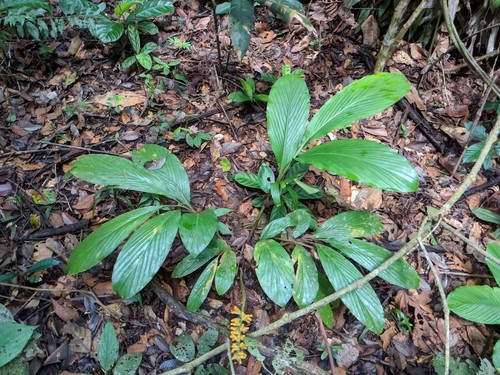
Wurfbainia villosa
(Loureiro) Skornick. & A. D.Poulsen
Ela-ela china, Xanthoid cardamon
iNaturalist· cc-by-nc
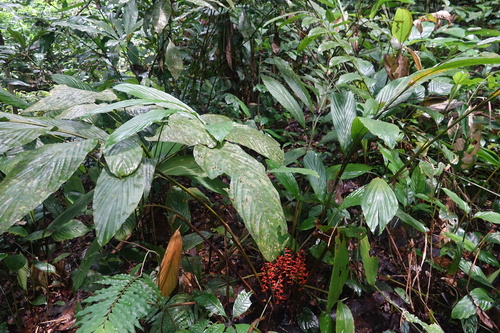
(c) 刘光裕 Liu Guangyu, some rights reserved (CC BY-NC), uploaded by 刘光裕 Liu Guangyu
iNaturalist· cc-by-nc
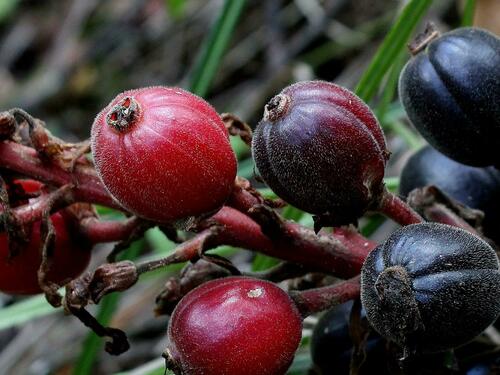
(c) 小铖/Smalltown, some rights reserved (CC BY-NC), uploaded by 小铖/Smalltown
iNaturalist· cc-by-nc
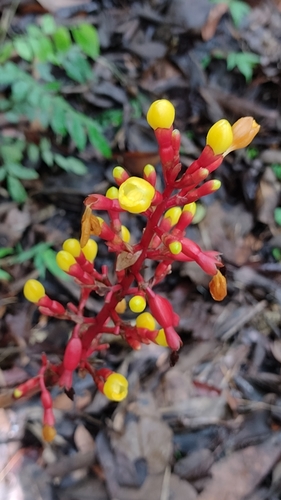
(c) ashi_xsbn, some rights reserved (CC BY-NC)
Summary
Source: WikipediaWurfbainia villosa, also known by its basionym Amomum villosum, (Chinese: 砂仁; pinyin: shārén) is a plant in the ginger family which is grown as a cardamom-like spice throughout Southeast Asia and South China. Like cardamom, the plant is cultivated for its fruits, dry capsules containing strongly aromatic seeds. W. villosa is an evergreen monocotyledonous plant 1.5 to 3.0 m in height, the branches and leaves of which are similar to those of ginger. It grows in the shade of trees and has a reproductive peculiarity whereby those flowers borne on creeping growth at ground level will set fruit, while those borne on aerial branches will not. It blooms in March and April, the colour, translucency and waxy lustre of the flowers being likened traditionally to those of white jade.
Description
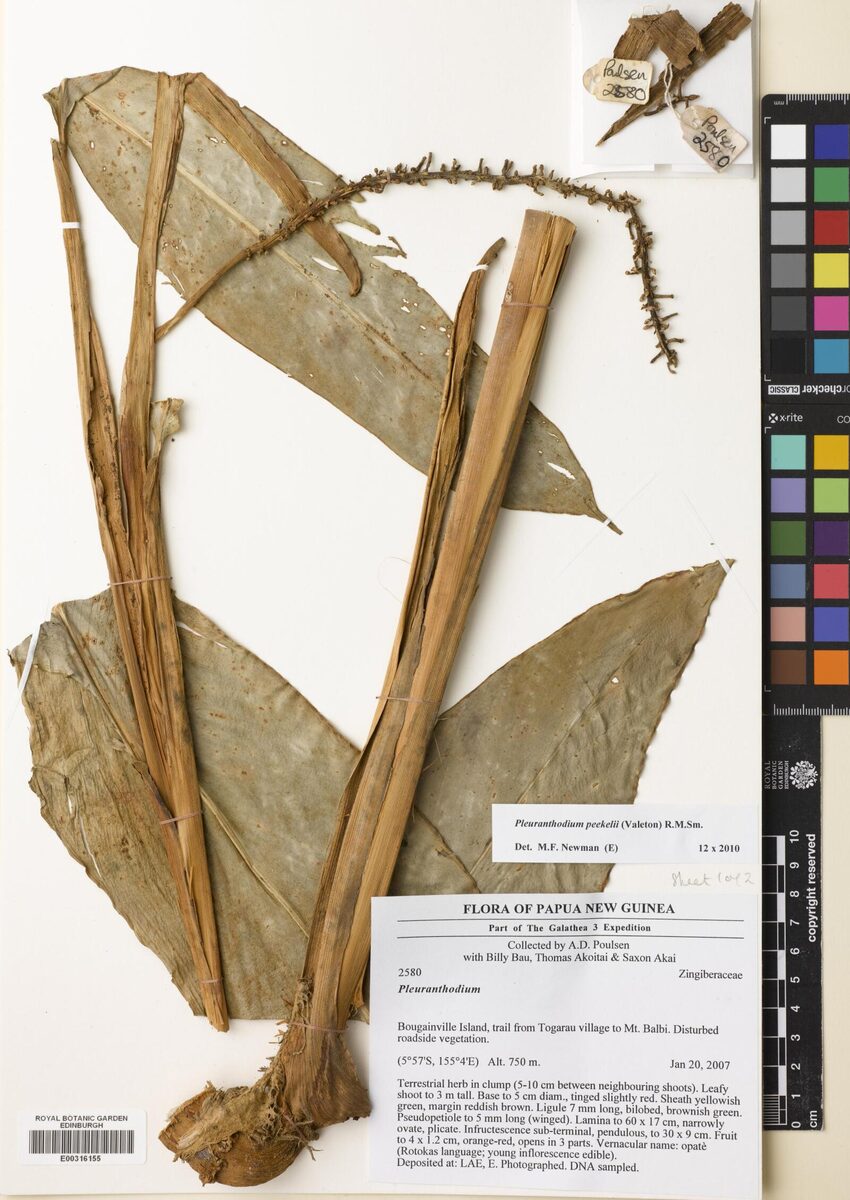
A ginger family herb. It grows 2-3 m tall. The rhizome has a scent. It can be 1.5 cm across. The false stems are 20-50 cm apart. There are 20-40 leaves on each false stem. They become smaller up the stem. The leaf blade is 13-45 cm long by 1-9 cm wide. There are 1-3 flowering stalks near the base. These are 5-15 cm long. The fruit are up to 1.5 cm long. They are prickly. They are greenish-red or reddish-brown. The seeds are angular to round and 2-3 mm across. They are brown and turn black. There are 15 in each section.
Edible Uses
The seed of Wurfbainia villosa is used as a spice in Chinese cuisine, in which it can also form an ingredient in certain recipes for the traditional spice mixture known as five-spice powder. From as early as the time of the Tang dynasty, many ancient books, including, notably, the Compendium of Materia Medica, have been unanimous in describing the taste of W. villosa as "acrid, fresh, and slightly bitter".
Traditional Uses
The seeds are used as a substitute for true cardamom. The leaves are cooked and used as a vegetable.
This uses section is brief — help expand it
Distribution
A tropical plant. It is grown as an under-storey plant in forest. It grows in open lowland and mountain evergreen forest. It grows between 100-1,650 m above sea level. In XTBG Yunnan.
Where It Grows
Asia, Cambodia, China, Hong Kong, India, Indochina, Korea, Laos, Myanmar, SE Asia, Thailand, Vietnam,
Other Information
It is a cultivated food plant. It is important in Laos.
Notes
There are about 150 Amomum species. They are mostly tropical. It is like cardamom.
Synonyms
Also Known As
Kreko shmol, Mak neng khieo
References (12)
- Bircher, A. G. & Bircher, W. H., 2000, Encyclopedia of Fruit Trees and Edible Flowering Plants in Egypt and the Subtropics. AUC Press. p 24 (As Amomum villosum and Amomum echinosphaera)
- Burkill, I.H., 1966, A Dictionary of the Economic Products of the Malay Peninsula. Ministry of Agriculture and Cooperatives, Kuala Lumpur, Malaysia. Vol 1 (A-H) p 927 (As Amomum villosum and Amomum echinosphaera)
- e-monocot.org/taxon/urn:kew.org:wcs:taxon:219541 (As Amomum villosum)
- Hedrick, U.P., 1919, (Ed.), Sturtevant's edible plants of the world. p 50 (As Amomum villosum)
- Fl. cochinch. 1:4. 1790 (As Amomum villosum)
Show all 12 references Hide references
- Hill, M. & Hallam, D., (eds), 1997, Na Hang Nature Reserve, Tat Ke Sector. Site description and conservation evaluation. Hanoi. p 76 (As Amomum villosum)
- Lu, C.L., Zhao, H. Y. and Jiang, J. G., 2013, Evaluation of multi-activites of 14 edible species from Zingiberaceae. Int. J. Food Sci Nutr. 64(1):28-35 (As Amomum villosum)
- PROSEA handbook Volume 13 Spices. p 274 (As Amomum villosum)
- Sang, D. T., & Mizoue, K. O. N., 2012, Use of Edible Forest Plants among Indigenous Ethnic Minorities in Cat Tien Biosphere Reserve, Vietnam. Asian Journal of Biodiversity Vol. 3 (1), p 23-49 (As Amomum villosum)
- www.zingiberaceae.e-monocot.org/taxonomy/term/1192 (As Amomum villosum)
- Xu, You-Kai, et al, 2004, Wild Vegetable Resources and Market Survey in Xishuangbanna, Southwest China. Economic Botany. 58(4): 647-667. (As Amomum villosum)
- World Checklist of Useful Plant Species 2020. Royal Botanic Gardens, Kew