Dysoxylum alliaceum
(Blume) Blume
Buff mahogany tree
iNaturalist· cc-by-nc
(c) Graham Bell, some rights reserved (CC BY-NC)
iNaturalist· cc-by-nc
(c) Graham Bell, some rights reserved (CC BY-NC)
iNaturalist· cc-by-nc
(c) Graham Bell, some rights reserved (CC BY-NC)
Description
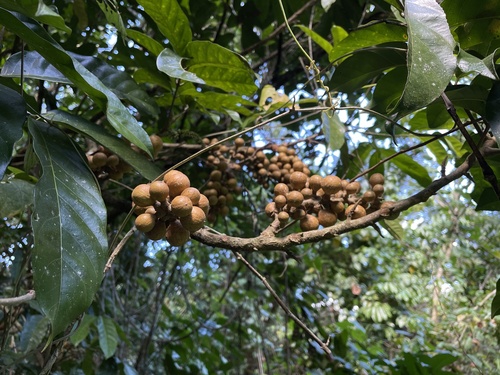
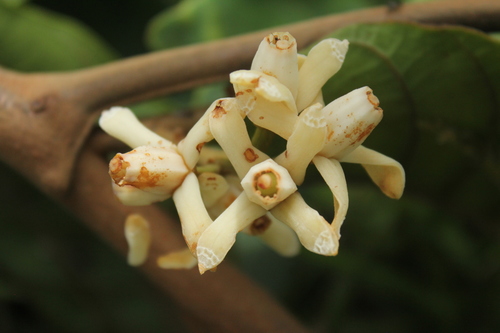
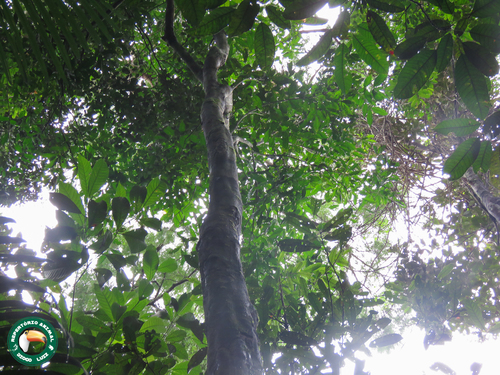
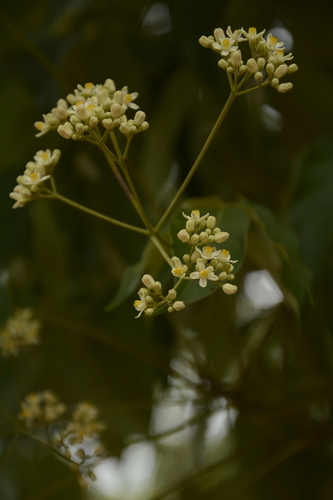
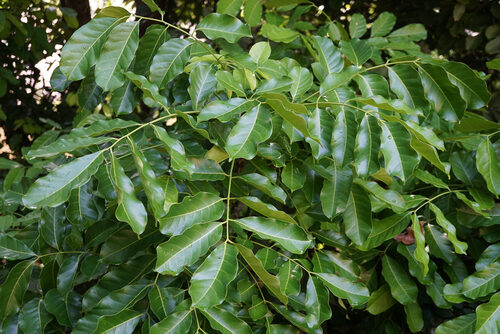
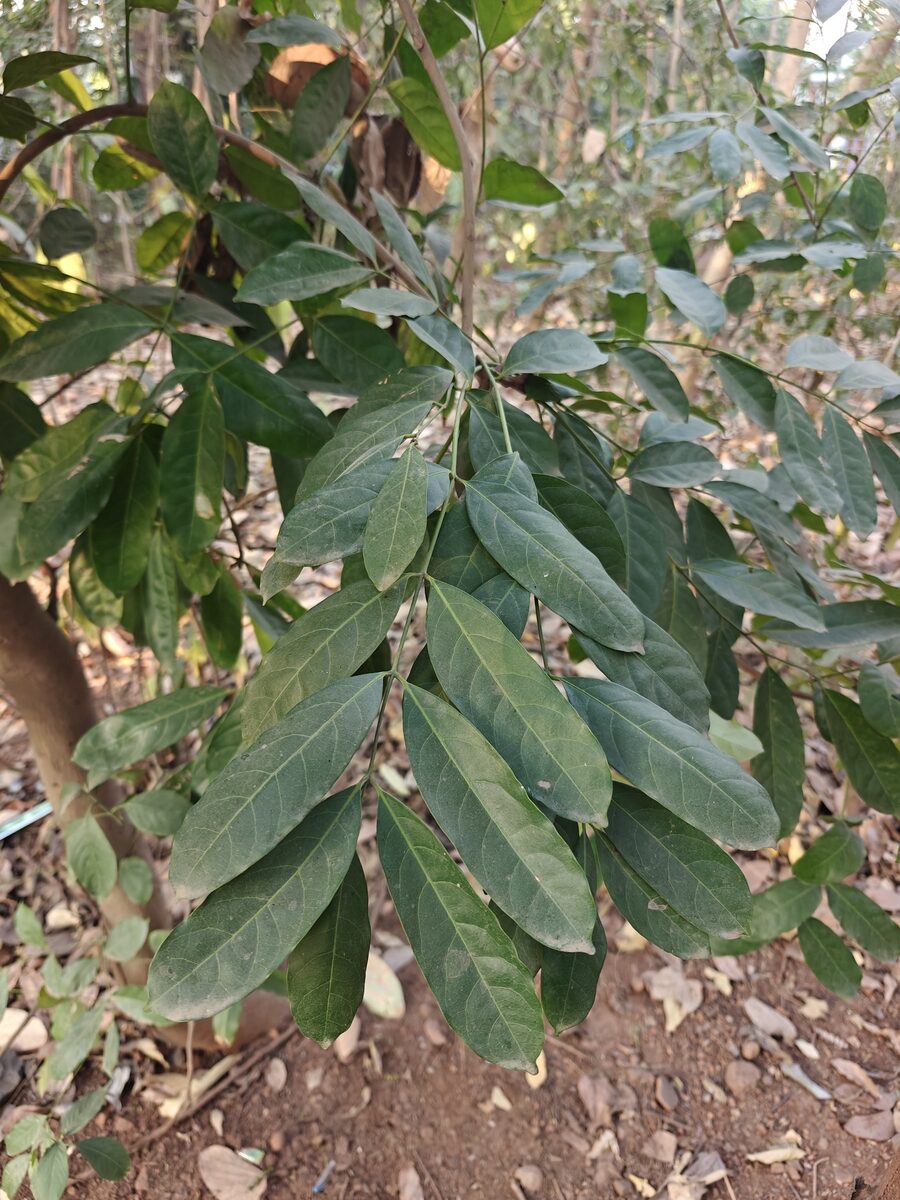
A tree. It grows up to 38 m tall. All parts smell of onion. The trunk can be 80 cm across. It is fluted at the base. It can have buttresses. The leaves are compound with leaflets in pairs but no leaflet at the end. There are 3-8 pairs of leaflets. The leaves can be 60 cm or longer. The leaf stalk is 5-15 cm long. The leaflets are oval and 7.5-25 cm long by 2.5-7.5 cm wide. The flowers are close together with short stalks. The flowering stalk can be 40 cm long. The flowers have a sweet scent. The fruit capsule is 7.5 cm across. It can be 25 cm long and is constricted between the seeds. There are 1-4 seeds per capsule. The seeds are oblong and red.
Edible Uses
Fresh leaves are cooked with fish to impart an onion flavor. The seeds are used with ginger to prepare sauce, and dried seeds have been used as a garlic substitute.
Traditional Uses
Fresh leaves are cooked with fish to give an onion flavour. The seeds are used with ginger to prepare a sauce. The dried seeds have been used as a garlic substitute.
Medicinal Uses
The seeds are prepared with ginger for traditional use.
Known Hazards
The seeds are poisonous and contain dysoxylum acid. (as Dysoxylum euphlebium). The seed of the tree is used locally as a vertebrate poison.
Distribution
A tropical plant. It grows in rainforest. It also grows on limestone. It is usually near streams. It grows up to 1800 m altitude.
Where It Grows
Andaman Islands, Asia, Australia, India, Indochina, Indonesia, Malaysia, Myanmar, Pacific, Papua New Guinea, PNG, Philippines, SE Asia, Solomon Islands, Thailand, Vietnam,
Cultivation
Plants can be grown by seeds.
Other Uses
The whitish wood is light in weight, not resistant to insects. Freshly cut wood emits a fruity odour. Another report says that the heartwood is red-brown, the sapwood fawnish. It is occasionally made into boards and is used for interior construction. Used for house building. The wood is suitable for medium to heavy construction work, planking, flooring, panelling, and for manufacturing high grade furniture, wood pallets, veneer and plywood. We have no more specific information on the wood of this species, but it is one of a group of species that are the source of a commercial timber known in the trade as 'jarum-jarum'. The general description of jarum-jarum is as follows:- The heartwood is orange-red to brick red when fresh,darkening on exposure; it is clearly demarcated from the yellow sapwood. The texture is moderately coarse but uneven due to the abundant of parenchyma; the grain is straight, interlocked, wavy or irregular; there is a watersilk marking on flat-sawn surfaces due to the parenchyma bands. The wood is moderately hard to hard. It is used for purposes such as flooring, furniture, wall panelling, solid door construction, veneer and plywood.
Notes
There are about 80 Dysoxylum species. They occur in Asia and the Pacific in the tropics.
Synonyms
Also Known As
Beka-beka bukit, Cape York cedar, Ch(awj)c kh(ees), Kalimutain, Kambutong, Kasai tembaga, Kayu bawang, Ki bawang, Kulim burong, Kuling-bubui, Langsat munyit, Langsat-langsat, Latak manuk, Longkang bawang, Marburung, Paluahan, Pela, Pohon kedoya bawang, Sibaumater bau, Ta suea khao
References (13)
- Cooper, W. and Cooper, W., 2004, Fruits of the Australian Tropical Rainforest. Nokomis Editions, Victoria, Australia. p 288
- Fern, K., 2012, Tropical Species Database http://theferns.info/tropical/ (As Dysoxylum euphlebium)
- French, B.R., 2010, Food Plants of Solomon Islands. A Compendium. Food Plants International Inc. p 323
- Martin, F.W. & Ruberte, R.M., 1979, Edible Leaves of the Tropics. Antillian College Press, Mayaguez, Puerto Rico. p 199 (As Dysoxylum euphlebium)
- Merrill, E. D., 1914, New or Noteworthy Philippine Plants Vol. 10 Philippine Journal of Science. http://www.biodiversitylibrary.org (As Dysoxylum euphlebium)
Show all 13 references Hide references
- Milow, P., et al, 2013, Malaysian species of plants with edible fruits or seeds and their evaluation. International Journal of Fruit Science. 14:1, 1-27
- PROSEA handbook Volume 13 Spices. p 252, 276
- Seidemann J., 2005, World Spice Plants. Economic Usage, Botany, Taxonomy. Springer. p 141
- Sosef, M. S. M., Hong, L. T., & Prawirohatmodjo, S., (Eds.), 1998, Timber tree: Lesser-known timbers. Plant Resources of South-East Asia, 5(3), p 197
- Sukarya, D. G., (Ed.) 2013, 3,500 Plant Species of the Botanic Gardens of Indonesia. LIPI p 252
- Suwardi, A. B., et al, 2020, Wild edible fruits generate substantial income for local people of the Gunung Leuser National Park, Aceh Tamiang Region. Ethnobotany Research & Applications 20:11
- Wongprasert, T. et al, 2011, A Synoptic Account of the Meliaceae of Thailand. Thai For. Bull. 39:210-266
- World Checklist of Useful Plant Species 2020. Royal Botanic Gardens, Kew