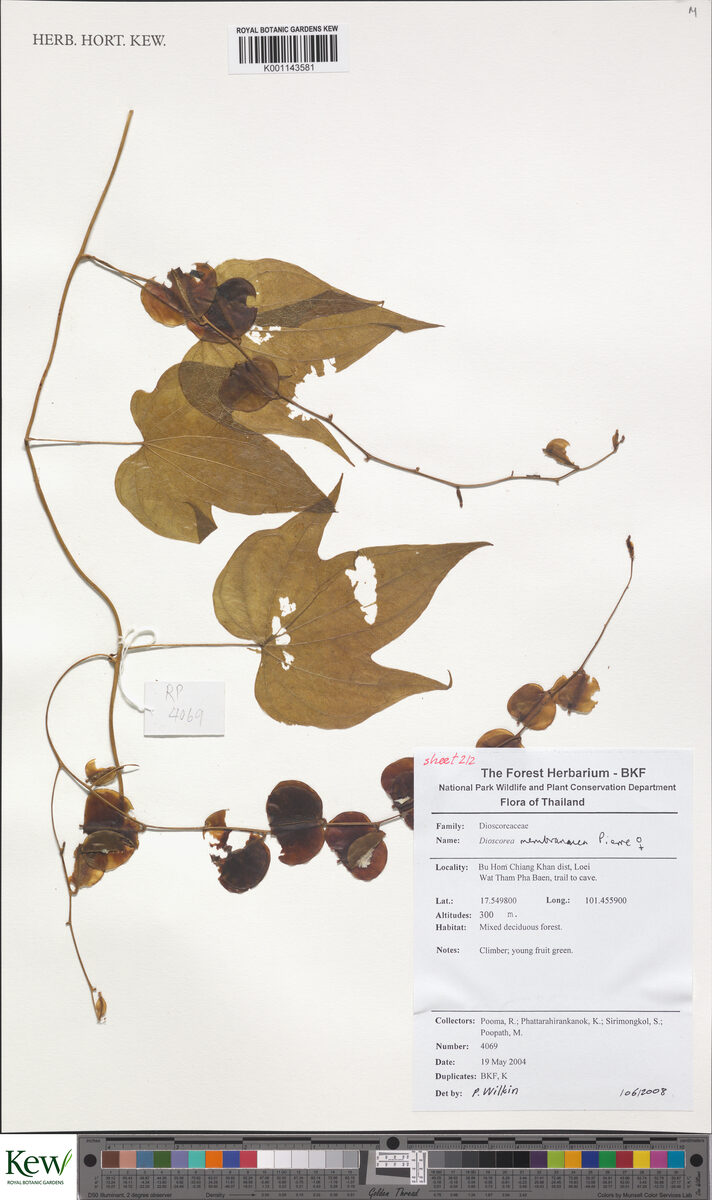
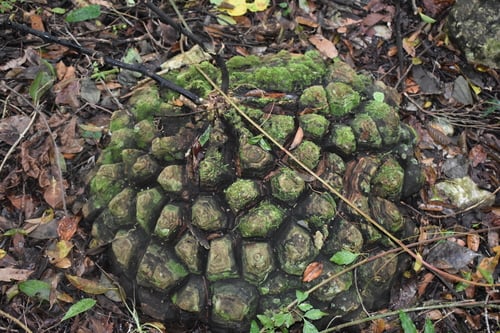
Dioscorea filiformis
Blume
wikimedia· cc-by-sa
Wikimedia Commons - UPLB MNH Digital Archives
Description
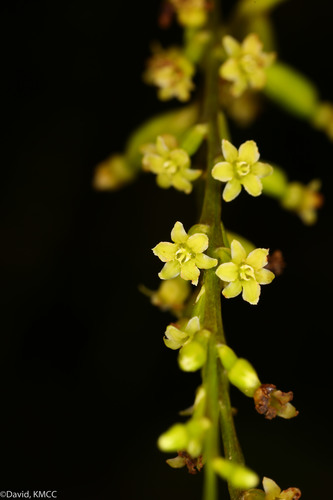
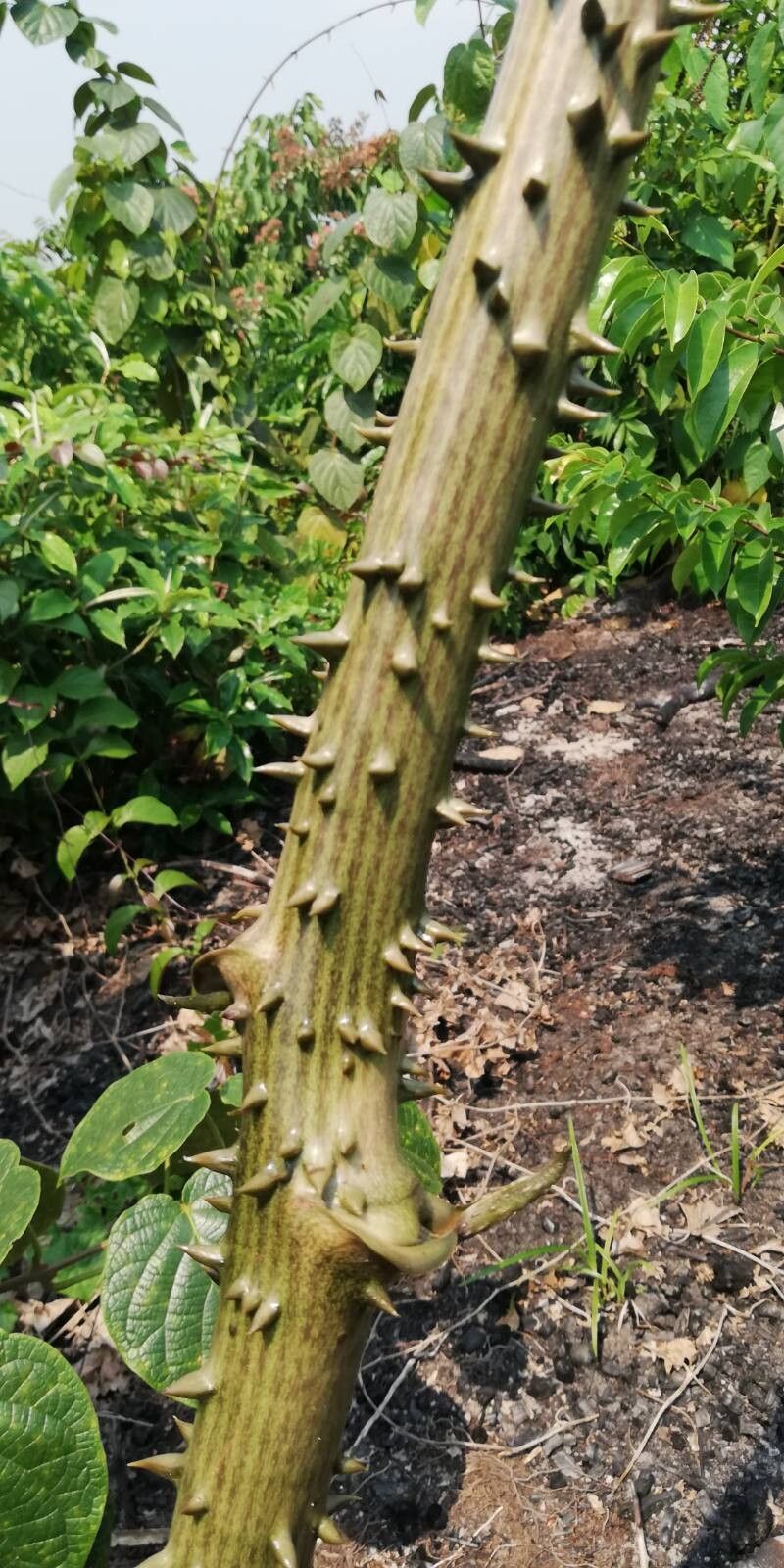
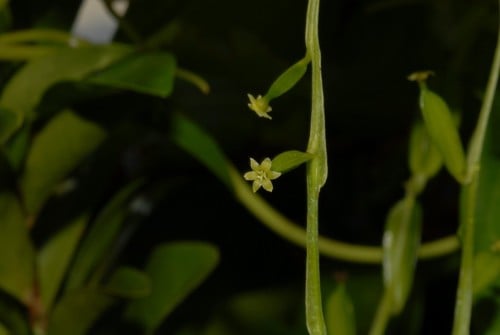
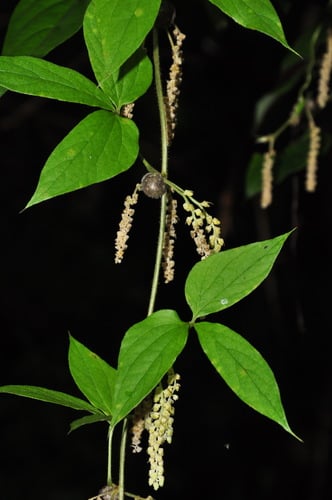
A yam. It keeps growing from year to year by growing from the tubers. The stems are round and do not have thorns. They twine to the right. It often has bulbils. The tubers are long and narrow. They are 50 cm long by 2 cm across. The flesh is white. The leaves are simple or mostly alternate but can be opposite on larger stems. The leaf stalk is shorter than the blade. Leaves can be 10 cm long by 7 cm wide. The base is ear shaped. The male flower stalks are leafless and zig zag. Female flower stalks are 20 cm long. The capsules have wings.
Edible Uses
The tubers are boiled and eaten, and are an important food source in Peninsula Thailand.
Traditional Uses
The tubers are boiled and eaten.
This uses section is brief — help expand it
Distribution
A tropical plant. It grows in the lowland often on limestone cliffs.
Where It Grows
Asia, Cambodia, Indochina, Indonesia, Malaysia, Pacific, Philippines, SE Asia, Thailand,
Other Information
It is an important food in Peninsula Thailand.
Notes
There are about 650 species of Dioscorea.
Synonyms
Also Known As
Aroi huwi curuk, Balun, Dudung, Kiroi, Kiru, Man-thian, Ma thien, Phak-maeo-daeng, Wauh
References (7)
- Castillo, C., 2013, The Archaeobotany of Khao Sam Kaeo and Phu Khao Thong: The Agriculture of Late Prehistoric Southern Thailand. Ph. D. thesis University College, London p 378
- Eiadthong, W., et al, 2010, Management of the Emerald Triangle Protected Forests Complex. Botanical Consultant Technical Report. p 23 (As Dioscorea myriantha)
- Kachenchart, B., et al, 2008, Phenology of Edible Plants at Sakaerat Forest. In Proceedings of the FORTROP II: Tropical Forestry Change in a Changing World. Bangkok, Thailand. (As Dioscorea myriantha)
- Lim, T. K., 2015, Edible Medicinal and Non Medicinal Plants. Volume 9, Modified Stems, Roots, Bulbs. Springer p 35
- Mareenoon, K. et al, 2008, Ethnobotany of Dioscorea L. (Dioscoreaceae), a Major Food Plant of the Sakai Tribe at Banthad Range, Peninsular Thailand. Ethnobotany Reaearch & Applications 6:385-394
Show all 7 references Hide references
- PROSEA handbook Volume 9 Plants yielding non-seed carbohydrates. p 172
- World Checklist of Useful Plant Species 2020. Royal Botanic Gardens, Kew