Dioscorea membranacea
Pierre ex Prain & Burkill
gbif· cc-by
Royal Botanic Gardens, Kew
gbif· cc-by
Royal Botanic Gardens, Kew
gbif· cc-by
Royal Botanic Gardens, Kew
Description
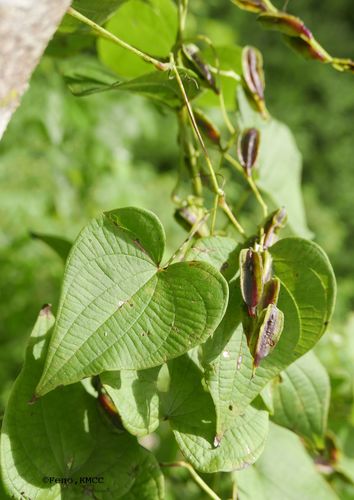
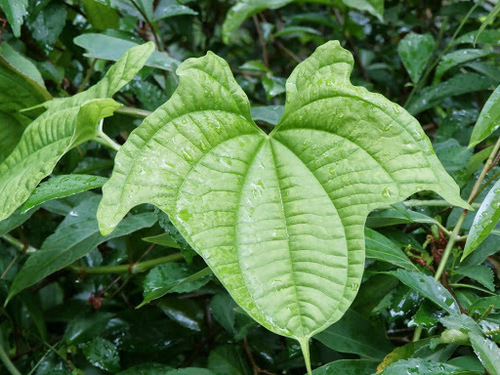
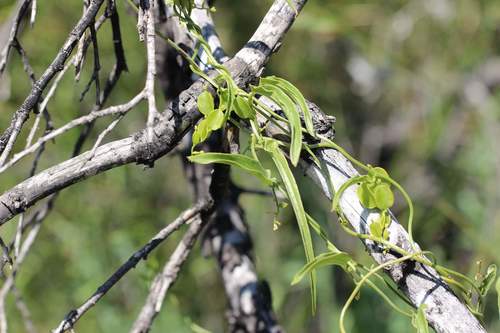
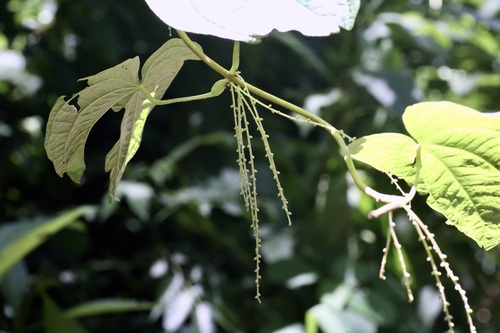
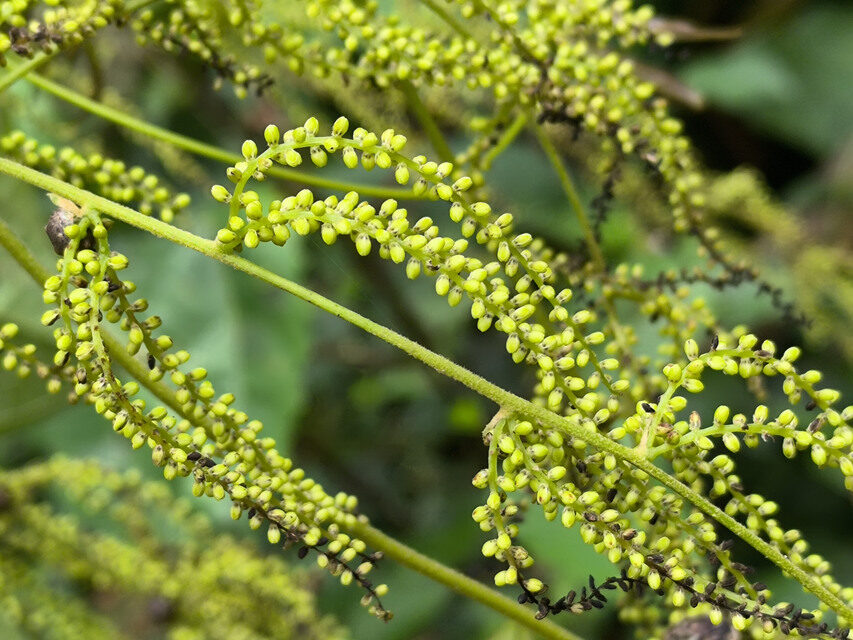
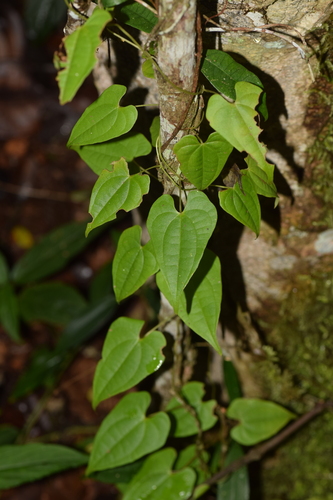
A yam. The vine climbs 10 m tall. The rhizome is 4-8 cm long by 1-5 cm wide. It is branching and spreading. The vine twines to the left. The leaves have a 3-5 pointed lobes. The leaves are simple and alternate. The leaf stalks are 2-13 cm long.
Edible Uses
The tuber, root, and rhizome are edible; rhizome sections 10–16 cm long are used for cultivation and consumption. It serves as a famine food.
Medicinal Uses
Used as a medicine and investigated as an anticancer plant.
Distribution
It is a tropical plant.
Where It Grows
Asia, Indochina, Laos, Myanmar, SE Asia, Thailand, Vietnam,
Cultivation
Sections of the rhizome 10-16 cm long are used.
Other Information
It is a famine food and a medicine.
Notes
It is used as an anticancer plant.
Also Known As
Chatong, Hua-khao-yen
References (3)
- Lim, T. K., 2015, Edible Medicinal and Non Medicinal Plants. Volume 9, Modified Stems, Roots, Bulbs. Springer p 36
- Mareenoon, K. et al, 2008, Ethnobotany of Dioscorea L. (Dioscoreaceae), a Major Food Plant of the Sakai Tribe at Banthad Range, Peninsular Thailand. Ethnobotany Reaearch & Applications 6:385-394
- Saekoo, J. et al, 2010, Cytotoxic effect and its mechanism of dioscorealide B from Disocorea membranacea against breast cancer cells. J. Med. Assoc. Thai. 2010 Dec.:93 Suppl. 7:S277-83