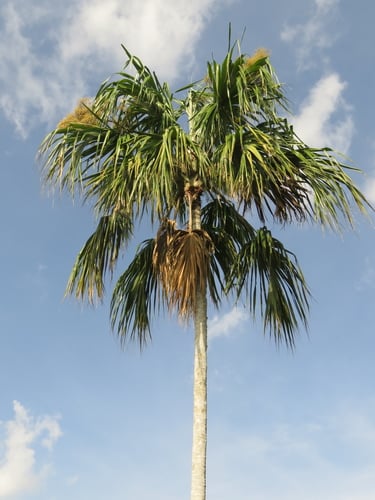
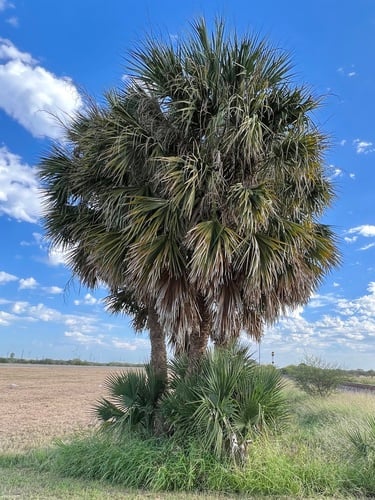
Wettinia maynensis
Spruce
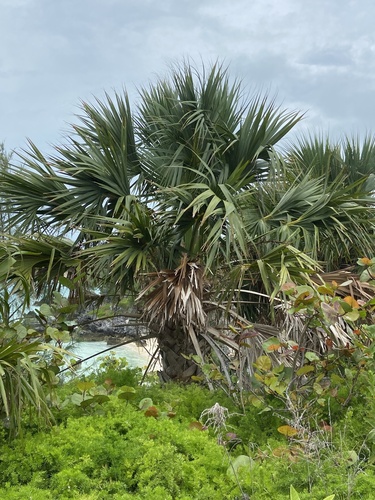
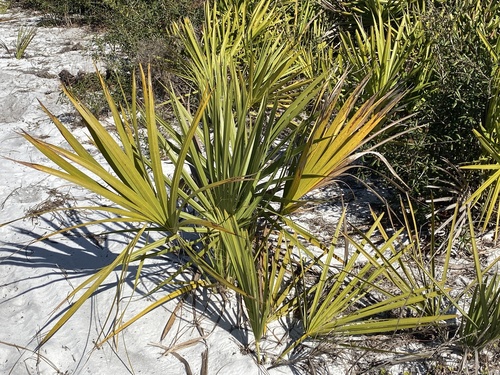
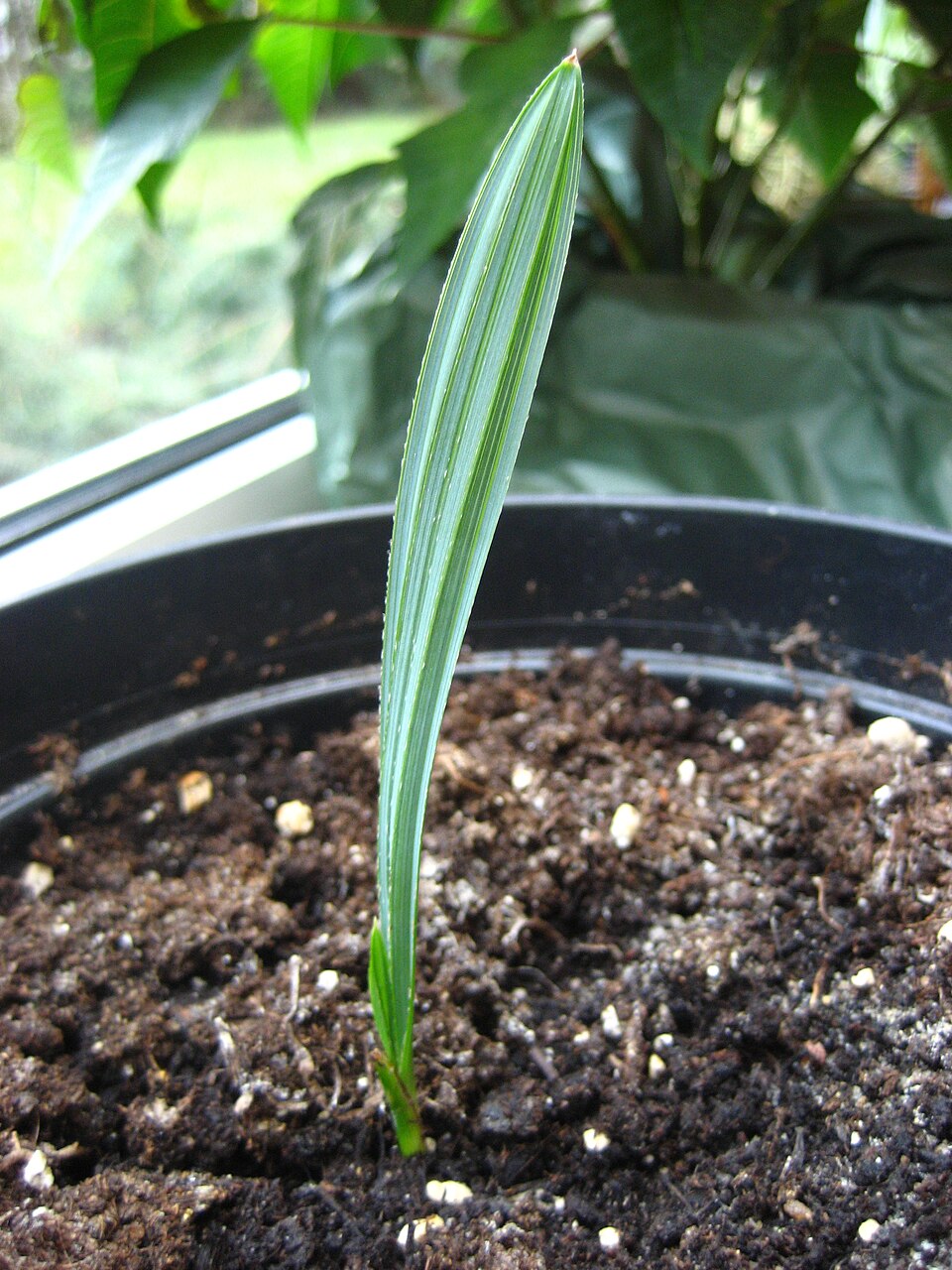
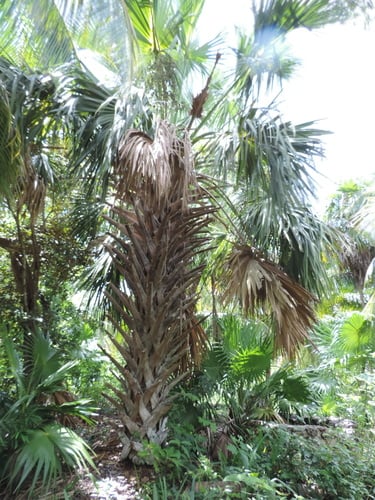
Wettinia palm
iNaturalist· cc-by-nc
(c) Jorge L. Peña, some rights reserved (CC BY-NC), uploaded by Jorge L. Peña
iNaturalist· cc-by-nc
(c) Jorge L. Peña, some rights reserved (CC BY-NC), uploaded by Jorge L. Peña
iNaturalist· cc-by-nc
(c) Jorge L. Peña, some rights reserved (CC BY-NC), uploaded by Jorge L. Peña
Description
A solitary palm. It grows 6-14 m tall. The trunk is 8-15 cm across. There are 5-10 leaves. The old leaves hang from the palm. There are 31-43 leaflets on each side of the leaf. They are not divided and hang down. There are 3-5 flowering stalks from each node. There are 5-7 short, stout flowering branches. These become densely packed with fruit. These form a pyramid shape. The fruit are 1.8-2.5 cm long by 1.5-2 cm wide. They are covered with white hairs.
Edible Uses
Leaves - cooked. The apical bud, often called the 'palm heart', is cooked and eaten as a vegetable. Eating this bud leads tot he death of the tree since it is unable to produce new side shoots.
Distribution
A tropical plant. They grow in lowland and mountain rainforest between 200-1,600 m altitude.
Where It Grows
Amazon, Andes, Brazil, Colombia, Ecuador, Peru, South America,
Other Uses
The outsides of the stems are hard. They are used as posts in construction.
Synonyms
Also Known As
Bambil, Camonilla, Chonta, Corunta, Gualte, Kayebeme, Kayebepa, Kili, Kili yura, Kuunt, Pambil, Paxiubinha-de-macaco, Pona, Ponilla, Pullo coroto, Quilli, Quirihua, Teren, Terene, Walte, Winico
References (11)
- Duchelle, A. E., 2007, Observations on Natural Resource use and Conservation by the Shuar In Ecuador's Cordillera del Condor. Ethnobotany Research & Applications 5:005-023
- Eynden, Van den, V., & Cueva E., Cabrera, O., 2004, Edible Palms of Southern Ecuador. Palms. Vol 48(3):141-147
- Grandtner, M. M. & Chevrette, J., 2013, Dictionary of Trees, Volume 2: South America: Nomenclature, Taxonomy and Ecology. Academic Press p 704
- Henderson, A., Galeano, G and Bernal, R., 1995, Field Guide to the Palms of the Americas. Princeton. p 116
- Kermath, B. M., et al, 2014, Food Plants in the Americas: A survey of the domesticated, cultivated and wild plants used for Human food in North, Central and South America and the Caribbean. On line draft. p 925
Show all 11 references Hide references
- Marcia, M. J., et al, 2011, Palm Uses in Northwestern South America: A Quantitative Review. Bot. Rev. (2011) 77:462-570
- Roa, J. A. G. & Boada, D. S. G., 2018, Fundación para el Fortalecimiento de la Fruticultura y Plantas Alimenticias no Convencionales en Colombia.
- Torre, de la L., et al, 2008, Enciclopedia de las Plantas Útiles del Ecuador. Herbario QCA. Pontificia Universidad Católica del Ecuador. p 209
- Van den Eynden, V., et al, 2003, Wild Foods from South Ecuador. Economic Botany 57(4): 576-603
- Van den Eynden, V. et al, 2004, Edible Palms of Southern Ecuador. Palms Volume 48(3):142-148
- World Checklist of Useful Plant Species 2020. Royal Botanic Gardens, Kew