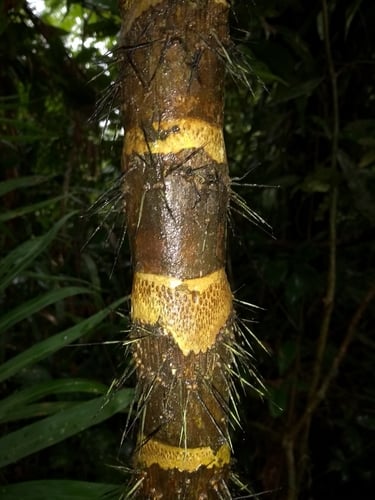
Sabal mexicana
Mart.
Mexican Palmetto
iNaturalist· cc-by
(c) CK2AZ, some rights reserved (CC BY), uploaded by CK2AZ
iNaturalist· cc-by
(c) Whitney Cranshaw, Colorado State University, United States, some rights reserved (CC BY)
iNaturalist· cc-by-nc
(c) Rich Kostecke, some rights reserved (CC BY-NC), uploaded by Rich Kostecke
Summary
Source: WikipediaSabal mexicana is a species of palm tree that is native to far southern North America. Common names include Rio Grande palmetto, Mexican palmetto, Texas palmetto, Texas sabal palm, palmetto cabbage and palma de mícharos. The specific epithet, "mexicana", is Latin for "of Mexico."
Description
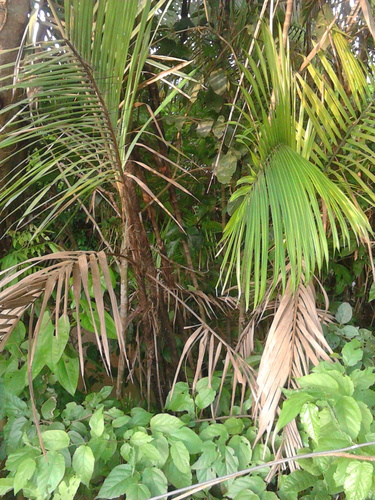
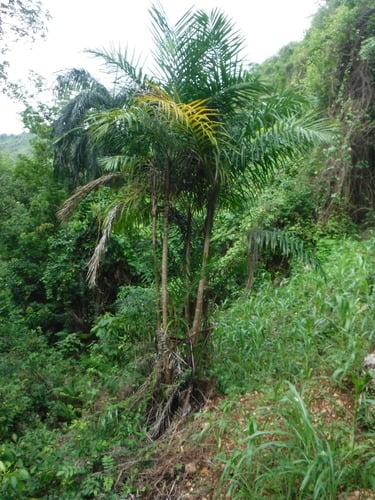
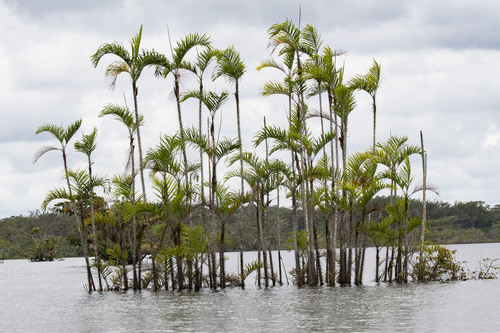
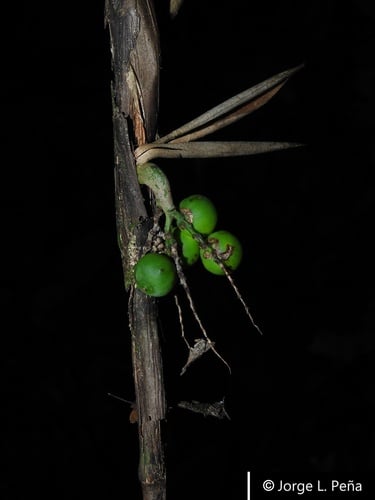
A large palm. The trunk is 15-20 m high and 35-60 cm across. The trunk is grey and covered with old leaf bases. The leaves are big and fan shaped. They are greyish-green and 2-3 m long. The leaf stalk runs into the leaf blade. The leaf stalks are stiff and 1-1.5 m long. The leaves are divided for about 3/4 of their length into numerous segments which droop. The flower stalks grow among the leaves. The flowers are white. The fruit occur in large clusters and have small dark black fruit. These are 1.5 cm long.
Edible Uses
The fruit is a small dry berry up to 25mm in diameter with a thin sweet flesh. No edibility records have been found specifically for this species, but the following uses recorded for the related S. palmetto very probably apply here. The fruit can be eaten raw or cooked — it is sweet and pleasant, a nourishing food though said to be an acquired taste; the fruit of S. palmetto is up to 12mm long and 3mm wide. Young leaves can be eaten raw or cooked and are considered an excellent food. The sap is sweet.
Traditional Uses
The palm heart is eaten. It is dried and pounded into a meal. The fruit is eaten. It only has a small amount of pulp.
This uses section is brief — help expand it
Medicinal Uses
None known.
Distribution
A tropical plant. It will grow in tropical and temperate regions. It is common in the lowland vegetation of Mexico. It grows near sea level. A very hardy palm. It thrives in hot dry climates. It suits hardiness zones 9-12.
Where It Grows
Asia, Australia, Belize, Central America*, El Salvador, Guatemala, Honduras, Indonesia, Mexico, Nicaragua, North America, SE Asia, USA (Texas),
Cultivation
Succeeds in most fertile moist but well-drained soils in a sheltered sunny position. Although it prefers a humid atmosphere, this species is tolerant of arid atmospheres so long as it has plenty of moisture available at the roots. Plants from the north of its range (in Texas) have a reasonably marginal frost-tolerance and might be suitable for growing outdoors in the very mildest areas of the country. Palms usually have deep penetrating root systems and generally establish best when planted out at a young stage. However, older plants are substantially more cold tolerant than juvenile plants. In areas at the limit of their cold tolerance, therefore, it is prudent to grow the plants in containers for some years, giving them winter protection, and only planting them into their permanent positions when sheer size dictates. This species can also be transplanted even when very large. Although the thick fleshy roots are easily damaged and/or desiccated, new roots are generally freely produced. It is important to stake the plant very firmly to prevent rock, and also to give it plenty of water until re-established - removing many of the leaves can also help. A very variable plant in the wild.
Propagation
Sow seed as soon as ripe in a warm greenhouse at no less than 24°C — stored seed is very slow to germinate. Pre-soaking seed for 24 hours in warm water before sowing may reduce germination time. Plants form a long tap-root before producing a shoot. Fresh seed typically germinates in 3–4 months at 25°C. Prick seedlings out into individual pots once large enough to handle and grow on in the greenhouse for at least their first two winters. Plant out in late spring or early summer after the last expected frosts, and consider providing cold protection through at least the first winter outdoors.
Other Uses
The leaves are used for making baskets, chair seats, or thatch. The following uses are recorded for S. palmetto and very probably apply here as well. An excellent fibre is obtained from the leaf stalks — the finest quality comes from young leaf stalks still in the bud, with coarser material from older leaves or the bases of old leaf stalks surrounding the bud. The fibres are up to 50cm long and are harvested commercially to make brushes, particularly those required to remain stiff in hot water or caustics. The roots contain tannin.
Production
The young plants grow quite quickly.
Other Information
They are cultivated for thatch in Yucatan in Mexico.
Notes
There are 16 Sabal species.
Synonyms
Also Known As
Aptas, Bon xa'an, Guano bon, Jippi Jappa, Palmareal, Palma redonda, Rio Grande Palmetto, Texas Palmetto, Oaxaca palmetto, Palem sabal texas, Palma apachite, Palma de micharo, Palma real
References (17)
- Balick, M.J. and Beck, H.T., (Ed.), 1990, Useful palms of the World. A Synoptic Bibliography. Colombia p 251, 597,
- Cundall, P., (ed.), 2004, Gardening Australia: flora: the gardener's bible. ABC Books. p 1292
- Facciola, S., 1998, Cornucopia 2: a Source Book of Edible Plants. Kampong Publications, p 31 (As Sabal texana)
- Gibbons, M., 2003, A pocket guide to Palms. Chartwell Books. p 192
- Haynes, J., & McLaughlin, J., 2000, Edible palms and Their Uses. University of Florida Fact sheet MCDE-00-50-1 p 12
Show all 17 references Hide references
- Henderson, A., Galeano, G and Bernal, R., 1995, Field Guide to the Palms of the Americas. Princeton. p 66
- Hibbert, M., 2002, The Aussie Plant Finder 2002, Florilegium. p 282
- Hist. nat. palm. 3:246, t. 8. 1838
- Jones, D.L., 1994, Palms throughout the World. Smithtonian Institution, Washington. p 347
- JSTOR Global Plants edible
- Kermath, B. M., et al, 2014, Food Plants in the Americas: A survey of the domesticated, cultivated and wild plants used for Human food in North, Central and South America and the Caribbean. On line draft. p 770
- Piedra-Malagón, E. M. et al, 2022, Edible native plants of the Gulf of Mexico Province. Biodiversity Data Journal 10: e80565 p 12
- Riffle, R.L. & Craft, P., 2003, An Encyclopedia of Cultivated Palms. Timber Press. p 446
- Schuler, S., (Ed.), 1977, Simon & Schuster's Guide to Trees. Simon & Schuster. No. 66 (As Sabal texana)
- Segura, S. et al, 2018, The edible fruit species in Mexico. Genet Resour Crop Evol (2018) 65:1767–1793
- Standley, P. C., 1926, Trees and Shrubs of Mexico. Contributions from the United States National Herbarium Vol. 23 p 72 (As Inodes texana)
- Sukarya, D. G., (Ed.) 2013, 3,500 Plant Species of the Botanic Gardens of Indonesia. LIPI p 816 (As Sabal texana)