Sabal bermudana
L. H. Bailey
Bermuda palm
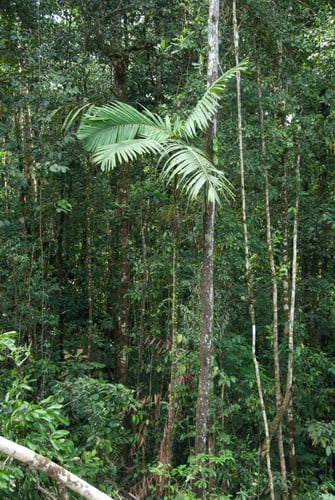
iNaturalist· cc-by-nc
(c) maryah, some rights reserved (CC BY-NC)
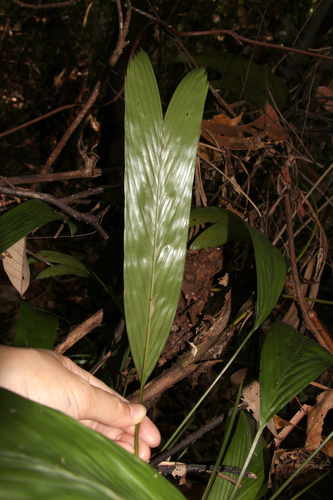
iNaturalist· cc-by-nc
(c) James Bailey, some rights reserved (CC BY-NC)
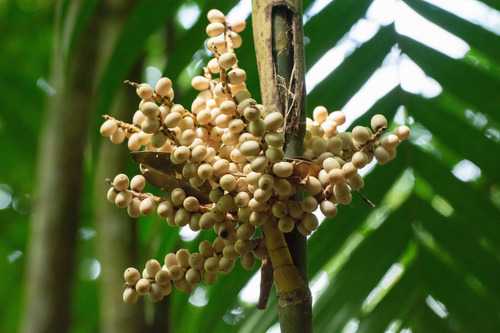
iNaturalist· cc-by-nc
(c) Luke Foster, some rights reserved (CC BY-NC)
Summary
Source: WikipediaSabal bermudana, commonly known as the Bermuda palmetto or bibby-tree, is one of 15 species of palm trees in the genus Sabal and is endemic to Bermuda although reportedly naturalized in the Leeward Islands. It was greatly affected by the introduction of non-native plants such as the Chinese fan palm, which created competition for space that it usually lost.
Description
A palm. It has a single stem. It grows 7 m tall. The trunk is 20-35 cm across. There are 15-25 leaves. There are 85-95 leaflets. They are rigid and joined at their base for about half their length. The flowering stalk branches 3 times. The stalk arches over and is not longer than the leaf stalk. The fruit are pear shaped. They are black and 1.3-1.9 cm across. It is like Sabal palmetto but has larger, pear shaped fruit.
Edible Uses
Bermudians used to use, for a short period, the leaflets of the palm to weave into hats and export them to the United Kingdom and other countries. Sabal bermudana also had holes drilled into its trunk and sap extracted to make "bibby", a strong alcoholic beverage. During the 17th century, most houses in Bermuda had palmetto-thatched roofs.
Traditional Uses
The fruit can be used to produce a flour. The growing tip can be cooked and eaten.
This uses section is brief — help expand it
Distribution
It is a tropical plant. It grows in dry and marshy locations in open areas in Bermuda. In Townsville Queens BG.
Where It Grows
Australia, Bermuda, Central America, SE Asia, Singapore,
Cultivation
Native to the subtropical islands of Bermuda, the plant can be cultivated in the tropics and warm temperate areas. Succeeds in full to part sun. Prefers a well-drained soil. The plant is somewhat salt tolerant. A slow-growing plant.
Other Uses
Puerto Rican straw hats are made from the young leaves of this ]plant, after curing, bleaching, and drying. The leaf fibres are employed also for making baskets, mats, and hammocks. The older leaves serve as thatch.
Synonyms
Also Known As
Bermuda palmetto
References (5)
- Balick, M.J. and Beck, H.T., (Ed.), 1990, Useful palms of the World. A Synoptic Bibliography. Colombia p 292
- Henderson, A., Galeano, G and Bernal, R., 1995, Field Guide to the Palms of the Americas. Princeton. p 64
- Hodge, W.H., 1960, Bermuda's palmetto. Principes. 4(3):90-100
- Marinelli, J. (Ed), 2004, Plant. DK. p 378
- Recher, P, 2001, Fruit Spirit Botanical Gardens Plant Index. www.nrg.com.au/~recher/ seedlist.html p 7 (As Sabal princeps)