Urochloa panicoides
P. Beauvois
Urochloa grass, Liverseed grass, Kuri millet
iNaturalist· cc-by-nc-sa
(c) David Hoare, some rights reserved (CC BY-NC-SA), uploaded by David Hoare
iNaturalist· cc-by-nc
(c) Ran Dai, some rights reserved (CC BY-NC)
Summary
Source: WikipediaUrochloa panicoides is a fodder grass originating in Southern Africa.
Description
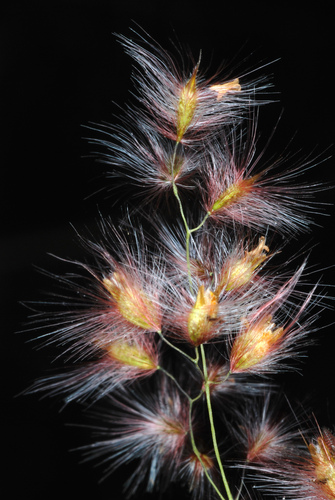
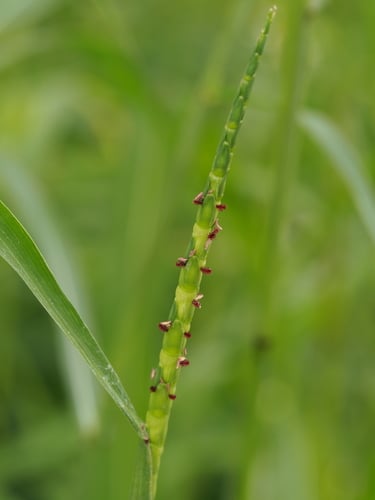
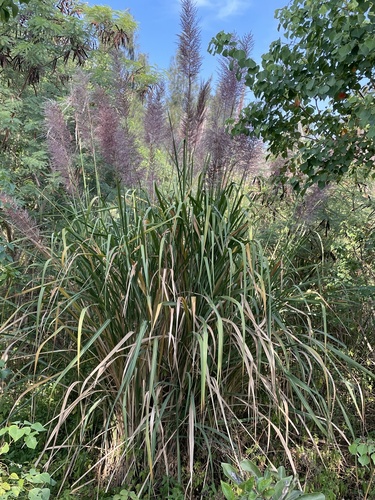
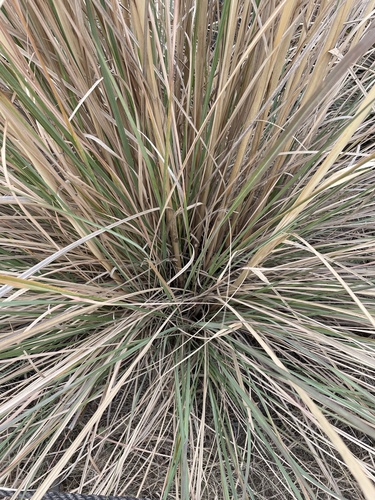
An annual millet grass. It forms loose tufts. It is 20-80 cm tall. The leaf sheaths are loose. The blades are sword shaped and 5-15 cm long by 0.5-1.5 cm wide.
Edible Uses
The seeds are ground into flour and mixed with maize or beans for bread-making, or sun-dried, crushed, winnowed, and cooked with salt to eat alongside beans.
Traditional Uses
The seeds are ground into flour and then mixed with maize or beans before making bread. The seeds are sun dried then crushed and winnowed before being cooked with salt and eaten with beans.
Distribution
It grows in warm temperate places. It grows in moist grasslands and lake sides. In Africa in grows between sea level and 1,600 m above sea level. In Argentina it grows between 300-700 m above sea level. In Sichuan and Yunnan.
Where It Grows
Africa, Argentina, Asia, Australia, Bhutan, Botswana, China, East Africa, Himalayas, India, Indochina, Laos, Malawi, Middle East, Mozambique, Myanmar, Pakistan, SE Asia, South Africa, Southern Africa, St Helena, Sudan, Yemen, Zambia, Zimbabwe,
Notes
There are 12 Urochloa species. Chemical composition (per grams/100g): Protein = 10.50g. Fat = 4.0g. Carbohydrate (soluble) = 42.11g. Fibre = 17.02g. Ash = 16g. Water = 8.82g. Calories = 258.
Synonyms
Also Known As
Barajalganti, Chatta, Jalganti, Jhun, Kaadubillisaamal hullu, Kowin, Kuri, Kuriya, Lei shu wei fu cao, Podru, Sallawudu
References (8)
- Ambasta, S.P. (Ed.), 2000, The Useful Plants of India. CSIR India. p 425, 663
- Arora, R. K., 2014, Diversity in Underutilized Plant Species - An Asia-Pacific Perspective. Bioversity International. p 17
- Ess. Agrostogr. 53, t. 11, fig. 1. 1812
- Flora of Pakistan. www.eFloras.org
- Hussey, B.M.J., Keighery, G.J., Cousens, R.D., Dodd, J., Lloyd, S.G., 1997, Western Weeds. A guide to the weeds of Western Australia. Plant Protection Society of Western Australia. p 73
Show all 8 references Hide references
- Paczkowska, G. & Chapman, A.R., 2000, The Western Australian Flora. A Descriptive Catalogue. Western Australian Herbarium. p 121
- PATON & DUNLOP, (As Panicum javanicum)
- Singh, H.B., Arora R.K.,1978, Wild edible Plants of India. Indian Council of Agricultural Research, New Delhi. p 85