Balanites orbicularis
Sprague
No photos yet for Balanites orbicularis
Sign in to contribute a photoDescription
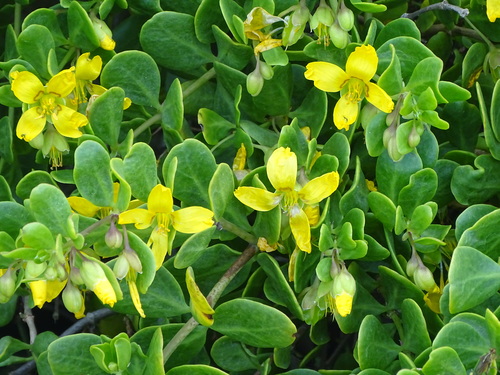
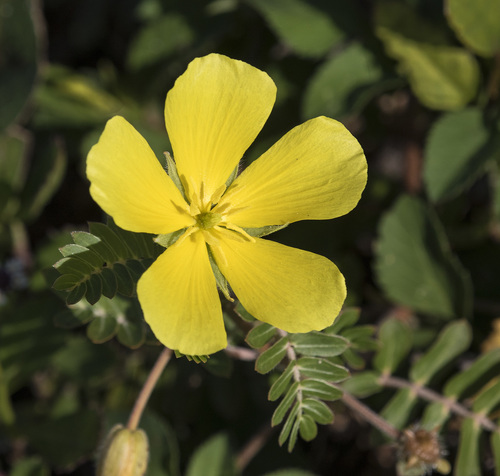
A thorny bush. It has several stems. It keeps its leaves throughout the year. It grows 2-5 m tall. The bark is grey and becomes rough and furrowed with age. The thorns are very dark green. They are stout, 3 cm long and straight. The leaves occur in pairs. They do not have a leaf stalk. They are rounded to heart shaped and grey green and hairy. The flowers are small. They occur on bunches along the thorns. The fruit are oval and hairy. They are 2 cm long.
Edible Uses
Very ripe fruit are eaten fresh. Unripe fruit and seeds can be eaten after very long boiling.
Traditional Uses
Very ripe fruit are eaten. Unripe fruit and seeds can be eaten after very long boiling.
This uses section is brief — help expand it
Distribution
A tropical plant. It grows in arid areas. It can tolerate drought. It grows on a variety of soils. It is often found in sandy river beds.
Where It Grows
Africa, East Africa, Kenya, Somalia, South Sudan, Uganda,
Cultivation
Plants can be grown from seed. It is not necessary to treat the seed. Seed can be stored for one year after removing them from the fruit. Seeds can be sown in pots then transplanted.
Production
Plants are slow growing.
Synonyms
Also Known As
Kullan, Salai
References (5)
- Bircher, A. G. & Bircher, W. H., 2000, Encyclopedia of Fruit Trees and Edible Flowering Plants in Egypt and the Subtropics. AUC Press. p 53
- Ichikawa, M., 1980, The Utilization of Wild Food Plants by the Suiei Dorobo in Northern Kenya. J. Anthrop. Soc. Nippon. 88(1): 25-48
- Katende, A.B., Birnie, A & Tengnas B., 1995, Useful Trees and Shrubs for Uganda. Identification, Propagation and Management for Agricultural and Pastoral Communities. Technical handbook No 10. Regional Soil Conservation Unit, Nairobi, Kenya. p 124
- Morgan, W. T. W., 1981, Ethnobotany of the Turkana: Use of plants by a Pastoral People and Their Livestock in Kenya. Economic Botany 35(1):96-130
- Peters, C. R., O'Brien, E. M., and Drummond, R.B., 1992, Edible Wild plants of Sub-saharan Africa. Kew. p 68