Bactris guineensis
(L.) H. E. Moore
Tobago cane, Corozo palm
iNaturalist· cc-by-nc
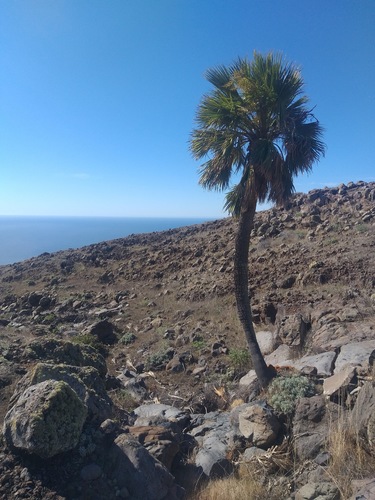
(c) Zein et Carlo, some rights reserved (CC BY-NC), uploaded by Zein et Carlo
iNaturalist· cc-by-nc
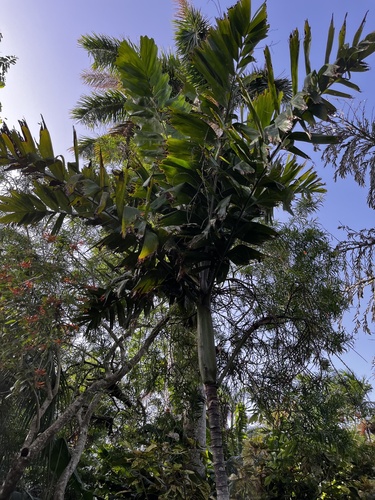
(c) Yennifer Alfaro, some rights reserved (CC BY-NC), uploaded by Yennifer Alfaro
iNaturalist· cc-by-nc
(c) Grupo Bio-n-tessori Colegio Montessori de Cartagena, some rights reserved (CC BY-NC), uploaded by Grupo Bio-n-tessori Colegio Montessori de Cartagena
Description
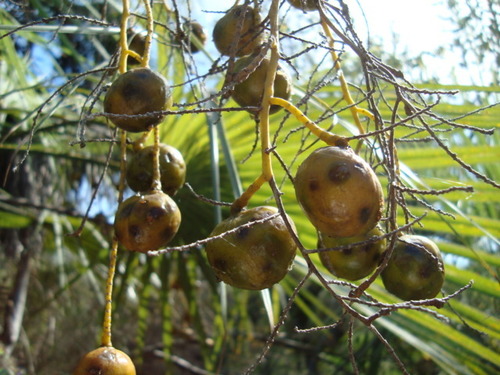
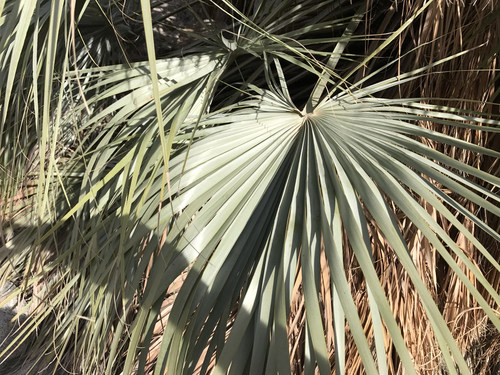
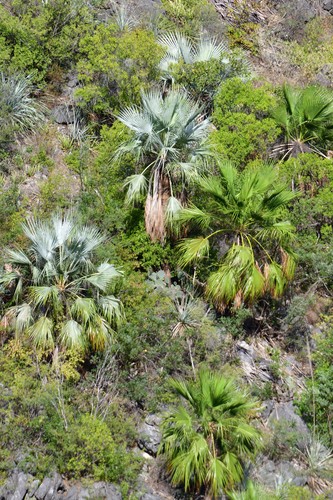
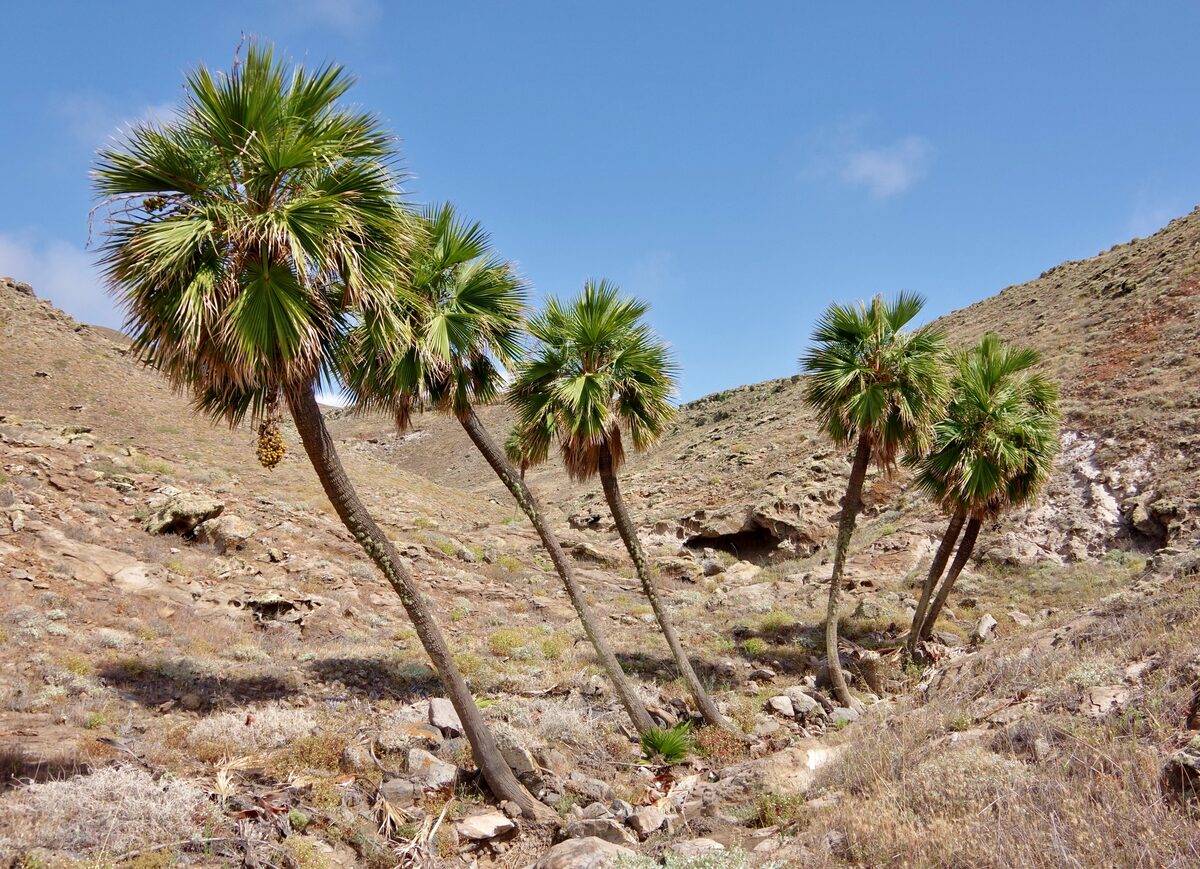
A small palm. It forms dense clusters. The stems are spiny. The trunks are 3 m high and 2.5 cm across. The leaves are 1 m long. The leaflets are straight and narrow and regularly spaced. They are split at the tip. The leaflets grow at different angles from the spiny leaf stalk. The fruit are purple and about the size of cherries.
Edible Uses
The fruit pulp is eaten fresh and used to make a traditional drink called chica de corozo in Colombia. The fruit is also used for wine and pickles.
Traditional Uses
Fruit are used to make a drink. In Colombia it is called chica de corozo. They are also used for wine. They are also used in pickles. The fruit pulp is eaten fresh.
Medicinal Uses
The fruits are used in a decoction as an antihelminthic and laxative. They are also used to treat snakebite.
Distribution
A tropical plant. It suits hot, tropical lowland climates. It grows in clearings in the rainforest and in deciduous thorn forest. It can grow on various soils. It cannot tolerate frost. It grows up to 850 m altitude in Central America. In Brisbane Botanical gardens.
Where It Grows
Amazon, Asia, Australia, Central America*, Colombia, Costa Rica, Ecuador, Indonesia, Jamaica, Nicaragua, Panama, SE Asia, South America, Venezuela, West Indies,
Cultivation
Plants are grown from seeds. They can also be grown from suckers.
Propagation
Seed - pre-soak for 24 hours in warm water and sow in containers. Germination takes 2 months or more. The seed has a limited viability and needs to be sown as fresh as possible. Division of suckers.
Other Uses
The stems were at one time extensively used to make canes (walking sticks).
Notes
There are 239 Bactris species. There are 75 species in tropical America. Most Bactris have fruit that are edible but many are not attractive.
Synonyms
Also Known As
Biscoyol, Coyolito, Palem koroso, Piritu palm, Piritu, Prickly pole, Tobago cane, Tobago palm, Uvita de monte
References (19)
- Balick, M.J. and Beck, H.T., (Ed.), 1990, Useful palms of the World. A Synoptic Bibliography. Colombia p 281 (As Bactris minor), 534 (As Bactris minor), 561 (As Bactris piritu),
- Bircher, A. G. & Bircher, W. H., 2000, Encyclopedia of Fruit Trees and Edible Flowering Plants in Egypt and the Subtropics. AUC Press. p 52 As Bactris minor)
- Chizmar Fernandez, C., et al, 2009, Plantas comestibles de Centroamerica. Instituto de Biodiversidad, Costa Rica. p 82
- Flowerdew, B., 2000, Complete Fruit Book. Kyle Cathie Ltd., London. p 162 (As Bactris minor)
- Gentes Herb. 9:251. 1963
Show all 19 references Hide references
- Grandtner, M. M. & Chevrette, J., 2013, Dictionary of Trees, Volume 2: South America: Nomenclature, Taxonomy and Ecology. Academic Press p 56
- Haynes, J., & McLaughlin, J., 2000, Edible palms and Their Uses. University of Florida Fact sheet MCDE-00-50-1 p 3
- Hedrick, U.P., 1919, (Ed.), Sturtevant's edible plants of the world. p 90 (As Bactris minor)
- Henderson, A., Galeano, G and Bernal, R., 1995, Field Guide to the Palms of the Americas. Princeton. p 190
- Janick, J. & Paul, R. E. (Eds.), 2008, The Encyclopedia of Fruit & Nuts. CABI p 102
- Johnson, D.V., 1998, Tropical palms. Non-wood Forest products 10. FAO Rome. p 91
- Jones, D.L., 1994, Palms throughout the World. Smithtonian Institution, Washington. p 52, 55,
- Kermath, B. M., et al, 2014, Food Plants in the Americas: A survey of the domesticated, cultivated and wild plants used for Human food in North, Central and South America and the Caribbean. On line draft. p 116
- Lopez-Diago, D. & Garcia, N., 2021, Wild edible fruits of Colombia. Biota ColomBiana 22 (2) p 31
- Martin, F. W., et al, 1987, Perennial Edible Fruits of the Tropics. USDA Handbook 642 p 46 (As Bactris minor)
- Riffle, R.L. & Craft, P., 2003, An Encyclopedia of Cultivated Palms. Timber Press. p 268
- Roa, J. A. G. & Boada, D. S. G., 2018, Fundación para el Fortalecimiento de la Fruticultura y Plantas Alimenticias no Convencionales en Colombia.
- Sukarya, D. G., (Ed.) 2013, 3,500 Plant Species of the Botanic Gardens of Indonesia. LIPI p 759
- Torre, de la L., et al, 2008, Enciclopedia de las Plantas Útiles del Ecuador. Herbario QCA. Pontificia Universidad Católica del Ecuador. p 196