Syzygium anisatum
(J. Vickery) Craven & Biffin
Aniseed myrtle, Ringwood, Aniseed Tree
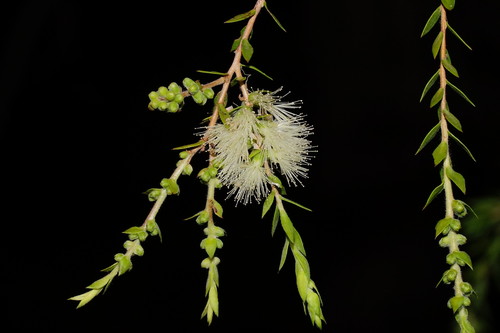
iNaturalist· cc-by-nc-sa
(c) Nick Lambert, some rights reserved (CC BY-NC-SA), uploaded by Nick Lambert
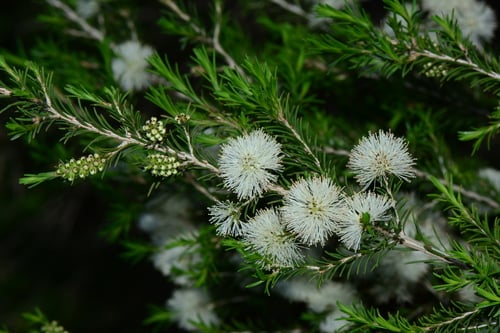
iNaturalist· cc-by-nc-sa
(c) Nick Lambert, some rights reserved (CC BY-NC-SA), uploaded by Nick Lambert
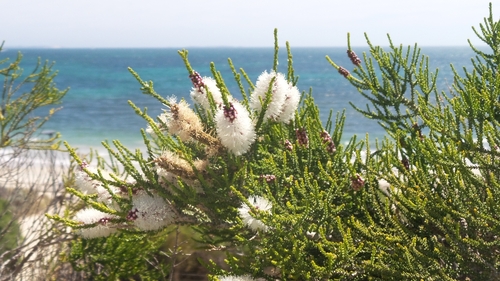
iNaturalist· cc-by-nc-sa
(c) Nick Lambert, some rights reserved (CC BY-NC-SA), uploaded by Nick Lambert
Summary
Source: WikipediaSyzygium anisatum, with common names ringwood and aniseed tree, is a rare rainforest tree native to New South Wales, Australia. The aromatic leaves contain an essential oil profile comparable to true aniseed. The leaf from cultivated plantations is used as a bushfood spice and distilled for the essential oil, and is known in the trade as aniseed myrtle or anise myrtle. The ringwood tree has a dense crown and grows up to 45 m (148 ft) tall. The leaves are 6–12 cm (2.4–4.7 in) long with prominently undulated margins and rich aniseed aroma when crushed. Flowers are white and sweetly scented, borne in panicles. The fruit are dry papery capsules around 5 mm (0.20 in) long and are white in appearance. Ringwood's natural distribution in the wild is restricted to the Nambucca and Bellinger Valleys in northeastern New South Wales.
Description
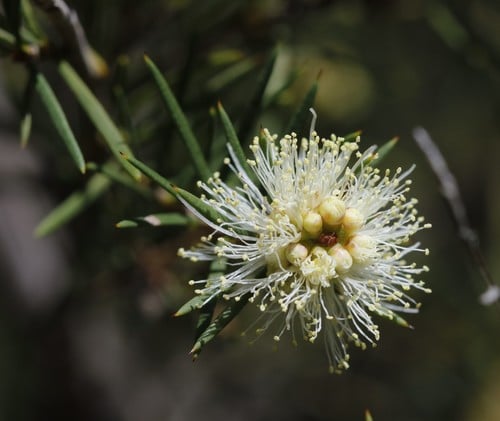
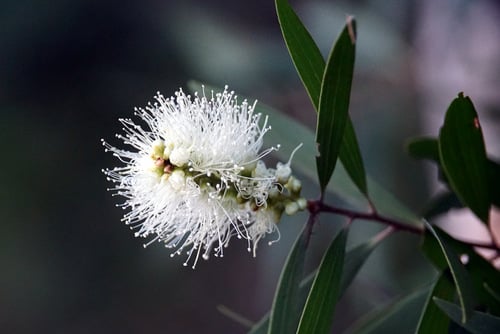
A large evergreen tree. It grows 10-50 m high. The bark is reddish-brown and corky. The crown is dense. The leaves are 5-10 cm long and 2-4 cm wide. They are sword shaped and pointed. They are shiny and green. They have an aniseed scent. The flowers are creamy white and 0.5-0.8 cm across. The flowers are white and have a sweet scent. They occur in groups. The fruit are funnel shaped. The fruit is a dry papery capsule 5 mm long.
Edible Uses
Fresh leaves are used whole like bay leaves in vinegars and oils; dried ground leaves flavor meat, seafood, cheeses, bread, and teas; an essential oil from the leaves flavors ice cream; dried ground leaves and flowers are used as a spice in small amounts for sauces and baked goods.
Traditional Uses
The fresh leaves are used whole like bay leaves in flavoured vinegars and oils. The dried ground leaves are used to flavour meat, seafood, cheeses, bread, teas etc. The leaves are the source of an essential used for flavouring ice cream. The leaves and flowers can be used as a spice. They are dried and ground and used in small amounts in sauces and to flavour baked goods.
Medicinal Uses
Used as a flavouring spice and herbal tea ingredient. Although previously known, it was first sold in the early 1990s as a bushfood spice, and in the mid 1990s cultivated in plantations to meet demand. The essential oil of S. anisatum contains anethole and methyl chavicol, imparting licorice and aniseed flavours respectively. 'Aniseed myrtle' is the name originally coined to specifically describe high quality selections of the trans-anethole chemotype (90%+) - generally recognized as safe for flavouring. These selections are propagated from cutting for consistent essential oil quality. The aniseed myrtle selections are also low in methyl chavicol and cis-anethole (less than 0.1%). Research indicates that aniseed myrtle oil has antimicrobial activity, including on the pathogenic yeast Candida albicans.
Known Hazards
The tree is susceptible to damage from myrtle rust and is damaged by drought and frost.
Distribution
It is a subtropical plant. It grows in the Australian rainforest. It can be in dry subtropical or humid tropical zones. It is best in medium to heavy soils. It needs a protected, partly shaded position. It is damaged by drought and frost. It suits hardiness zones 9-10.
Where It Grows
Australia*,
Cultivation
Plants can be grown from seed or cuttings. Cuttings are slow to strike.
Other Information
It is now a cultivated spice crop.
Notes
There are 8 Backhousia species. They occur in Australia. It is damaged by myrtle rust.
Synonyms
Also Known As
Ringwood
References (13)
- Alice, L. & O'Quinn, T., Australian Bush Superfoods. Explore Australia p 23
- Bodkin, F., 1991, Encyclopedia Botanica. Cornstalk publishing, p 123 (As Backhousia anisata)
- Bonney, N., 2012, Edible Wild Native Plants for Southern Australia. p 26
- Botanical Gardens sign (As Anetholea anisata)
- Elliot, W.R., & Jones, D.L., 1982, Encyclopedia of Australian Plants suitable for cultivation. Vol 2. Lothian. p 267 (As Backhousia anisata)
Show all 13 references Hide references
- Etherington, K., & Imwold, D., (Eds), 2001, Botanica's Trees & Shrubs. The illustrated A-Z of over 8500 trees and shrubs. Random House, Australia. p 112 (As Backhousia anisata)
- Facciola, S., 1998, Cornucopia 2: a Source Book of Edible Plants. Kampong Publications, p 140 (As Backhousia anisata)
- Hibbert, M., 2002, The Aussie Plant Finder 2002, Florilegium. p 37 (As Backhousia anisata)
- Jones D, L, 1986, Ornamental Rainforest Plants in Australia, Reed Books, p 66 (As Backhousia anisata)
- Lord, E.E., & Willis, J.H., 1999, Shrubs and Trees for Australian gardens. Lothian. p 12 (As Backhousia anisata)
- Nicholson, N & H., 1994, Australian Rainforest Plants 4, Terania Rainforest Publishing. NSW. p 14 (As Backhousia anisata)
- Robins, J., 1996, Wild Lime. Cooking from the Bush food garden. Allen & Unwin p 137 (As Backhousia anisata)
- www.ceres.org/au/bushfood catalogue (As Backhousia anisata)