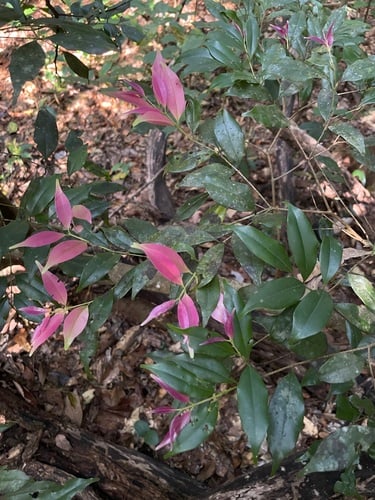
Syzygium xanthophyllum
(C. B. Robinson) Merr.
Malatampui
gbif· cc0
Botanical Research Institute of Texas
gbif· cc0
Botanical Research Institute of Texas
gbif· cc0
Botanical Research Institute of Texas
Description
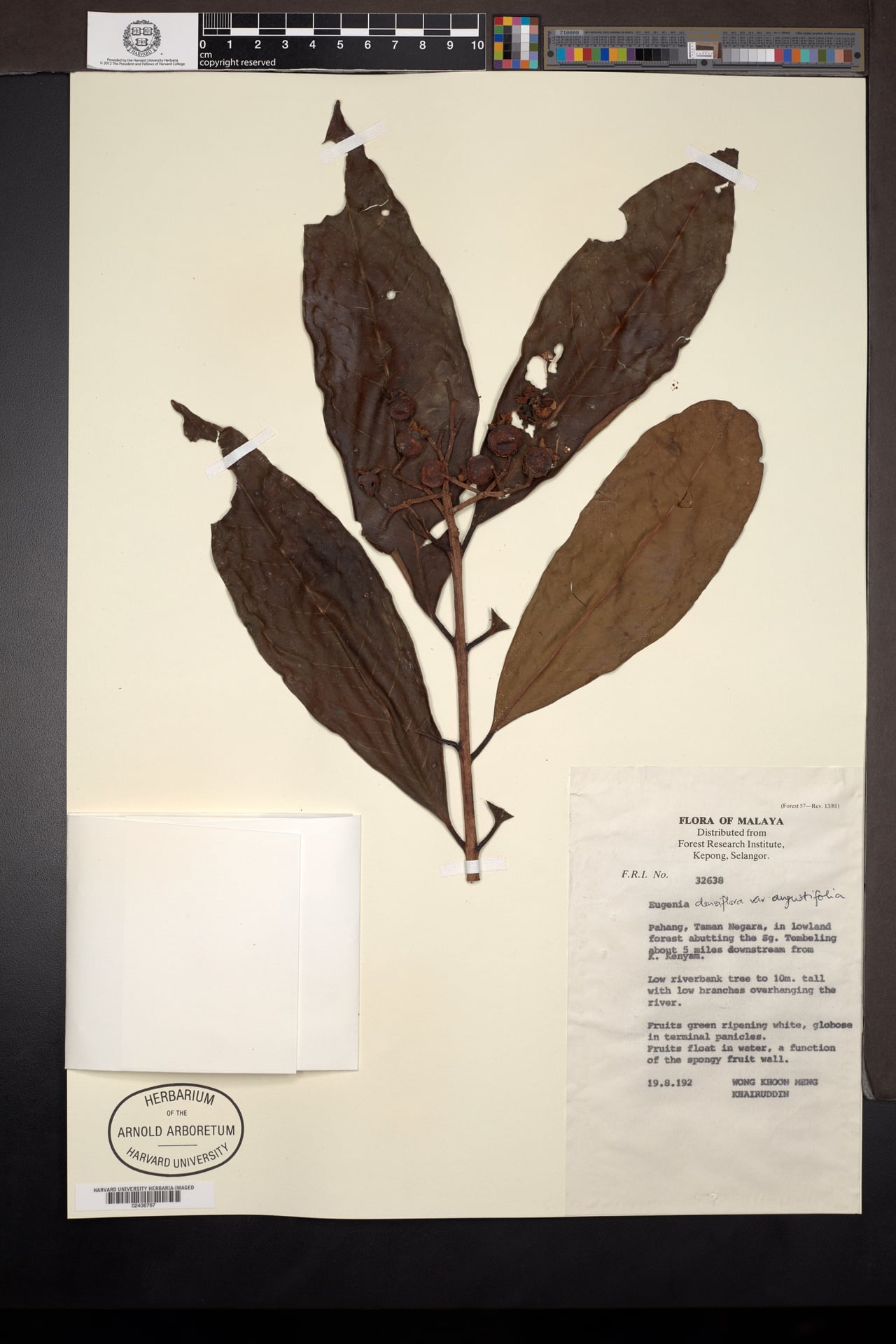
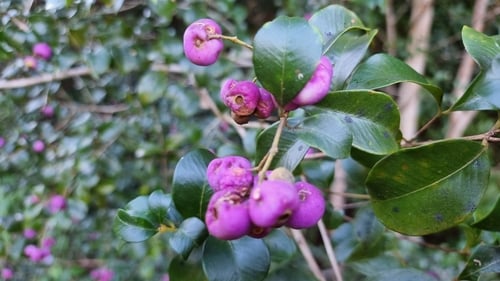
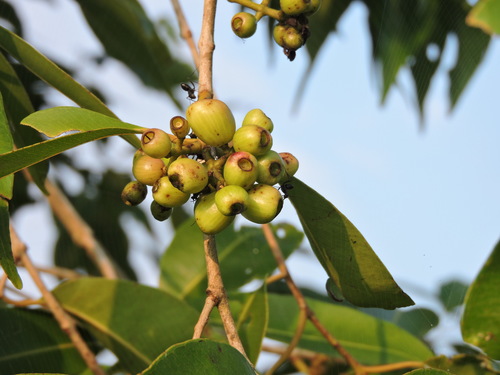
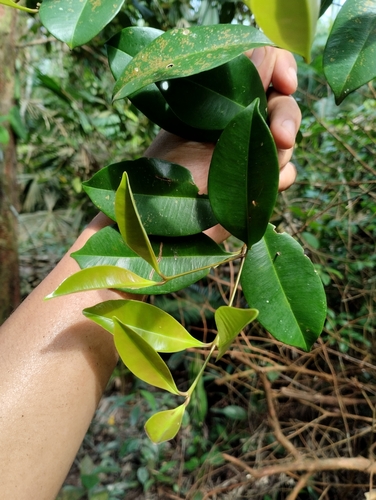
A small or large tree. It can be 20 m tall. The trunk can be 50 cm across. The twigs are grey, smooth and not angled. The leaves are opposite, papery smooth and pointed at both ends. They are 7-15 cm long. The flowers are few to several and whitish. The fruit occur in clusters. The fruit are round or somewhat bell shaped and reddish when mature. They are 2-3 cm across.
Edible Uses
Fruit - raw. The pulp is eaten. The reddish fruit is a globose berry 2 - 3cm in diameter. The fruit is produced in clusters.
Distribution
A tropical plant. They are widely distributed from Luzon to the Visayas in the Philippines growing at low altitudes.
Where It Grows
Asia, Pacific, Philippines, SE Asia,
Cultivation
Plants are grown from fresh seed.
Propagation
Seed - best sown as soon as it is ripe.
Synonyms
Also Known As
Barakbak, Lapinig, Malatampui
References (5)
- Alegado, A. M. & De Guzman, R. B., 2014, Indigenous food crops of the Aetas tribe in the Philippines and their traditional methods of food preparation. in Promotion of Underutilized Indigenous Food Resources for Food Security and Nutrition in Asia and Pacific. FAO. Bangkok p 160
- Brown, W.H., 1920, Wild Food Plants of the Philippines. Bureau of Forestry Bulletin No. 21 Manila. p 134
- Monsalud, M.R., Tongacan, A.L., Lopez, F.R., & Lagrimas, M.Q., 1966, Edible Wild Plants in Philippine Forests. Philippine Journal of Science. p 507
- PROSEA No. 2
- World Checklist of Useful Plant Species 2020. Royal Botanic Gardens, Kew