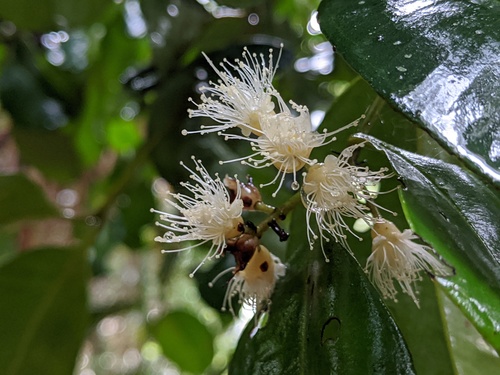
Syzygium wilsonii subsp. cryptophlebium
(F. Muell.) B. Hyland
Plum satinash
gbif· cc-by-nc
Rachel Reese
gbif· cc-by-nc
Rachel Reese
gbif· cc-by
呂一起(Lu i-chi)
Description
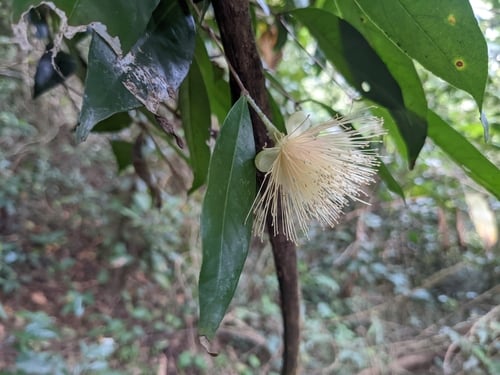
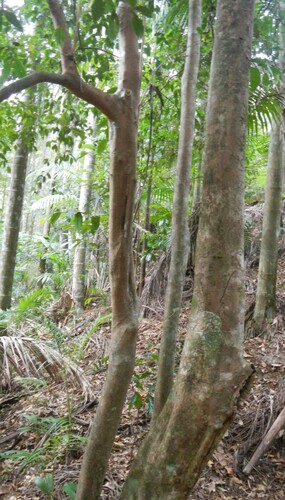
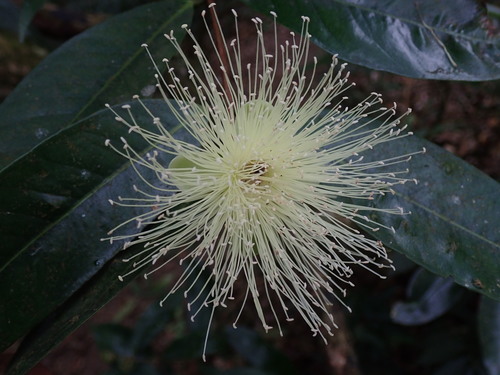
A shrub. It has a spreading habit with drooping branches. It grows to 10-30 m tall. The new growth is red or pink. The flowers are small and cream to pink. The fruit is purple. They occur in large bunches.
Edible Uses
The fruit are edible.
Distribution
A tropical plant. It needs a sheltered spot and protection from drying winds. In the Cairns Botanical Gardens.
Where It Grows
Australia*,
Synonyms
Eugenia cryptophlebia F. Muell.Eugenia macoorai F. M. BaileyEugenia rhadinantha S. MooreEugenia sordida F. M. BaileySyzygium cryptophlebium (F. Muell.) Craven & Biffin
References (11)
- Barwick, M., 2004, Tropical and Subtropical Trees. A Worldwide Encyclopedic Guide. Thames and Hudson p 394
- Bodkin, F., 1991, Encyclopedia Botanica. Cornstalk publishing, p 964
- Cherikoff V. & Isaacs, J., The Bush Food Handbook. How to gather, grow, process and cook Australian Wild Foods. Ti Tree Press, Australia p 201
- Cooper W & Cooper W T, 1994, Fruits of the Rain Forest. RD Press p 280
- Cooper, W. and Cooper, W., 2004, Fruits of the Australian Tropical Rainforest. Nokomis Editions, Victoria, Australia. p 370
Show all 11 references Hide references
- Jackes, B.R., 2001, Plants of the Tropics. Rainforest to Heath. An Identification Guide. James Cook University. p 69
- Jones D, L, 1986, Ornamental Rainforest Plants in Australia, Reed Books, p 82
- Leiper, G & Houser, J., Mutooroo. Plant Use by Australian Aboriginal People. Assembly press, Queensland. (As Syzygium cryptophlebia)
- Nicholson, N & H., 1996, Australian Rainforest Plants 2, Terania Rainforest Publishing. NSW. p 60
- Queensland Forest Service, 1991, Trees and Shrubs. Department of Primary Industries. p 118
- Townsend, K., 1994, Across the Top. Gardening with Australian Plants in the tropics. Society for Growing Australian Plants, Townsville Branch Inc. p 351