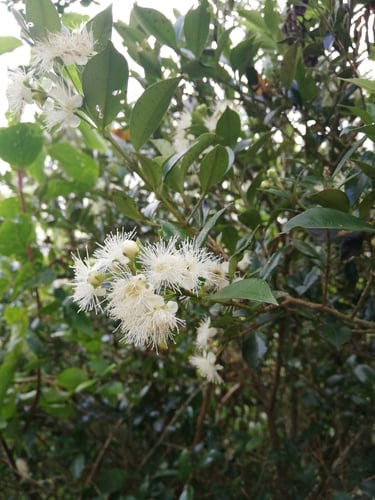
Thryptomene maisonneuvei
F. Muell.
Heath myrtle, Desert thryptomene
iNaturalist· cc-by-nc
(c) chrissara, some rights reserved (CC BY-NC)
iNaturalist· cc-by-nc
(c) chrissara, some rights reserved (CC BY-NC)
iNaturalist· cc-by-nc
(c) chrissara, some rights reserved (CC BY-NC)
Description
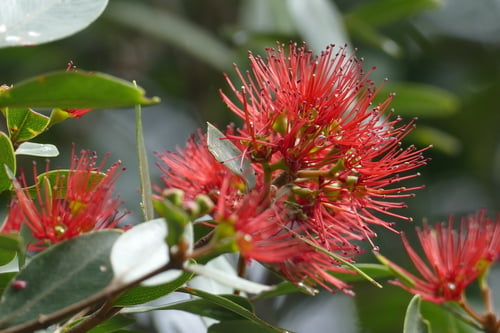
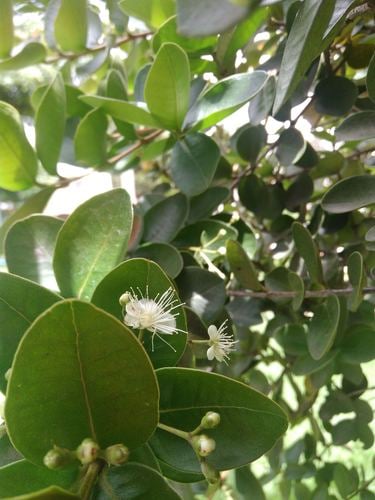
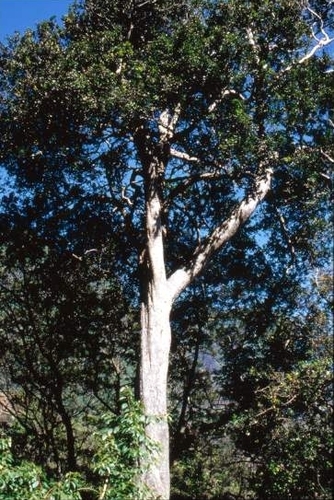
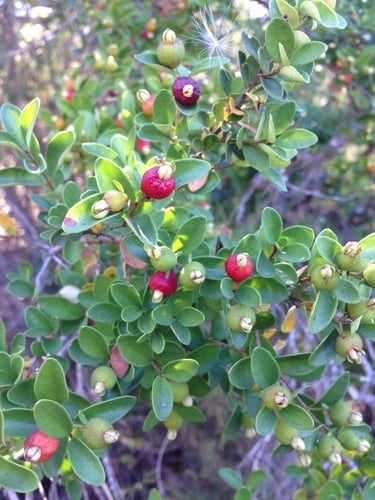
A low dense shrub. It has many branches and is round and compact. It grows 0.3-1.5 m high. The bark peels in thin red strips. The leaves are very small and crowded along the ends of the small branches. They have a sweet smell when crushed. The flowers are small and white or pinkish. The fruit are small woody capsules.
Edible Uses
The nectar is beaten from the flowers in early morning and consumed as a drink.
Traditional Uses
The nectar is beaten from the flowers in early morning. It is used as a drink.
This uses section is brief — help expand it
Distribution
It is a subtropical plant. It grows on red sand dunes and sandplains. It can grow in arid places.
Where It Grows
Australia*,
Notes
There are 40 Thryptomene species. They grow in Australia.
References (5)
- Cherikoff V. & Isaacs, J., The Bush Food Handbook. How to gather, grow, process and cook Australian Wild Foods. Ti Tree Press, Australia p 191
- Goddard, C. & Kalotas A. (Eds.), Punu, 2002, Yankunytjatjara plant use. Jukurrpa books. p 56 (As Aluta maisonneuvei)
- Latz, P.K., 1996, Bushfires and Bushtucker: Aboriginal plant use in Central Australia. IAD Press Alice Springs p 285
- Lord, E.E., & Willis, J.H., 1999, Shrubs and Trees for Australian gardens. Lothian. p 194
- Paczkowska, G . & Chapman, A.R., 2000, The Western Australian Flora. A Descriptive Calatogue. Western Australian Herbarium. p 403