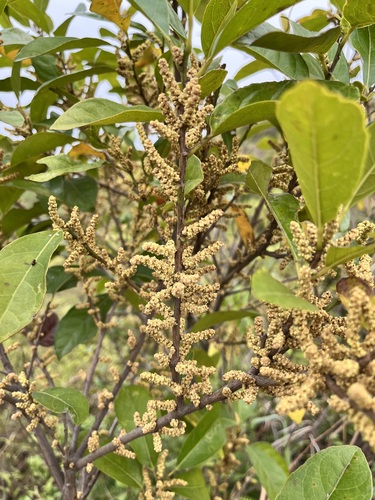
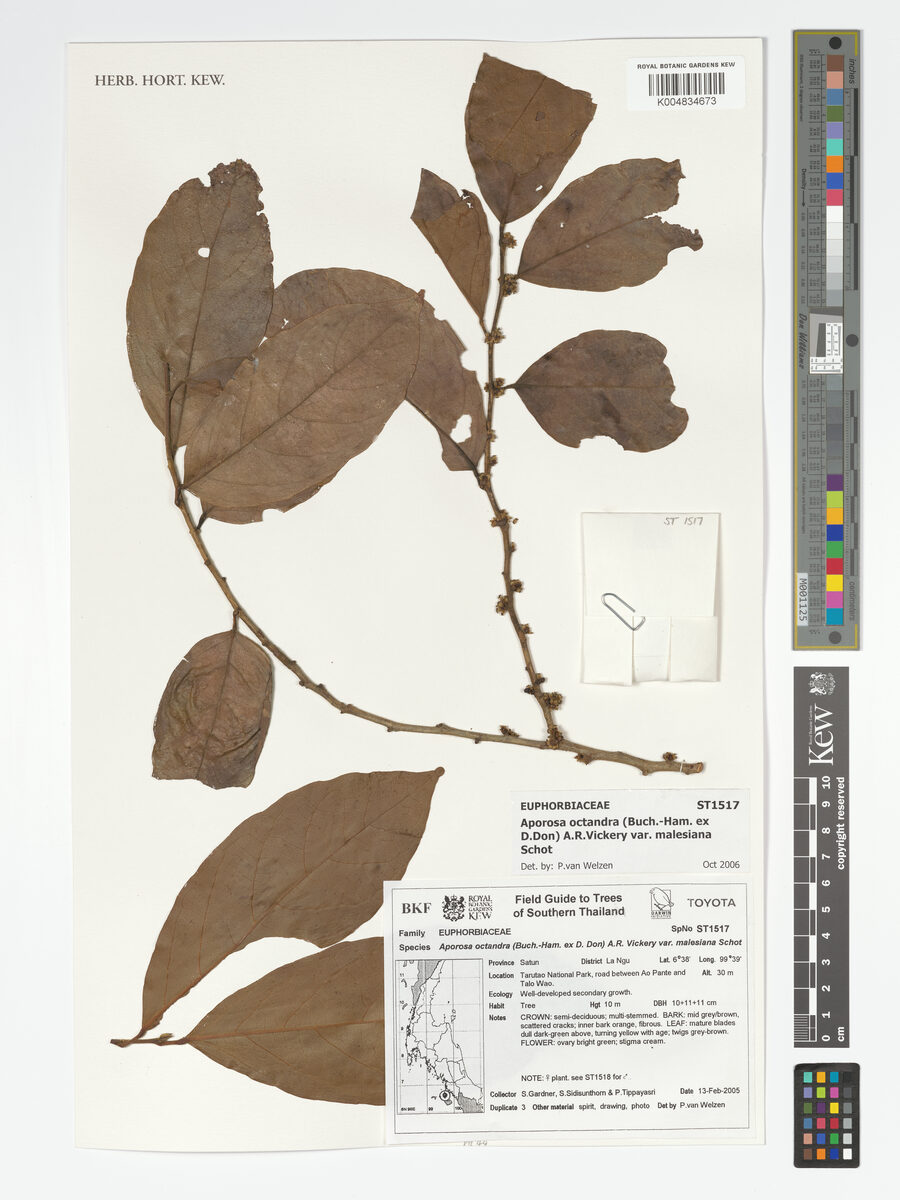
Nothobaccaurea stylaris
(Mull.Arg.) Haegens
wikimedia· cc-by
Wikimedia Commons - Smith, A C
Description
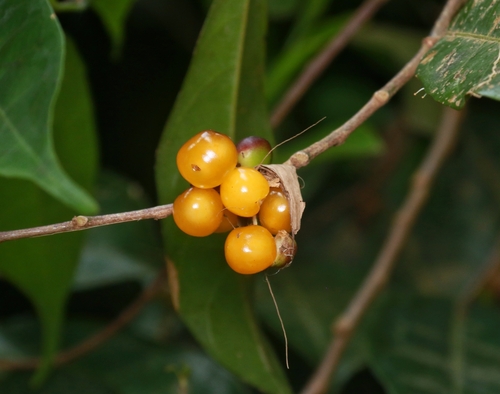
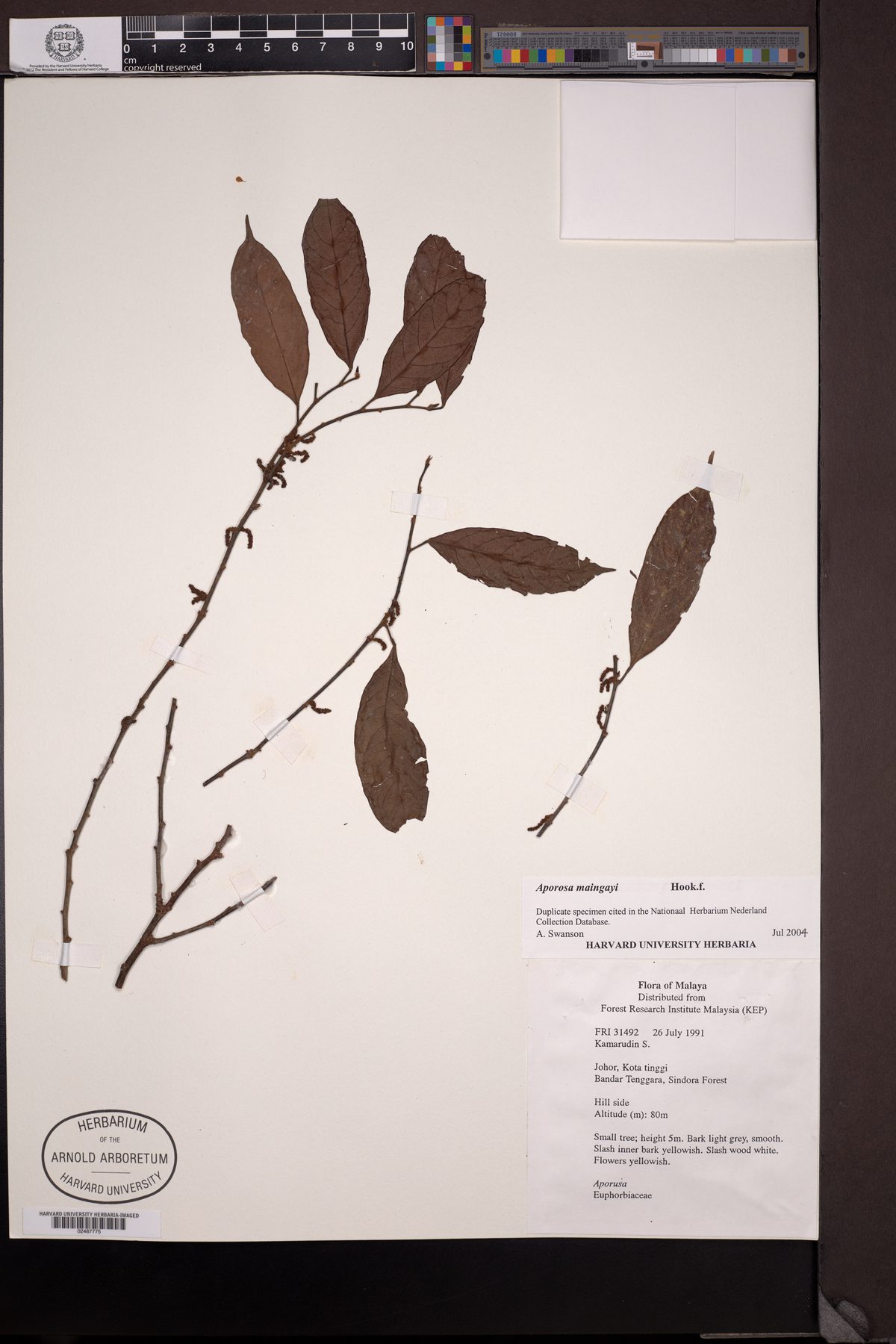
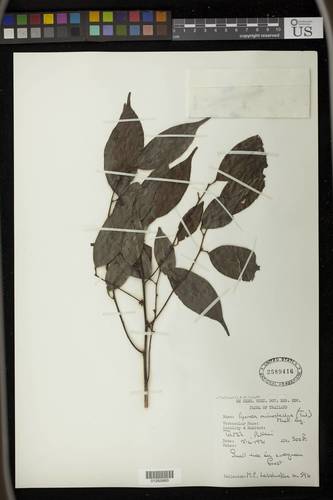
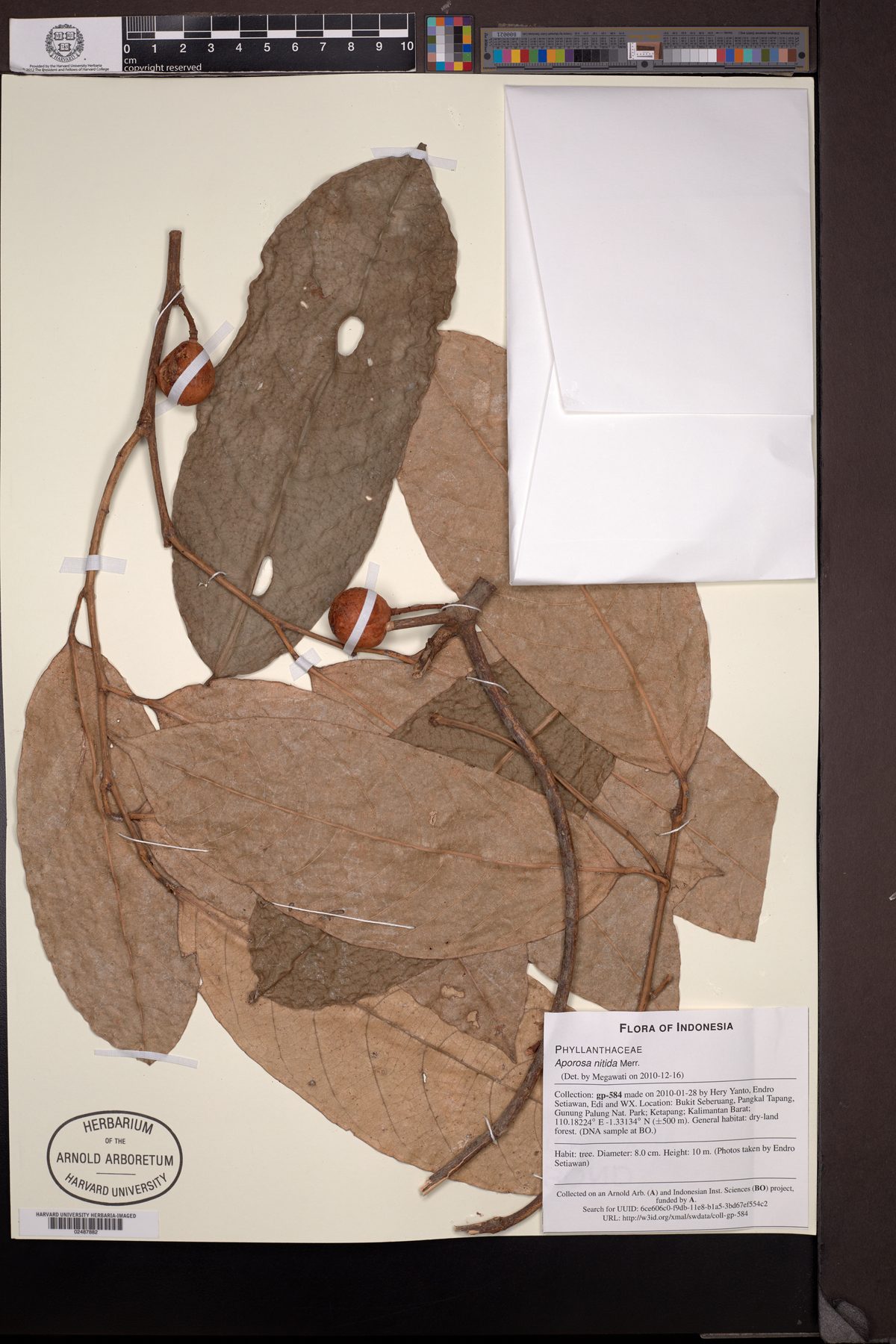
A shrub or tree. It grows 2-20 m high. The trunk is 20-50 cm across. The branches come out in flat layers. They are hairy when young. The bark is finely cracked. The leaves are simple and alternate. They are rounded at the base and do not have lobes. Male and female flowers are separate. The flowering shoots can be in the axils of leaves or on the trunk. There can be many flowers in a group. The fruit are oval and have 1-2 seeds. They are fleshy and about 1 cm long.
Medicinal Uses
The leaves are used in traditional medicine.
Distribution
A tropical plant. It grows in primary and secondary forest from sea level to 1,100 m above sea level.
Where It Grows
Fiji, Pacific, Solomon Islands, Vanuatu,
Notes
There are about 80 Baccaurea species. It is used in medicine.
Synonyms
Also Known As
Innoka, Kailoa, Midra, Roro damu, Sinumbuta, Vurevure
References (1)
- Martin R, Haegens AP (2000) Taxonomy, phylogeny, and biogeography of Baccaurea, Distichirhops, and Nothobaccaurea (Euphorbiaceae). Blumea, 3-214. Contact: Martin, Raoul ; Haegens, Anne Peter; Universiteit Leiden branch, Nationaal Herbarium Nederland, Leiden, Netherlands