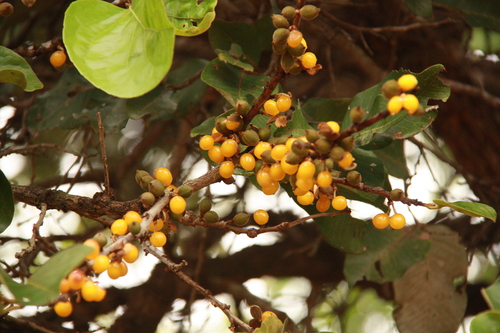
Baccaurea motleyana
(Muell.-Arg.) Muell.-Arg.
Motley's rambai
iNaturalist· cc-by-nc
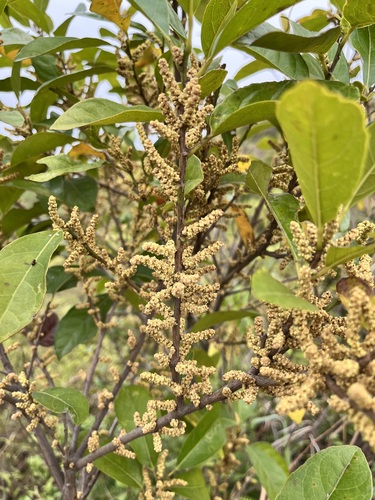
(c) Cheongweei Gan, some rights reserved (CC BY-NC), uploaded by Cheongweei Gan
iNaturalist· cc-by-nc
(c) Pizzas fear me, some rights reserved (CC BY-NC)
iNaturalist· cc-by-nc
(c) Pizzas fear me, some rights reserved (CC BY-NC)
Summary
Source: WikipediaBaccaurea motleyana is a species of fruit tree in the family Phyllanthaceae. It is native to Thailand, Peninsular Malaysia, Sumatra and Borneo. It is cultivated for its fruit in India and Bangladesh.
Description
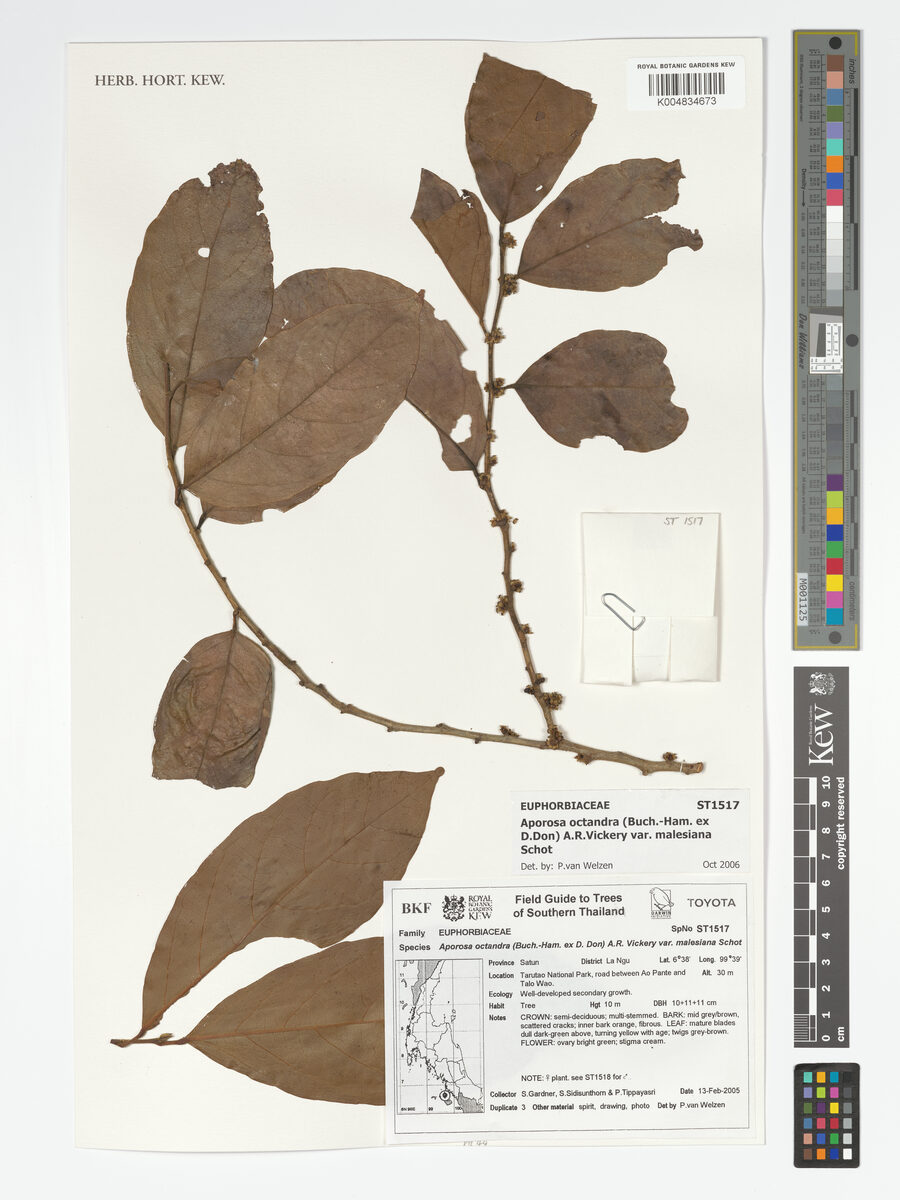
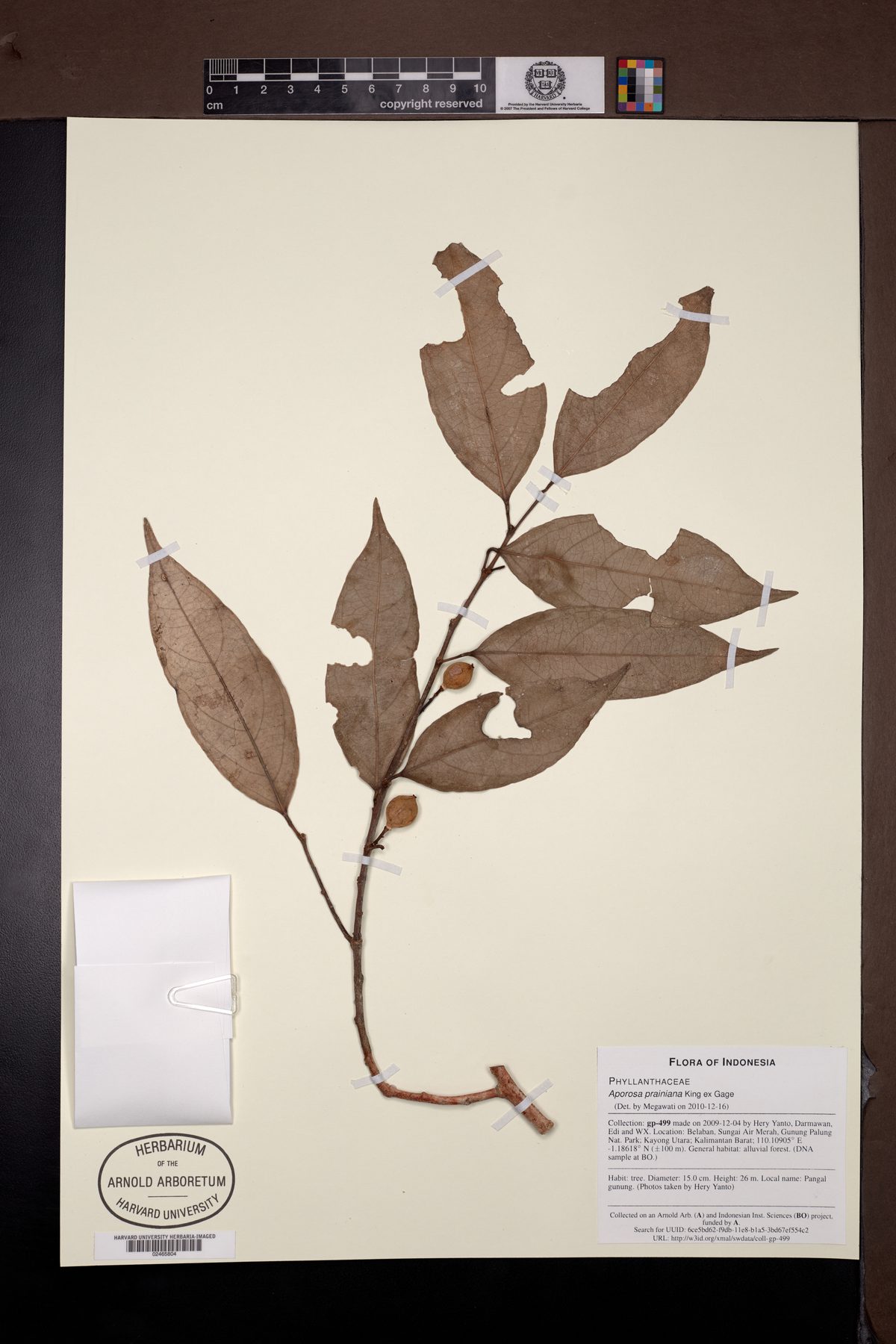
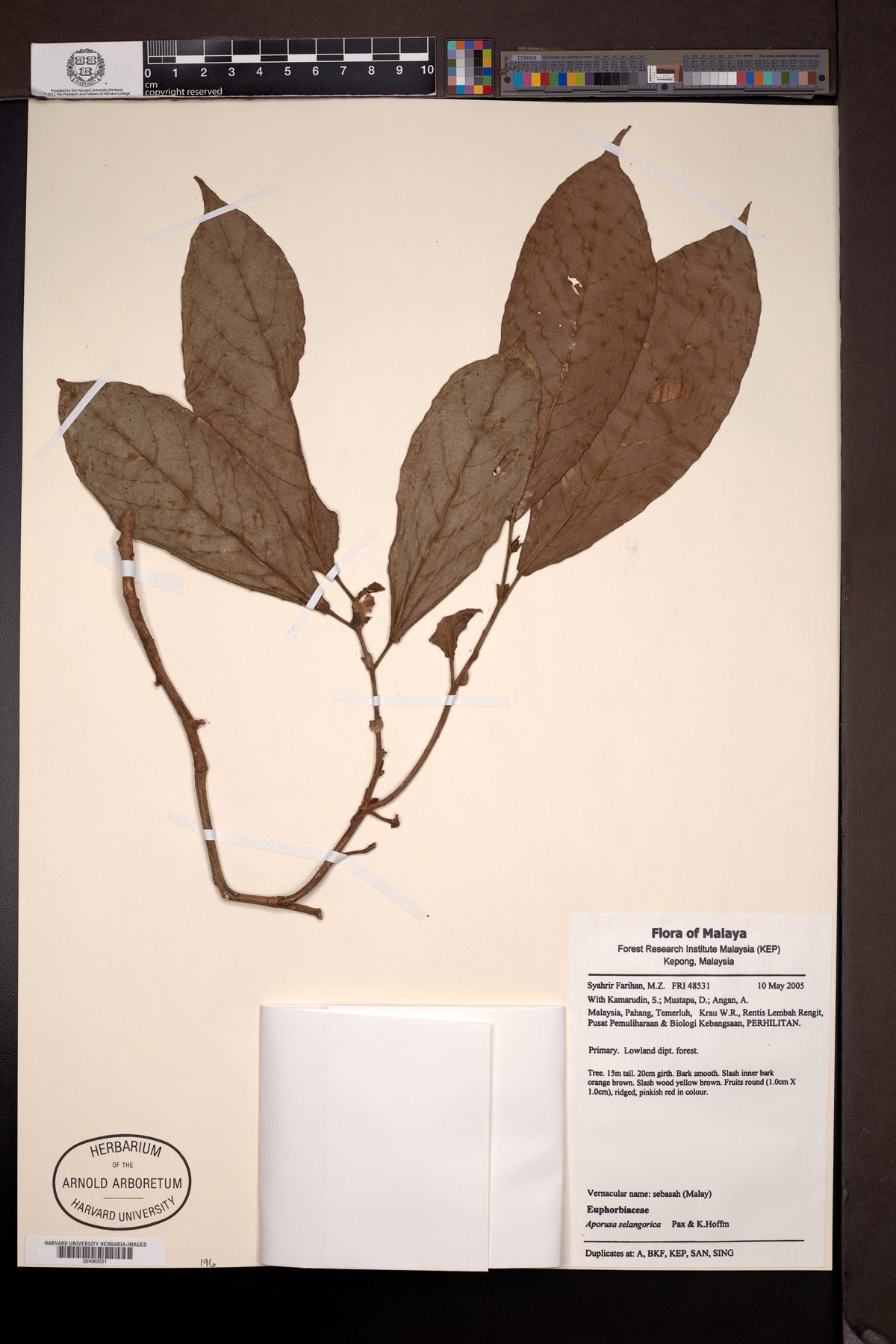
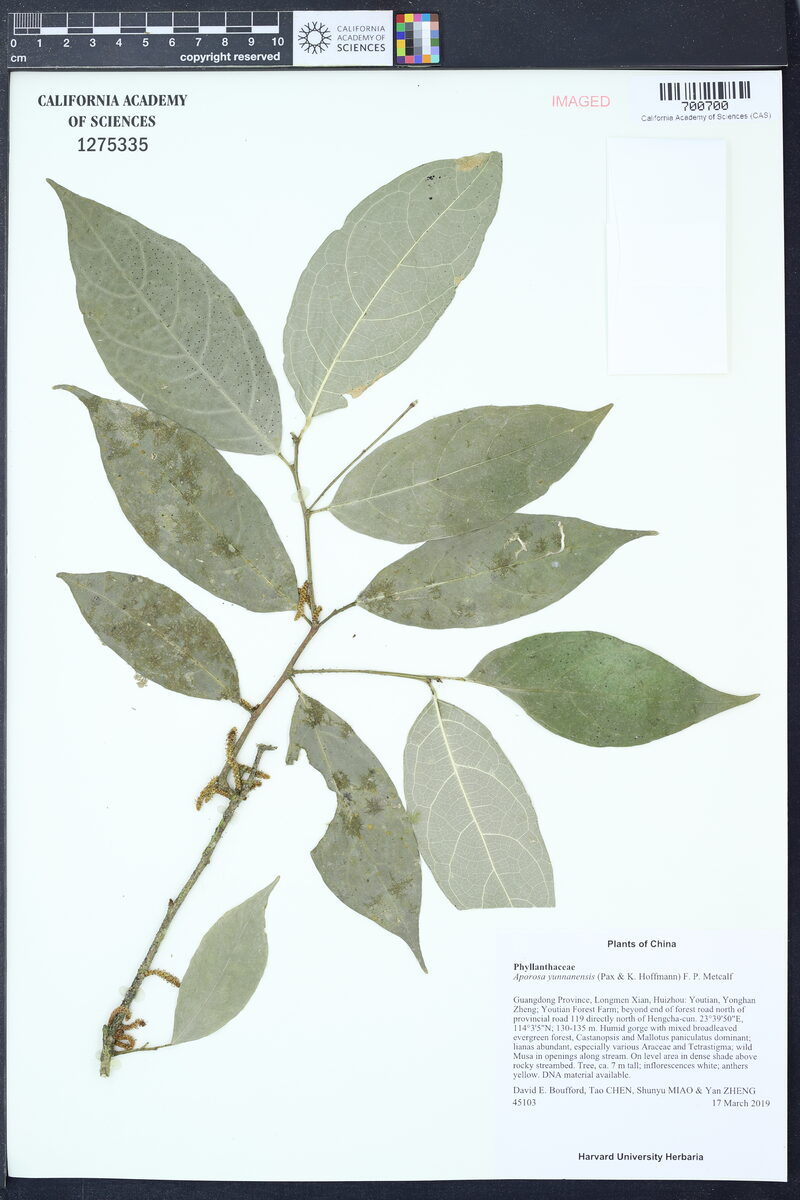
A tree up to 20 m tall. The trunk is 40 cm across. The tree is densely leafy. The leaves are simple. They are glossy. The underside of the leaves is velvety. The leaves are sword shaped and 20-35 cm long by 8-17 cm wide. The leaf stalks are 3-10 cm long. Trees are separately male and female. Flowers hang from the branches. Male flowers are small and pale yellowish-green. They do not have petals. They have a sweet scent. The female flowers are larger. The fruit hang on strings from the twigs. Each fruit is about 2-4 cm across. They have a smooth thin skin. The pulp is white and let's light through. It contains several seeds. The seeds are fairly large. They are flat and brown.
Edible Uses
The fruit are eaten fresh, stewed, or made into jam; more acidic fruit are cooked. The fruit are also fermented into drinks or used to make vinegar.
Traditional Uses
The fruit are eaten fresh, stewed and made into jam. The more acid fruit are cooked. The fruit are fermented in a drink. They are also used for vinegar.
Medicinal Uses
The squeezed cambium and inner bark are used as a remedy for sore eyes.
Distribution
A tropical plant. It suits the hot humid lowland tropics. It needs a warm frost free position. It grows from 15 to 500 m altitude. In Yunnan.
Where It Grows
Asia, Australia, Brunei, China, Indochina, Indonesia*, Malaysia, Pacific, Philippines, SE Asia, Sri Lanka, Thailand, Vietnam,
Cultivation
Plants are grown from seed. They can also be grown by air-layering and grafting.
Propagation
Seed - when sown fresh it usually germinates in a few days. Air layering Grafting
Other Uses
A dye is obtained from the tannin-rich bark. It is mixed with the roots of Melastoma malabathricum to produce a dark-red dye. The stems are utilized as posts. In common with other trees that produce their flowers and fruits on the trunk of the tree, members of this genus are generally considered to be good support trees for the climbing rattan palms, which are grown to provide material for basket making, weaving into furniture, making ropes etc.
Production
Trees fruit 3 years after planting.
Other Information
It is a cultivated tree.
Notes
There are about 80 Baccaurea species.
Nutrition
| Part | Moisture | kJ | kcal | Protein | Vit A | Vit C | Iron | Zinc |
|---|---|---|---|---|---|---|---|---|
| Fruit | 79 | 272 | 65 | 1.7 | — | — | 0.8 | — |
Synonyms
Also Known As
Asam lambun, Bua trai, Buah jentik, Daun tien, Gadu guda, Himbabalod, Jelintik, Kepundung, Lamkhae, Limpahung, Maa-fai, Mafai-farang, Mah-fai, Mangkau, Mari-kau-napula, Menteng, Muna mudakkan, Pekang, Pohon rambai matae, Putat, Ra mai, Rambai, Rambe, Rambeh, Rambi, Ramei, Rumbai, Tampoi, Ulup lavae
References (41)
- Arora, R. K., 2014, Diversity in Underutilized Plant Species - An Asia-Pacific Perspective. Bioversity International. p 60
- Bingtao, Li, et al, Euphorbiaceae. p 217
- Bircher, A. G. & Bircher, W. H., 2000, Encyclopedia of Fruit Trees and Edible Flowering Plants in Egypt and the Subtropics. AUC Press. p 51
- Blench, R., 2004, Fruits and Arboriculture in the Indo-Pacific Region. Indo-Pacific Prehistory Association Bulletin 24. (Taipei Papers Volume 2) p 35
- Burkill, I.H., 1966, A Dictionary of the Economic Products of the Malay Peninsula. Ministry of Agriculture and Cooperatives, Kuala Lumpur, Malaysia. Vol 1 (A-H) p 282
Show all 41 references Hide references
- Chai, P. P. K. (Ed), et al, 2000, A checklist of Flora, Fauna, Food and Medicinal Plants. Lanjak Entimau Wildlife Sanctuary, Sarawak. Forestry Malaysia & ITTO. p 167
- Chin, H.F., & Yong, H.S., 1996, Malaysian Fruits in Colour. Tropical press, Kuala Lumpur p 32
- Coronel, R.E., 1982, Fruit Collections in the Philippines. IBPGR Newsletter p 9
- Darley, J.J., 1993, Know and Enjoy Tropical Fruit. P & S Publishers. p 42
- A. L. P. P. de Candolle, Prodr. 15(2):461. 1866
- Engel, D.H., & Phummai, S., 2000, A Field Guide to Tropical Plants of Asia. Timber Press. p 94
- Facciola, S., 1998, Cornucopia 2: a Source Book of Edible Plants. Kampong Publications, p 100
- Flora of China Vol. 11, p 217 www.eFloras.org
- Food Composition Tables for use in East Asia FAO http://www.fao.org/infoods/directory No. 990
- Fu, Yongneng, et al, 2003, Relocating Plants from Swidden Fallows to Gardens in Southwestern China. Economic Botany, 57(3): 389-402
- Giesen, W., 2013, Paludiculture: sustainable alternatives on degraded peat land in Indonesia (revised draft)
- Hanum, F. I., 1999, Plant Diversity and Conservation Value of Ayer Hitam Forest, Selangor, Peninsula Malaysia. Pertanika J. Trop. Agric. Sci. 22(2):73-83
- Kiple, K.F. & Ornelas, K.C., (eds), 2000, The Cambridge World History of Food. CUP p 1842
- Lembaga Biologi Nasional, 1977, Buah-Buahan, Balai Pustaka, Jakarta. p 106
- Macmillan, H.F. (Revised Barlow, H.S., et al) 1991, Tropical Planting and Gardening. Sixth edition. Malayan Nature Society. Kuala Lumpur. p 294
- Martin, F. W., et al, 1987, Perennial Edible Fruits of the Tropics. USDA Handbook 642 p 27
- McMakin, P.D., 2000, Flowering Plants of Thailand. A Field Guide. White Lotus. p 105
- Milow, P., et al, 2013, Malaysian species of plants with edible fruits or seeds and their evaluation. International Journal of Fruit Science. 14:1, 1-27
- Morton, J. F., 1987, Fruits of Warm Climates. Wipf & Stock Publishers p 211
- Pawera, L., et al, 2020, Wild Food Plants and Trends in Their Use: From Knowledge and Perceptions to Drivers of Change in West Sumatra, Indonesia, Foods. 2020, 9, 1240
- PROSEA (Plant Resources of South East Asia) handbook, Volume 2, 1991, Edible fruits and nut. p 98
- PROSEA handbook Volume 9 Plants yielding non-seed carbohydrates. p 187
- Purseglove, J.W., 1968, Tropical Crops Dicotyledons, Longmans. p 139
- Rajapaksha, U., 1998, Traditional Food Plants in Sri Lanka. HARTI, Sri Lanka. p 208
- Siong, K. H., 2003, Indigenous Fruits of Sarawak. ITTO & Sarawak Forest Department. p 61
- Slik, F., www.asianplant.net
- Sosef, M. S. M., Hong, L. T., & Prawirohatmodjo, S., (Eds.), 1998, Timber tree: Lesser-known timbers. Plant Resources of South-East Asia, 5(3), p 92
- Sukarya, D. G., (Ed.) 2013, 3,500 Plant Species of the Botanic Gardens of Indonesia. LIPI p 145
- Tankard, G., 1990, Tropical fruit. An Australian Guide to Growing and using exotic fruit. Viking p 114
- TodaFruta.com.br
- USDA, ARS, National Genetic Resources Program. Germplasm Resources Information Network - (GRIN). [Online Database] National Germplasm Resources Laboratory, Beltsville, Maryland. Available: www.ars-grin.gov/cgi-bin/npgs/html/econ.pl (10 April 2000)
- Wiersema, J. H. & Leon, B., 2013, World Economic Plants. A Standard Reference CRC Press. 2nd Ed. p 89
- World Checklist of Useful Plant Species 2020. Royal Botanic Gardens, Kew
- www.nationalherbarium.nl/thaueuph/ Flora of Thailand.
- Zawiah, N. & Othaman, H., 2012, 99 Spesies Buah di FRIM. Institut Penyelidikan Perhutanan Malaysia. p 50
- Zeven, A. C. & de West, J. M. J., 1982, Dictionary of cultivated plants and their regions of diversity. Wageningen. p 52