Azanza garckeana
(F. Hoffm.) Exell et Hillcoat
Chewing gum tree
iNaturalist· cc-by-nc
(c) Clare Mateke, some rights reserved (CC BY-NC)
iNaturalist· cc-by-nc
(c) Clare Mateke, some rights reserved (CC BY-NC)
iNaturalist· cc-by-nc
(c) Clare Mateke, some rights reserved (CC BY-NC)
Description
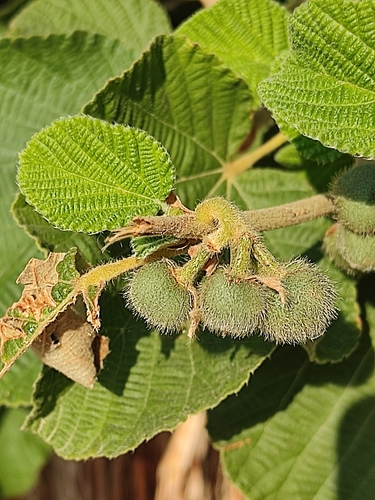
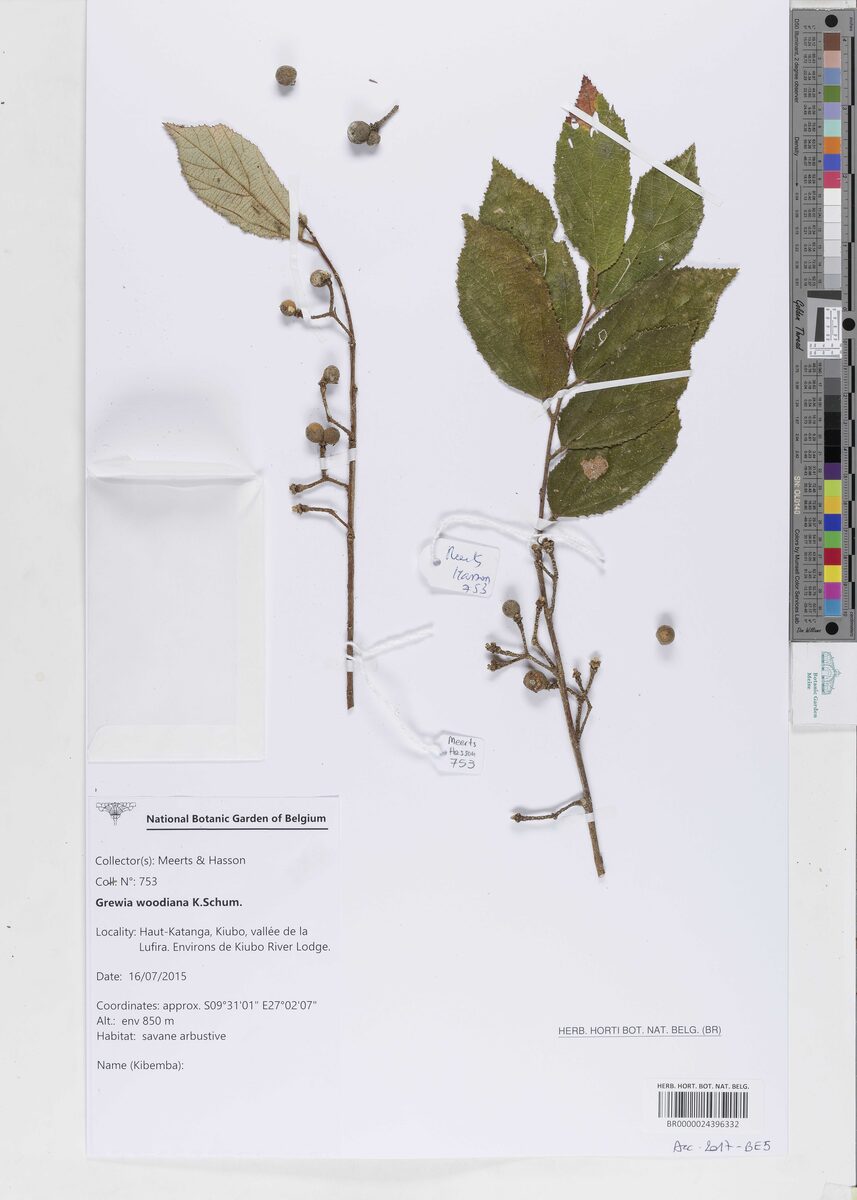
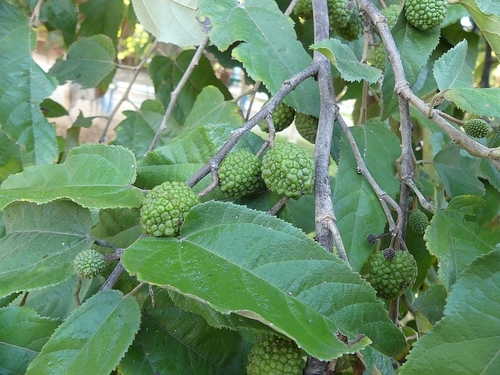
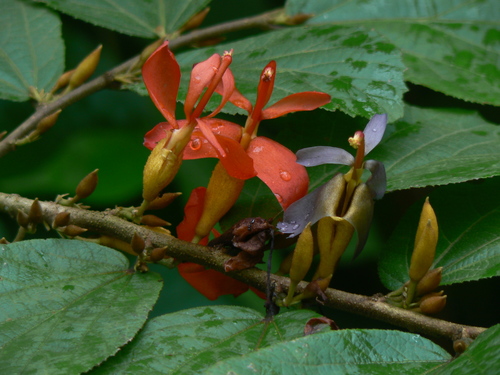
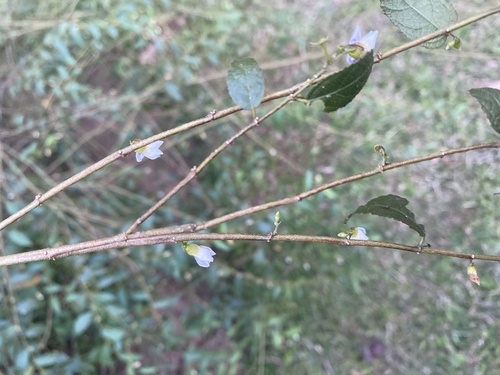
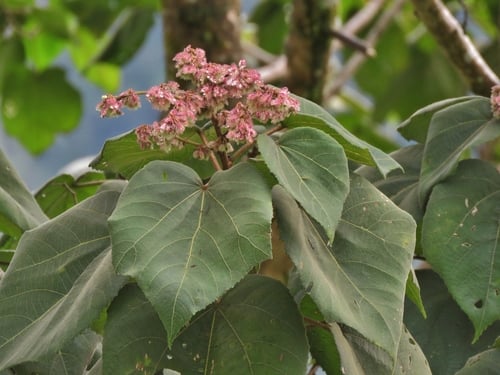
A bushy shrub or small evergreen tree. It can be 3-10 m high. The bark is brown and rough. The small branches have shaggy, woolly hairs. The leaves are alternate and simple. They have 3-5 lobes. They can be 20 cm long by 20 cm wide. There are hairs on both surfaces. The leaf stalk is 13 cm long. The flowers are yellow and turn orange with age. They have a maroon patch at the base of each petal. They are 6 cm across. They occur singly in the axils of leaves. The fruit is almost round and a woody capsule. It is 2.5-4 cm across. They have dense short hairs. They are divided into 5 sections. They are yellowish to brownish-green when mature. The fruit are edible. Now Thespesia garckeana
Edible Uses
The whole fruit except the seeds is chewed like gum, producing a sweet glutinous slime. The fruit is also used as a syrup and soup. The sap wood is yellow and the heart wood is a deep brown. It is easily worked but generally only suitable for small building needs, tool handles, oxen yokes, and domestic items such as spoons. The leaves of T. garckeana have many uses including green manure and mulch. The leaves also provide an often used fodder.
Traditional Uses
The whole fruit, except the seeds, is chewed like chewing gum. A sweet slime is produced. The seeds are not edible. The fruit need to be fully ripe. The hard outer layer is peeled off. Dried fruit are used for jellies. They are cooked and eaten in large quantities during famines. The fruit can be boiled and a little salt and dried and then stored for about 4 months. The fruit can be used for jam and processed products.
Distribution
It is a tropical plant. It grows in the lowlands. It grows in most types of woodland from sea level to 1700 m altitude in South Africa. It grows in savannah country. It grows in hot arid places. It grows in areas with an annual rainfall between 255-1,270 mm. In Zimbabwe it is mostly in areas with an annual rainfall between 750-900 mm per year. It can grow in arid places. It often grows in termite mounds. It grows in Miombo woodland in Africa.
Where It Grows
Africa, Botswana, Burundi, Central Africa, Congo, East Africa, Kenya, Malawi*, Mozambique, Namibia, Nigeria, South Africa, Southern Africa, Sudan, Tanzania, West Africa, Zambia, Zimbabwe,
Cultivation
Plants can be grown from seeds. It is best to remove the seed coat. Seeds germinate in 20-60 days. Seedling trays should not be kept too moist. Seedlings can be transplanted at the 3 leaf stage. Often seeds are sown directly in the field.
Production
It is reasonably slow growing.
Other Information
The fruit are popular with children and herdsmen. It is sold in local markets.
Nutrition
| Part | Moisture | kJ | kcal | Protein | Vit A | Vit C | Iron | Zinc |
|---|---|---|---|---|---|---|---|---|
| Fruit | 14.8 | 1042 | 249 | 5 | — | — | 5 | 0.4 |
| Fruit | 18 | — | — | — | — | — | — | — |
Synonyms
Also Known As
Azanza, Emotoo, Goron tula, Intchavana, Intchavana, Itobgwe, Kitotoo, Maneko, Matohwe, M'fono, Mhlaguhlagu, Mnduwe, Molee, Monego, Moroja, Morojwa, Mtobo, Mtowo, mu-Tuu, Mufufuma, Mugurura, Mukole, Mukukuma, Munogotogiwa, Muraurau, Mutoba, Mutobge, Mutogwe, Mutohwe, Mutongoe, Mutoo, Mutowe, Nakhgar, Ntobo, Quarters, Rhodesian tree hibiscus, Shot-apple, Snot apple, Snotappel, Tlaghay, Tree hibiscus, Uxakuxahu, Xaguzagum
References (61)
- Akinnifesi, F. K., et al, 2006, Towards the development of Miombo fruit trees as commercial crops in Southern Africa. Forests, Trees and Livelihoods. Vol. 16 pp 1-3-121
- Awodoyin, R.O., Olubode, O.S., Ogbu, J.U., Balogun, R.B., Nwawuisi, J.U. and Orji, K.O., 2015, Indigenous Fruit Trees of Tropical Africa: Status, Opportunity for Development and Biodiversity Management. Agricultural Sciences, 6, 31-41
- Benhura, M. A. N., et al., 1999, Facile formation of caramel colours using the polysaccharide material that is extracted from the fruit of Azanza garckeana. Food Chemistry 65 (1999) 303-307
- Bunderson, W. T. et al, 2002, Common Agroforestry Species in Malawi. Malawi Agroforestry Extension Project, Pubication No. 46, Lilongwe. p 33
- Burkill, H. M., 1985, The useful plants of west tropical Africa, Vol. 4. Kew.
Show all 61 references Hide references
- Campbell, B. M., 1987, The Use of Wild Fruits in Zimbabwe. Economic Botany 41(3): 375-385
- Dale, I. R. and Greenway, P. J., 1961, Kenya Trees and Shrubs. Nairobi. p 262
- Davis, S.D., Heywood, V.H., & Hamilton, A.C. (eds), 1994, Centres of plant Diversity. WWF. Vol 1. p 244
- Drummond, R. B., 1981, Common Trees of the Central Watershed Woodlands of Zimbabwe, National Herbarium Salisbury. p 138
- Estud., Ensai. & Docum. 12:59. 1954
- Facciola, S., 1998, Cornucopia 2: a Source Book of Edible Plants. Kampong Publications, p 147
- FAO. 1983, Food and fruit-bearing forest species 1: Examples from Eastern Africa. FAO Food and Forestry Paper 44/1 p 15
- Flora Zambesiaca. http://apps.kew.org/efloras
- Food Composition Tables for use in Africa FAO http://www.fao.org/infoods/directory No. 1020
- Fowler, D. G., 2007, Zambian Plants: Their Vernacular Names and Uses. Kew. p 44
- Fox, F. W. & Young, M. E. N., 1982, Food from the Veld. Delta Books. p 261
- Global Plants JSTOR
- Grivetti, 1976,
- Grivetti, L. E., 1980, Agricultural development: present and potential role of edible wild plants. Part 2: Sub-Saharan Africa, Report to the Department of State Agency for International Development. p 71
- INFOODS:FAO/INFOODS Databases
- Jardin, C., 1970, List of Foods Used In Africa, FAO Nutrition Information Document Series No 2.p 122
- Keay, R.W.J., 1989, Trees of Nigeria. Clarendon Press, Oxford. p 140
- Leakey, R. R. B., 1999, Potential for novel food products from agroforestry trees: A review. Food Chemistry. 66:1-14
- Le Houerou, H. N., (Ed.), 1980, Browse in Africa. The current state of knowledge. International Livestock Centre for Africa, Ethiopia. p 163
- Malaisse, F., 1997, Se nourrir en floret claire africaine. Approche ecologique et nutritionnelle. CTA., p 69 (As Thespesia garckeana)
- Mannheimer, C. A. & Curtis. B.A. (eds), 2009, Le Roux and Muller's Field Guide to the Trees and Shrubs of Namibia. Windhoek: Macmillan Education Namibia. p 328
- Maroyi, A., 2011, The Gathering and Consumption of Wild Edible Plants in Nhema Communal Area, Midlands Province, Zimbabwe. Ecology of Food and Nutrition 50:6, 506-525
- Maroyi, A. & Cheikhyoussef, A., 2017, Traditional knowledge of wild edible fruit in southern Africa: A comparative use patterns in Namibia and Zimbabwe. Indian Journal of Traditional Knowledge. 16(3): 385-392
- Maundu, P. et al, 1999, Traditional Food Plants of Kenya. National Museum of Kenya. p 68
- Mbuya, L.P., Msanga, H.P., Ruffo, C.K., Birnie, A & Tengnas, B., 1994, Useful Trees and Shrubs for Tanzania. Regional Soil Conservation Unit. Technical Handbook No 6. p 114
- Motlhanka, D. M. T., et al, 2008, Edible Indigenous Fruit Plants of Eastern Botswana. International Journal of Poultry Science. 7(5): 457-460
- Motlhanka, D. M. & Makhabu, S. W., 2011, Medicinal and edible wild fruit plants of Botswana as emerging new crop opportunities. Journal of Medicinal Plants Research Vol. 5(10), pp. 1836-1842
- Mpasiwakomu, R. A., 2017, The Diversity and Utilization of Wild Edible and Medicinal Plant Species found in Uvinza Miombo Woodlands, Tanzania. M. Sc. thesis University of Tanzania.
- Msola, D. K., 2007, The role of Wild Foods in Household Income and Food Security in Mufundi District, Tanzania. Morogoro, Tanzania. p 44
- Mutie, F. G., 2020, Conservation of Wild Food Plants and Their Potential for Combatting Food Insecurity in Kenya as Exemplified by the Drylands of Kitui County. Plants 2020, 9, 1017
- Neudeck, L. et al, 2012, The Contribution of Edible Wild Plants to Food Security, Dietary Diversity and Income of Households in Shorobe Village, Northern Botswana. Ethnobotany Research & Applications 10:449-462
- Njana, M. A., et al, 2013, Are miombo woodlands vital to livelihoods of rural households? Evidence from Urumwa and surrounding communities, Tabora, Tanzania. Forests, Trees and Livelihoods, 22:2, 124-140
- Palgrave, K.C., 1996, Trees of Southern Africa. Struik Publishers. p 586
- Palmer & Pitman, 1972,
- Peters, C. R., O'Brien, E. M., and Drummond, R.B., 1992, Edible Wild plants of Sub-saharan Africa. Kew. p 144
- Pickering, H., & Roe, E., 2009, Wild Flowers of the Victoria Falls Area. Helen Pickering, London. p 79
- Plowes, N. J. & Taylor, F. W., 1997, The Processing of Indigenous Fruits and other Wildfoods of Southern Africa. in Smartt, L. & Haq. (Eds) Domestication, Production and Utilization of New Crops. ICUC p 186
- Prins, H. & Maghembe, J. A., 1994, Germination studies on seed of fruit trees indigenous to Malawi. Forest Ecology and Management 64:111-125
- RILEY & BROKENSHA
- Royal Botanic Gardens, Kew (1999). Survey of Economic Plants for Arid and Semi-Arid Lands (SEPASAL) database. Published on the Internet; http://www.rbgkew.org.uk/ceb/sepasal/internet [Accessed 3rd May 2011]
- Ruffo, C. K., Birnie, A. & Tengnas, B., 2002, Edible Wild Plants of Tanzania. RELMA p 150
- Ruiters-Welcome, A. K., 2019, Food plants of southern Africa. Ph.D. thesis. Univ. of Johannesburg p 75
- Salih, N. K. M., & Ali, A. H., 2014, Wild food trees in Eastern Nuba Mountain, Sudan: Use, diversity, and threatening factors. Journal of Agriculture and Rural Development in the Tropics and Subtropics Vol. 115 No. 1 pp 1-7
- Schmidt, E., Lotter, M., & McCleland, W., 2007, Trees and shrubs of Mpumalanga and Kruger National Park. Jacana Media p 394
- Scudder, 1962, 1971,
- Shumsky, S., et al, 2014, Institutional factors affecting wild edible plant (WEP) harvest and consumption in semi-arid Kenya. Land Use Policy 38(2014) 48-69
- Tredgold, M.H., 1986, Food Plants of Zimbabwe. Mambo Press. p 84
- van Wyk, Be, & Gericke, N., 2007, People's plants. A Guide to Useful Plants of Southern Africa. Briza. p 36
- van Wyk, B-E., 2011, The potential of South African plants in the development of new food and beverage products. South African Journal of Botany 77 (2011) 857–868
- Venter, F & J., 2009, Making the most of Indigenous Trees. Briza. p 54
- Welcome, A. K. & Van Wyk, B.-E., 2019, An inventory and analysis of the food plants of southern Africa. South African Journal of Botany 122 (2019) 136–179
- Wehmeyer, A. S, 1986, Edible Wild Plants of Southern Africa. Data on the Nutrient Contents of over 300 species
- Wild, 1975,
- World Checklist of Useful Plant Species 2020. Royal Botanic Gardens, Kew (As Thespesia garckeana)
- www.zimbabweflora.co.zw 2011
- www.worldagroforestrycentre.org/sea/products/afdbases/af/asp/SpeciesInfo.asp?SpID=272