Heliocarpus americanus
L.
Majaguillo
iNaturalist· cc-by
(c) Annika Lindqvist, some rights reserved (CC BY), uploaded by Annika Lindqvist
iNaturalist· cc-by
(c) Neptalí Ramírez Marcial, some rights reserved (CC BY)
iNaturalist· cc-by
(c) Neptalí Ramírez Marcial, some rights reserved (CC BY)
Summary
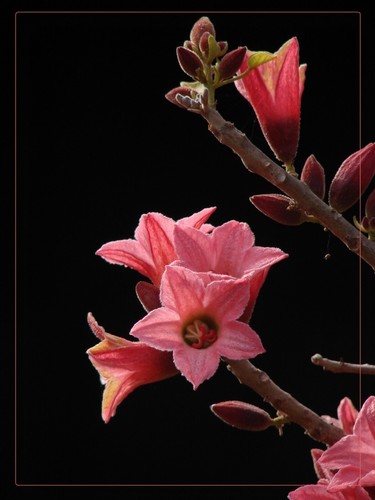
Source: WikipediaHeliocarpus americanus is a tropical tree native to Central America, and native throughout Mexico. It is sometimes called majaguillo or majagua. It is found in montane forest in Costa Rica and Panama at altitudes of 1,300–1,500 metres (4,300–4,900 ft). It bears pinkish-brown flowers in December and January.
Description
A medium sized tree. The trunk is straight and cylinder shaped. It often has branches near the base. The leaves are simple and alternate. The leaves are heart shaped and sometimes have 3 pointed lobes. There are teeth along the edge. The leaf stalks are hairy. The flowers are yellow or pink and in dense groups at the ends of branches. The seeds are in pink, feathery tufts.
Distribution
It is a tropical plant. It grows in low mountain forest. It is often in cloud forest. In Panama it grows between 1,300-1,500 m above sea level.
Where It Grows
Amazon, Andes, Argentina, Belize, Bolivia, Brazil, Central America, Colombia, Costa Rica, Ecuador, El Salvador, Guatemala, Hawaii, Honduras, Mexico, Nicaragua, North America, Pacific, Panama, Paraguay, Peru, South America, Trinidad and Tobago, Venezuela,
Propagation
Seed - best sown as soon as it is ripe in a partially shaded position in a nursery seedbed. A high germination rate can usually be expected, with the seed sprouting within 10 - 12 days. When the seedlings are 3 - 5cm tall, pot them up into individual containers and they should be ready to plant out less than 4 months later.
Other Uses
The bark of the young branches yields a strong, durable fibre from which a coarse rope is made. It is used also for weaving mats and baskets. The wood is light in weight, soft, porous, with poor mechanical properties and not durable when exposed. It is only used for items such as light boxes, toys, pencils, press plates etc.
Notes
These have also been in the Tiliaceae.
Synonyms
Also Known As
Afata, Afata blanca, Algodoeiro, Algodoncillo, Amor seco, Amores, Apeiva, Balsa macho, Balso, Burio, Cadillo, Cajeton, Dama, Damajao colorado, Guasca dulce, Huampo, Huampo blanco, Majagua, Majao, Majahua, Mecate de agua, Moho, Palo bobo, Pestano de mula, Sapan, Yaosa, Yarisa, Yausaquiro, Zapan
References (3)
- Condit, R., et al, 2011, Trees of Panama and Costa Rica. Princeton Field Guides. p 286
- Grandtner, M. M., 2008, World Dictionary of Trees. Wood and Forest Science Department. Laval University, Quebec, Qc Canada. (Internet database http://www.wdt.qc.ca)
- Grandtner, M. M. & Chevrette, J., 2013, Dictionary of Trees, Volume 2: South America: Nomenclature, Taxonomy and Ecology. Academic Press p 296
More from Malvaceae
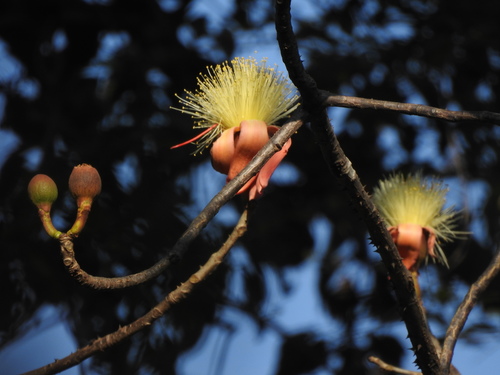
Bombax insigne
Showy silk cotton tree, White silk cotton tree
Bombax ungulicarpum
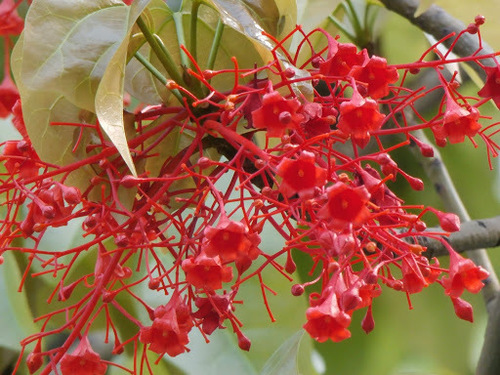
Brachychiton acerifolius
Flame tree, Flame kurrajong, Bottle Tree
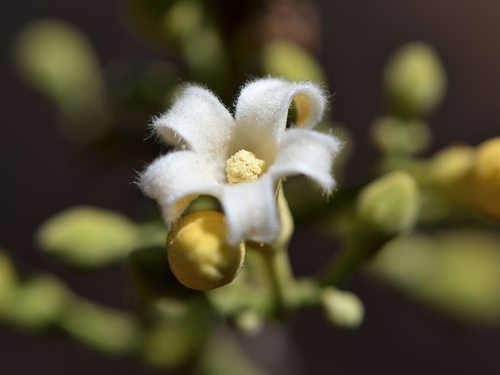
Brachychiton acuminatus
Kurrajong
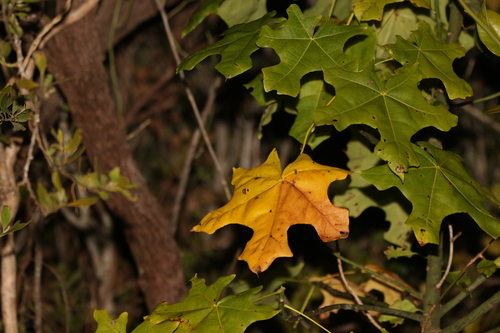
Brachychiton australis
Broad leafed bottle tree
Brachychiton bidwillii
Rusty kurrajong, Little kurrajong, Dwarf kurrajong