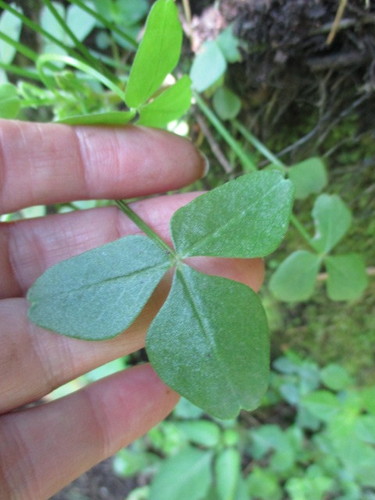
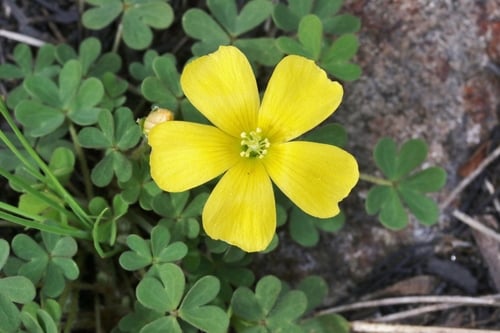
Averrhoa bilimbi
L.
Bilimbi
iNaturalist· cc-by-nc
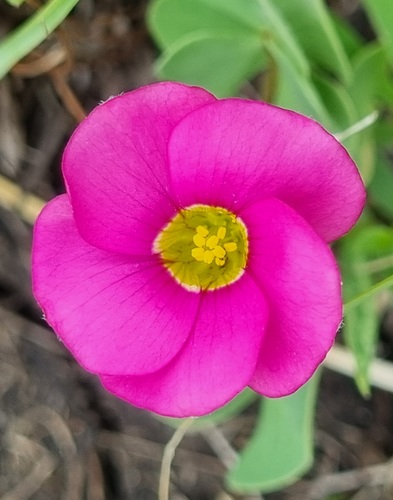
(c) leandroop, some rights reserved (CC BY-NC)
iNaturalist· cc-by
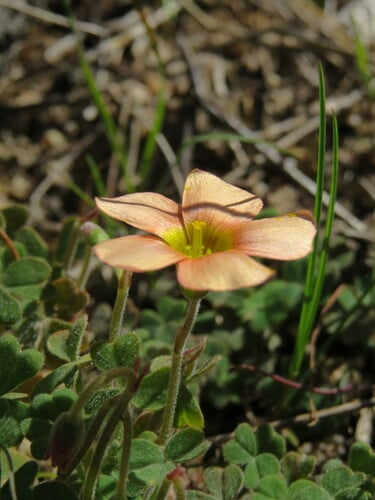
(c) portioid, some rights reserved (CC BY), uploaded by portioid
iNaturalist· cc-by-nc
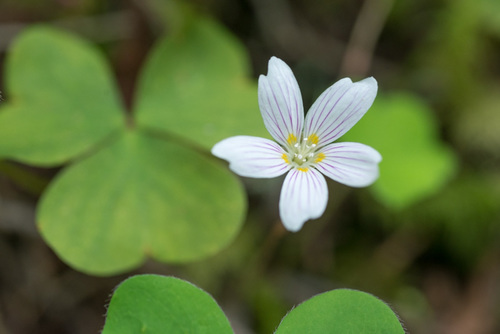
(c) Nadil Rodríguez, some rights reserved (CC BY-NC), uploaded by Nadil Rodríguez
Summary
Source: WikipediaAverrhoa bilimbi (commonly known as bilimbi, cucumber tree, or tree sorrel) is a fruit-bearing tree of the genus Averrhoa, family Oxalidaceae. It is native to the Maluku Islands and Sulawesi in Indonesia, and has become naturalised and is common throughout Southeast Asia. It is cultivated in parts of tropical South Asia and the Americas. It bears edible but extremely sour fruit. It is a close relative of the carambola tree.
Description
A small evergreen tree up to 7-10 m high. It can spread 3 m across. The stem is erect and short. Leaves are large. Leaves have from 5 to 17 or 34 pairs of leaflets. Leaves are pale green. The leaves are often clustered near the branch tips. Flowers are crimson. They are produced on old branches and the stem. The flowers are in 15 cm long clusters. These then bear clusters of cucumber shaped fruit on the trunk and older branches. Fruit are 8-10 cm long and yellow or green. They are soft and fleshy with a few flat seeds in the centre. Fruit are sour but edible.
Edible Uses
In Indonesia, A. bilimbi, locally known as belimbing wuluh, is often used to give a sour or acidic flavour to food, substituting tamarind or tomato. In the northwestern province of Aceh, it is preserved by salting and sun-drying to make asam sunti, a kitchen seasoning to make a variety of Acehnese dishes. It is a key ingredient in many Indonesian dishes such as sambal belimbing wuluh. In the Philippines, where it is commonly called kamias and ibâ, it is commonly found in backyards. The fruit are eaten either raw or dipped in rock salt. It can be either curried or added as a souring agent for common Filipino dishes such as sinigang, pinangat and paksiw. It can be sun-dried for preservation and used as a spice. It is also used to make a salad mixed with tomatoes, and chopped onions, with soy sauce as dressing. The uncooked bilimbi is prepared as relish and served with rice and beans in Costa Rica. In the Far East, where the tree originated, it is sometimes added to curry. In Malaysia and the Philippines, bilimbi or kamias is made into a rather sweet and sour jam, with a flavour profile similar to prunes or plums. In Kerala and Coastal Karnataka, India, it is used for making pickles and fish curry, especially with sardines, while around Karnataka, Maharashtra, and Goa the fruit is commonly eaten raw with salt and spice. In Guyana and Mauritius, it is made into achars/pickles. In Maldives where it is known as bilimagu, it is pickled with aromatic spices and eaten with rice and local Garudhiya (fish soup). It is also used in various Maldivian local dishes such as Boakibaa and Mashuni as a souring agent. In Seychelles, it is often used as an ingredient to give a tangy flavour to many Seychellois creole dishes, especially fish dishes. It is often used in grilled fish and also (almost always) in a shark meat dish, called satini reken. It is also cooked down with onion, tomato, and chili peppers to make a sauce. Sometimes they are cured with salt to be used when they are out of season. Bilimbi juice (with a pH of about 4.47) is made into a cooling beverage. It can replace mango in making chutney. Additionally, the fruit can be preserved by pickling, which reduces its acidity.
Traditional Uses
The fruit are used for souring dishes. They can also be used for jams, drinks, pickles and in curries. The flowers can be made into conserves.
This uses section is brief — help expand it
Medicinal Uses
The leaves can be used to cure syphilis when taken internally, either fresh or fermented. Three leaves are put in water and the liquid is drunk daily as a remedy for high blood pressure. When applied externally as a paste or poultice, the leaves prevent itching. A decoction of leaves is used to cure inflammation of the rectum and the paste is applied for mumps, rheumatism and pimples. An infusion of the flowers is used for coughs. The fruit is an astringent, stomachic and refrigerant and its juice is made into syrup as a cooling drink for reducing fever. It is antiscorbutic and is used in some slight cases of haemorrhage from the bowels as well as the stomach and internal haemorrhage. It is also used to cure beriberi, biliousness and coughs. One or two pickled fruits are eaten for controlling diarrhoea. A rotten fruit is rubbed into the skin to treat fungal diseases.
Known Hazards
The fruit contains high levels of oxalate. Acute kidney injury due to tubular necrosis caused by oxalate has been recorded in several people who drank the concentrated juice on continuous days as treatment for high cholesterol. The fruit also contains the neurotoxin caramboxin. The combination of both substances can also cause acute kidney injury when the fruit is consumed in excess, akin to the case with carambola. Even for those with prior normal renal function, this can result in neurotoxic as well as nephrotoxic effects.
Distribution
A tropical plant. It suits the hot, wet tropical lowlands. The tree is drought resistant. It will grow from sea level up to at least 750 m altitude in the tropics. It prefers well composted, moist soil, in a protected, partly shaded position. It is frost tender. In the Cairns Botanical Gardens. It suits hardiness zones 10-12. At MARDI.
Where It Grows
Africa, Amazon, Andamans, Asia, Australia, Bangladesh, Brazil, British Indian Ocean Terr., BIOT, Cambodia, Cape Verde, Central America, China, Colombia, Costa Rica, Cuba, Dominican Republic, East Africa, East Timor, Fiji, Ghana, Grenada, Guam, Guyana, Haiti, Hawaii, India, Indochina, Indonesia*, Jamaica, Laos, Malaysia, Maldives, Mariana Islands, Mexico, Mozambique, Myanmar, Nauru, Nicaragua, Northeastern India, Pacific, Pakistan, Palau, Papua New Guinea, PNG, Peru, Philippines, Pohnpei, SE Asia, Singapore, Solomon Islands, South America, Sri Lanka, St. Vincent and Grenadines, Suriname, Taiwan, Tanzania, Thailand, Timor-Leste, USA, Vietnam, West Africa, West Indies, West Timor,
Cultivation
Trees are mostly grown from seeds. It grows wild in secondary forest in many coastal areas. It can also be grown by air layering.
Propagation
Seed - although trees are usually propagated by seeds, this is generally discouraged when growing as a fruit crop since great variation occurs amongst the seedlings. Marcotting. Usually only done on a garden basis since it is a laborious and slow process and the layers take a long time to root. Budding and grafting. Shield budding is successfully practised in the Philippines and is recommended for large scale propagation. Root cutting may be possible, since it has been observed that severed roots of taling pling trees are able to produce adventitious growths that are able to establish themselves as independent plants.
Other Uses
The raw juice of the fruit is an effective remover of stains or spots on clothes, rust stains on brassware and stubborn food particles on enamelware. The fruits are used as mordants in the preparation of an orange dye for silk fabrics. A purple dye from the petals is used as an indicator in chemistry. The wood is white, soft but tough, even-grained, and weighs 35 lbs/cu ft. It is seldom available in a sufficient size to be used for carpentry. The wood is used for fuel.
Production
Flowers are produced all year round. Flowering is more common in dry seasons. Plants produce fruit after 5-6 years/ Fruit mature in 90 years. A tree can produce 500 fruit in a year.
Other Information
Only of minor use as a flavouring in cooking. It is common in India and south Asia. Occasional trees occur in Papua New Guinea and the fruit is probably little used. It is cultivated.
Notes
There are 5 Averrhoa species. Sometimes Averrhoa are put in the Averrhoaceae family.
Nutrition
| Part | Moisture | kJ | kcal | Protein | Vit A | Vit C | Iron | Zinc |
|---|---|---|---|---|---|---|---|---|
| Fruit | 94.2 | 84 | 20 | 0.8 | 30 | 16 | 1 | — |
| Flowers | — | — | — | — | — | — | — | — |
Synonyms
Also Known As
Belimbing asam, Belimbing besi, Belimbing buluk, Belimbing masam, Belimbing wuluh, Bilamagu, Bilimagu, Bilimbing wuluh, Bilin, Bilombitenga, Birinbi, Camia, Cornichonier, Cucumber tree, Iba, Kamias, Kamis, Kamrakh, Khe tau, Kochittamarattai, Lange birambi, Limao-de-Caiena, Limon chino, Mbilimbi, Mimbro, Mimbru, Pohon belimbing wuluh, Shiyam, Sour finger carambola, Taling pling, Tayok-zaungya, Tralong tong, Trolung tung
References (87)
- AAK, 1980, Bertanam Pohon Buah-buahan. Penerbitan Yayasan Kanisius, Jogyakarta. p 16
- Abbiw, D.K., 1990, Useful Plants of Ghana. West African uses of wild and cultivated plants. Intermediate Technology Publications and the Royal Botanic Gardens, Kew. p 42
- Ambasta S.P. (Ed.), 2000, The Useful Plants of India. CSIR India. p 63
- Arora, R. K., 2014, Diversity in Underutilized Plant Species - An Asia-Pacific Perspective. Bioversity International. p 59
- Baishya, S. Kr., et al, 2013, Survey of Wild Edible Fruits of Dhubri District, Assam, India. Plant Archives Vol 13 (1): 155-158
Show all 87 references Hide references
- Barwick, M., 2004, Tropical and Subtropical Trees. A Worldwide Encyclopedic Guide. Thames and Hudson p 39
- Bircher, A. G. & Bircher, W. H., 2000, Encyclopedia of Fruit Trees and Edible Flowering Plants in Egypt and the Subtropics. AUC Press. p 49
- Blench, R., 2004, Fruits and Arboriculture in the Indo-Pacific Region. Indo-Pacific Prehistory Association Bulletin 24. (Taipei Papers Volume 2) p 35
- Bodkin, F., 1991, Encyclopedia Botanica. Cornstalk publishing, p 120
- Brouk, B., 1975, Plants Consumed by Man. Academic Press, London. p 163
- Brown, W.H., 1920, Wild Food Plants of the Philippines. Bureau of Forestry Bulletin No. 21 Manila. p 72
- Burkill, H. M., 1985, The useful plants of west tropical Africa, Vol. 4. Kew.
- Burkill, I.H., 1966, A Dictionary of the Economic Products of the Malay Peninsula. Ministry of Agriculture and Cooperatives, Kuala Lumpur, Malaysia. Vol 1 (A-H) p 272
- Chakraborty, S. & Chaturbedi, H. P., 2014, Some Wild Edible Fruits of Tripura- A Survey. Indian Journal of Applied research. (4) 9
- Chandrashekara, U. M., 2009, Tree species yielding edible fruit in the coffee-based homegardens of Kerala, India: their diversity, uses and management. Food Sec. 1:361-370
- Chin, H.F., & Yong, H.S., 1996, Malaysian Fruits in Colour. Tropical press, Kuala Lumpur p 54
- Coe, F. G. & Anderson, G. J., 1997, Ethnobotany of the Miskitu of Eastern Nicaragua. Journal of Ethnobiology 17(2): 171-214
- Coronel, R.E., 1982, Fruit Collections in the Philippines. IBPGR Newsletter p 6
- Cundall, P., (ed.), 2004, Gardening Australia: flora: the gardener's bible. ABC Books. p 210
- Darley, J.J., 1993, Know and Enjoy Tropical Fruit. P & S Publishers. p 21
- Ekman Herbarium records Haiti
- Facciola, S., 1998, Cornucopia 2: a Source Book of Edible Plants. Kampong Publications, p 45
- Flora of Pakistan. www.eFloras.org
- Flowerdew, B., 2000, Complete Fruit Book. Kyle Cathie Ltd., London. p 158
- Food Composition Tables for use in East Asia FAO http://www.fao.org/infoods/directory No. 827
- French, B., 1986, Food Plants of Papua New Guinea, Asia Pacific Science Foundation p 222
- French, B.R., 2010, Food Plants of Solomon Islands. A Compendium. Food Plants International Inc. p 223
- Garner, R.J., and Chaudhri, S.A., (Ed.) 1976, The Propagation of Tropical fruit Trees. FAO/CAB. p 29
- Hedrick, U.P., 1919, (Ed.), Sturtevant's edible plants of the world. p 88
- Heywood, V.H., Brummitt, R.K., Culham, A., and Seberg, O. 2007, Flowering Plant Families of the World. Royal Botanical Gardens, Kew. p 239
- Hutton, W., 1997, Tropical Herbs and Spices of Indonesia. Periplus. p 14
- Hu, Shiu-ying, 2005, Food Plants of China. The Chinese University Press. p 490
- Jardin, C., 1970, List of Foods Used In Africa, FAO Nutrition Information Document Series No 2.p 122
- Kiple, K.F. & Ornelas, K.C., (eds), 2000, The Cambridge World History of Food. CUP p 1731
- Lembaga Biologi Nasional, 1977, Buah-Buahan, Balai Pustaka, Jakarta. p 20
- Lembogi Biologi Nasional, 1980, Sayur-sayuran. Balai Pustaka, Jakarta. p 16
- Llamas, K.A., 2003, Tropical Flowering Plants. Timber Press. p 306
- Lorenzi, H., Bacher, L., Lacerda, M. & Sartori, S., 2006, Brazilian Fruits & Cultivated Exotics. Sao Paulo, Instituto Plantarum de Estuados da Flora Ltda. p 466
- Macmillan, H.F. (Revised Barlow, H.S., et al) 1991, Tropical Planting and Gardening. Sixth edition. Malayan Nature Society. Kuala Lumpur. p 293
- Martin, F. W., et al, 1987, Perennial Edible Fruits of the Tropics. USDA Handbook 642 p 44
- Martin, M.A., 1971, Introduction L'Ethnobotanique du Cambodge. Centre National de la Recherche Scientifique. Paris
- Miguel, E., et al, 1989, A checklist of the cultivated plants of Cuba. Kulturpflanze 37. 1989, 211-357
- Milow, P., et al, 2014, Malaysian Species of Plants with Edible Fruits or Seeds and Their Valuation. International Journal of Fruit Science, 14:1–27
- Morton, J. F., 1987, Fruits of Warm Climates. Wipf & Stock Publishers p 128
- Pasha, M. K. & Uddin, S. B., 2019, Minor Edible Fruits of Bangladesh. Bangladesh J. Plant Taxon. 26(2): 299–313
- Patiri, B. & Borah, A., 2007, Wild Edible Plants of Assam. Geethaki Publishers. p 20
- Pawera, L., et al, 2020, Wild Food Plants and Trends in Their Use: From Knowledge and Perceptions to Drivers of Change in West Sumatra, Indonesia, Foods. 2020, 9, 1240
- Phon, P., 2000, Plants used in Cambodia. © Pauline Dy Phon, Phnom Penh, Cambodia. p 54
- PROSEA (Plant Resources of South East Asia) handbook, Volume 2, 1991, Edible fruits and nut. p 96
- Ochse, J. J. et al, 1931, Vegetables of the Dutch East Indies. Asher reprint. p 547
- Omawale, 1973, Guyana's edible plants. Guyana University, Georgetown p 44
- Ong, H.C. et al, 2012, Traditional knowledge and usage of edible plants among the Temuan villagers, Malaysia. Indian Journal of Traditional Knowledge. 11(1) pp 161-165
- Owen, S., 1993, Indonesian Food and Cookery, INDIRA reprints. p 49
- Paul, A., 2013, Minor and uncultivated fruits of Eastern India, 2nd International Symposium on Minor Fruits and Medicinal Plants
- Peekel, P.G., 1984, (Translation E.E.Henty), Flora of the Bismarck Archipelago for Naturalists, Division of Botany, Lae, PNG. p 265, 264
- Plants of Haiti Smithsonian Institute http://botany.si.edu/antilles/West Indies
- Purseglove, J.W., 1968, Tropical Crops Dicotyledons, Longmans. p 638
- Rajapaksha, U., 1998, Traditional Food Plants in Sri Lanka. HARTI, Sri Lanka. p 348
- Roa, J. A. G. & Boada, D. S. G., 2018, Fundación para el Fortalecimiento de la Fruticultura y Plantas Alimenticias no Convencionales en Colombia.
- Segura, S., et al, 2018, The edible fruit species in Mexico. Genet Resour Crop Evol (2018) 65:1767–1793
- Seidemann J., 2005, World Spice Plants. Economic Usage, Botany, Taxonomy. Springer. p 59
- Selvam, V., 2007, Trees and shrubs of the Maldives. RAP Publication No. 2007/12 p 34
- Smith, N., Mori, S.A., et al, 2004, Flowering Plants of the Neotropics. Princeton. Plate 35 (Photo)
- Solomon, C., 2001, Encyclopedia of Asian Food. New Holland. p 39
- Sp. pl. 1:428. 1753
- Staples, G.W. and Herbst, D.R., 2005, A tropical Garden Flora. Bishop Museum Press, Honolulu, Hawaii. p 446
- Sujanapal, P., & Sankaran, K. V., 2016, Common Plants of Maldives. FAO & Kerala FRI, p 46
- Sujarwo, W., et al, 2016, Traditional knowledge of wild and semi-wild edible plants used in Bali (Indonesia) to maintain biological and cultural diversity. Plant Biosystems, 2016, Vol. 150, No. 5, 971-976
- Sukarya, D. G., (Ed.) 2013, 3,500 Plant Species of the Botanic Gardens of Indonesia. LIPI p 141
- Sukenti, K., et al, 2016, Ethnobotanical study on local cuisine of the Sasak tribe in Lombok Island, Indonesia. Journal of Ethnic Foods. 3 (2016) 189-200 p 198
- Suwardi, A. B., et al, 2020, Ethnobotany and conservation of indigenous edible fruit plants in South Aceh, Indonesia. Biodiversitas Vol. 21, No. 5, pp 1850-1860
- Swaminathan, M.S., and Kochnar, S.L., 2007, An Atlas of Major Flowering Trees in India. Macmillan. p 86
- Tankard, G., 1990, Tropical fruit. An Australian Guide to Growing and using exotic fruit. Viking p 105
- Tate, D., 1999, Tropical Fruit. Archipelago Press. Singapore. p 32
- Terra, G.J.A., 1973, Tropical Vegetables. Communication 54e Royal Tropical Institute, Amsterdam, p 27
- Topp, J. M. W., 1988, An Annotated Check List of the Flora of Diego Garcia, British Ocean Territory. Atoll Research Bulletin No. 313
- Tyagi, R. K., et al, 2004, Conservation of Spices Germplasm in India. Indian J. Plant Genet. Resour. 17(3): 163-174
- USDA, ARS, National Genetic Resources Program. Germplasm Resources Information Network - (GRIN). [Online Database] National Germplasm Resources Laboratory, Beltsville, Maryland. Available: www.ars-grin.gov/cgi-bin/npgs/html/econ.pl (10 April 2000)
- van Wyk, B., 2005, Food Plants of the World. An illustrated guide. Timber press. p 81
- Vasquez, R. and Gentry, A. H., 1989, Use and Misuse of Forest-harvested Fruits in the Iquitos Area. Conservation Biology 3(4): 350f
- Wiersema, J. H. & Leon, B., 2013, World Economic Plants. A Standard Reference CRC Press. 2nd Ed. p 87
- Williams, C.N., Chew, W.Y., and Rajartnam, J.A., 1989, Tree and Field Crops of the Wetter Regions of the Tropics. Longman, p 118
- World Checklist of Useful Plant Species 2020. Royal Botanic Gardens, Kew
- www.worldagroforestrycentre.org/treedb/
- Zawiah, N. & Othaman, H., 2012, 99 Spesies Buah di FRIM. Institut Penyelidikan Perhutanan Malaysia. p 40
- Zeven, A. C. & de West, J. M. J., 1982, Dictionary of cultivated plants and their regions of diversity. Wageningen. p 50
- Zuchowski W., 2007, Tropical Plants of Costa Rica. A Zona Tropical Publication, Comstock Publishing. p 188