Avena byzantina
K. Koch
Red oat, Indian oat
iNaturalist· cc-by-nc-sa
(с) Kew on Flickr, некоторые права защищены (CC BY-NC-SA)
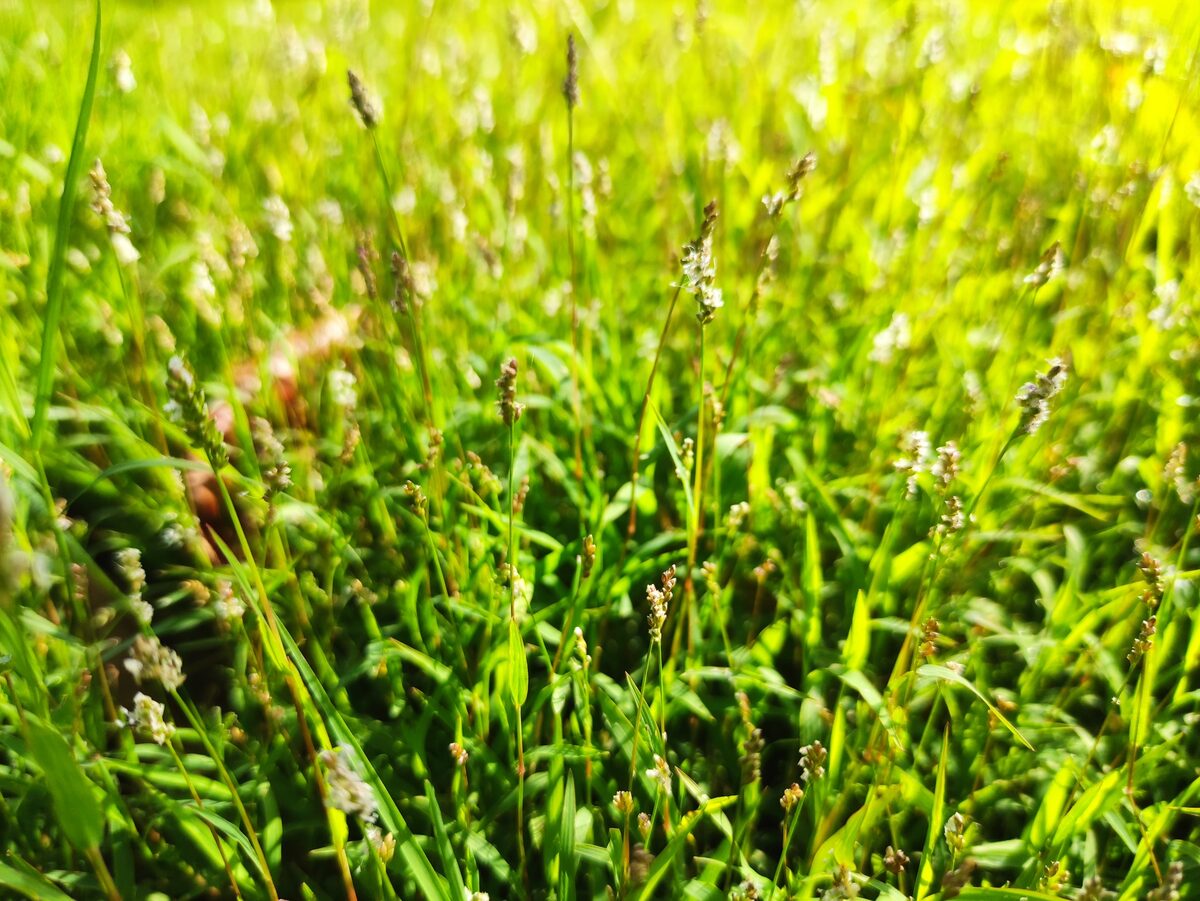
iNaturalist· cc-by-nc
(c) faluke, some rights reserved (CC BY-NC)
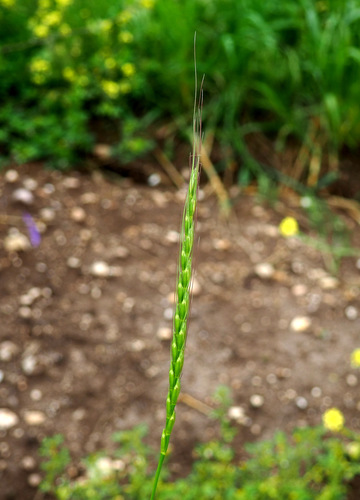
iNaturalist· cc-by-nc
(c) faluke, some rights reserved (CC BY-NC)
Summary
Source: WikipediaAvena byzantina, red oats, is a species of cultivated oat in the family Poaceae. It is native to Greece, Turkey, Cyprus, the Transcaucasus, Iran, and Saudi Arabia. Cultivated for thousands of years, it is better suited to warmer conditions than white or common oats (Avena sativa), but is often sown as a no‑till winter crop. There are 564 landraces and 203 cultivars of red oats listed in the European Plant Genetic Resources Search Catalogue (EURISCO). Approximately 10% of the millions of hectares worldwide under oats are devoted to red oats, principally for fodder.
Description
An annual grass. It grows 60-150 cm tall. The leaves are 10-30 cm long by 2-8 mm wide. Like oats but the spikelets have 3 florets.
This description is brief — help expand it
Edible Uses
Edible Parts: Seed Edible Uses: Coffee Seed - cooked. The seed ripens in the latter half of summer and, when harvested and dried, can store for several years. It has a floury texture and a mild, somewhat creamy flavour. It can be used as a staple food crop in either savoury or sweet dishes. The seed can be cooked whole, though it is more commonly ground into a flour and used as a cereal in all the ways that oats are used, especially as a porridge but also to make biscuits, sourdough bread etc. The seed can also be sprouted and eaten raw or cooked in salads, stews etc. The roasted seed is a coffee substitute.
Medicinal Uses
None known
Distribution
It is a Mediterranean climate plant. In Argentina it grows from sea level to 1,000 m above sea level.
Where It Grows
Africa, Argentina, Australia, Britain, Chile, East Africa, Europe, India, Iraq, Middle East, Mozambique, Nepal, Pakistan, South America, Spain, Turkey, Türkiye, Uruguay,
Cultivation
We have very little information on this species, but it should be possible to grow it as a spring-sown annual in Britain, and might also succeed as an autumn-sown crop. A hexaploid species, one report says that it is possibly a sub-species of A. sterilis, and is often cultivated for its edible seed in warmer temperate zones, whilst some modern works see it as no more than a synonym of A. sativa. This species succeeds in saline soils. It tolerates a pH in the range 5.3 to 8.2. The following notes are based on the general needs of the genus. Succeeds in any moderately fertile soil in full sun. Oats are in general easily grown plants but, especially when grown on a small scale, the seed is often completely eaten out by birds. Some sort of netting seems to be the best answer on a garden scale.
Propagation
Seed - sow in situ in early spring or in the autumn. Only just cover the seed. Germination should take place within 2 weeks.
Other Uses
Fibre Mulch Paper Thatching The straw has a wide range of uses such as for bio-mass, fibre, mulch, paper-making and thatching. Some caution is advised in its use as a mulch since oat straw can infest strawberries with stem and bulb eelworm. Special Uses
Notes
There are about 25 Avena species.
Synonyms
Also Known As
Jain, Javi, Jav, Yavalu
References (11)
- Ambasta S.P. (Ed.), 2000, The Useful Plants of India. CSIR India. p 63
- Brouk, B., 1975, Plants Consumed by Man. Academic Press, London. p 26
- Flora of Australia Volume 49, Oceanic Islands 1, Australian Government Publishing Service, Canberra. (1994) p 457
- Flora of Pakistan. www.eFloras.org
- Holden, J.H.W., 1979, Oats, in Simmonds N.W.,(ed), Crop Plant Evolution. Longmans. London. p 86
Show all 11 references Hide references
- Jardin, C., 1970, List of Foods Used In Africa, FAO Nutrition Information Document Series No 2.p 1
- Linnaea 21:392. 1848
- Plants for a Future database, The Field, Penpol, Lostwithiel, Cornwall, PL22 0NG, UK. http://www.scs.leeds.ac.uk/pfaf/
- Shah, S. K., 2014, Dietary contribution of underutilized minor crops and indigenous plants collected from uncultivated lands and forests in Nepal. in Promotion of Underutilized Indigenous Food Resources for Food Security and Nutrition in Asia and Pacific. FAO. Bangkok
- Small, E., 2009, Top 100 Food Plants. The world's most important culinary crops. NRC Research Press. p 370
- Vaughan, J. C. & Geissler, C. A., 2009, The new Oxford Book of Food Plants. Oxford University Press. p 4