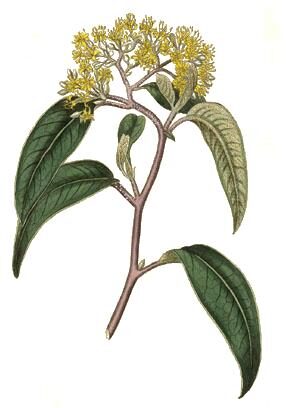
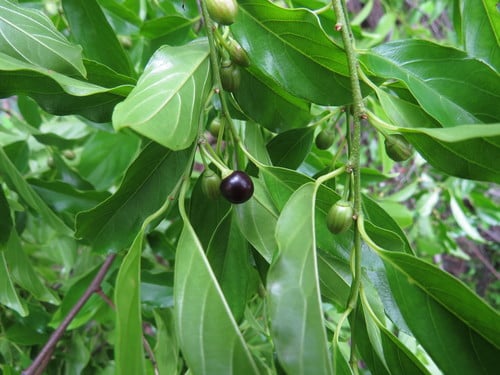
Hovenia acerba
Lindley
Japanese raisin tree
iNaturalist· cc-by-nc
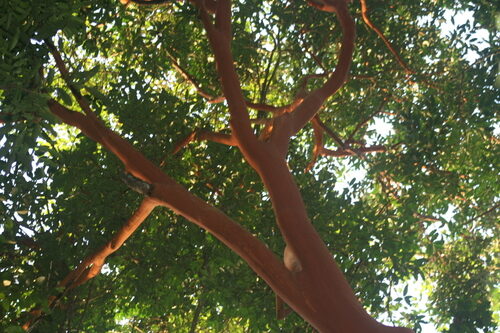
(c) Yao Li, some rights reserved (CC BY-NC), uploaded by Yao Li
iNaturalist· cc-by-nc
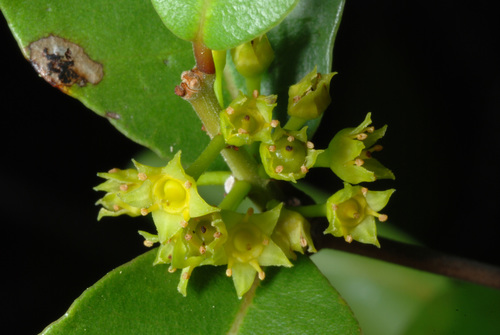
(c) jianglei, some rights reserved (CC BY-NC)
iNaturalist· cc-by-nc
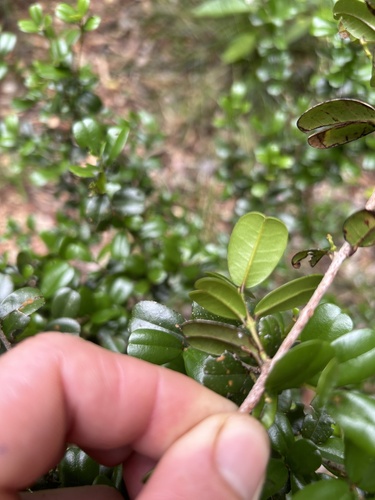
(c) lowind, some rights reserved (CC BY-NC)
Summary
Source: WikipediaHovenia acerba is a species of flowering plant in the raisin tree genus Hovenia (family Rhamnaceae), native to temperate areas of Nepal, the eastern Himalayas, Assam, Myanmar, northern Thailand, Tibet, and central and southern China. A tree reaching 25 m (82 ft), it is found at elevations up to 2,100 m (6,900 ft), in wooded and open areas, forest edges, and slopes, and it is frequently cultivated locally. Like Hovenia dulcis it is a source of a fine hard timber, and the sweet fruit rachis is edible and is used to make a fruit wine. The seeds are used in traditional medicine. One can distinguish Hovenia acerba by its fruits, which are yellow or brownish at maturity, whereas those of H. dulcis are black. It is widely used as a street tree in southern Chinese cities.
Description
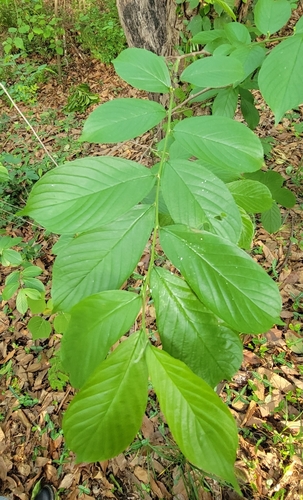
A deciduous shrub or tree. It can be 10-25 m tall. The leaves are oval and heart shaped at the base. They are 8-17 cm long by 6-12 cm wide. They are papery. The flowers are at the ends of branches or in the axils of leaves. The fruit is massed in clusters on the ends of the stems. The fruit are yellow but become brown when ripe. They can be 6.5 mm across. The fruiting stalks becomes fattened and fleshy. The seeds are dark brown. There are 2 botanical varieties.
Edible Uses
The fruit are used for brewing wine and eaten raw. The fruiting stalks, which are rich in sugar, are edible. The leaves are cooked as a vegetable.
Traditional Uses
Fruit used for brewing wine. Fruit are also eaten raw. The fruiting stalks are rich in sugar and edible. The leaves are cooked as a vegetable.
This uses section is brief — help expand it
Distribution
A temperate climate plant. It prefers full sun and well drained soil. It needs protecting from dry winds. It grows at 1450 m altitude in Yunnan in China. It grows in subtropical broadleaved evergreen forest. In XTBG Yunnan. In Sichuan.
Where It Grows
Asia, Bhutan, China, Himalayas, India, Myanmar, Nepal, Northeastern India, SE Asia, Tibet,
Notes
There are 2 Hovenia species.
Synonyms
Also Known As
M'an Tsz Kwo, Shi-pi, Sicka, Vau-tang-bawk, Yaigueizau, Zhi ju
References (8)
- Altschul, S.V.R., 1973, Drugs and Foods from Little-known Plants. Notes in Harvard University Herbaria. Harvard Univ. Press. Massachusetts. no. 2637
- Bot. Reg. 6: t. 501. 1820
- Dobriyal, M. J. R. & Dobriyal, R., 2014, Non Wood Forest Produce an Option for Ethnic Food and Nutritional Security in India. Int. J. of Usuf. Mngt. 15(1):17-37 (As Hobenia)
- Flora of China. Vol. 12 p 118 and Flora of China. www.eFloras.org
- Jin, Chen et al, 1999, Ethnobotanical studies on Wild Edible Fruits in Southern Yunnan: Folk Names: Nutritional Value and Uses. Economic Botany 53(1) pp 2-14
Show all 8 references Hide references
- Kar, A., et al, 2013, Wild Edible Plant Resources used by the Mizos of Mizoram, India. Kathmandu University Journal of Science, Engineering and Technology. Vol. 9, No. 1, July, 2013, 106-126
- Li, S., et al, 2020, Monpa, memory, and change: an ethnobotanical study of plant use in Mêdog County, South-east Tibet, China. Journal of Ethnobiology and Ethnomedicine. (2020) 16:5 p 22
- Xu, You-Kai, et al, 2004, Wild Vegetable Resources and Market Survey in Xishuangbanna, Southwest China. Economic Botany. 58(4): 647-667.