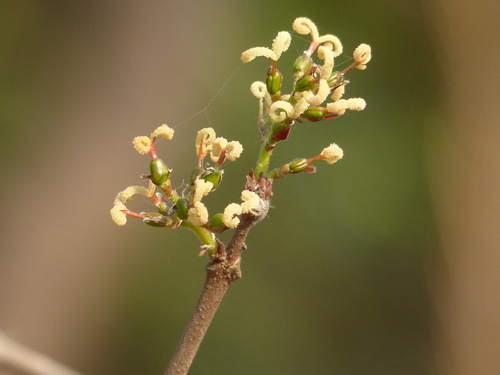
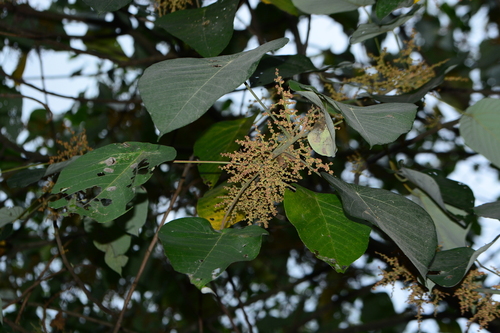
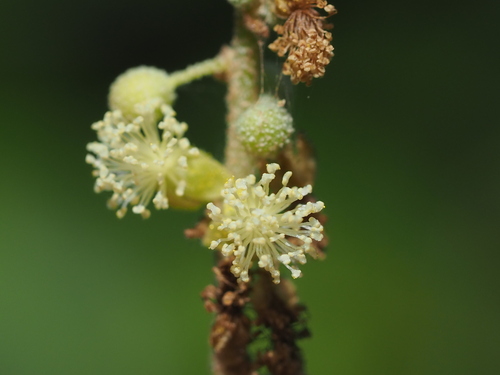
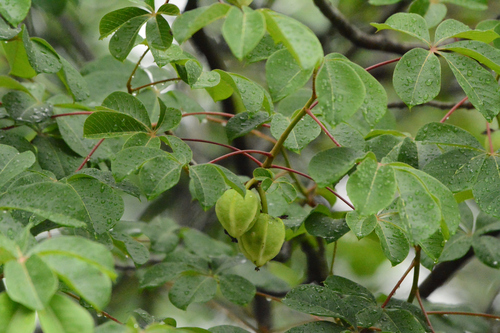
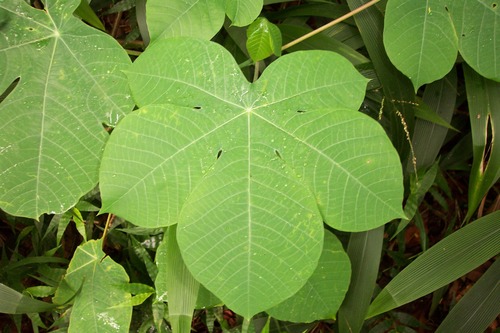
Micrandra spruceana
(Baill.) R. E. Schult.
Spruce micandra
iNaturalist· cc-by-nc-sa
(c) Mateo Hernandez Schmidt, some rights reserved (CC BY-NC-SA), uploaded by Mateo Hernandez Schmidt
iNaturalist· cc-by-nc-sa
(c) Mateo Hernandez Schmidt, some rights reserved (CC BY-NC-SA)
Summary
Source: WikipediaMicrandra spruceana is a species of tree in the family Euphorbiaceae. It is native to South America.
Description
A large evergreen tree growing to 30 m tall with a buttressed trunk, native to well-drained soils in the Amazon rainforest of South America.
This description is brief — help expand it
Edible Uses
Seed - cooked. The seeds are poisonous raw and need careful preparation to render them safe to eat. They are boiled and then washed several times to leech out the toxic compounds, after which they are broken up by hand. A paste resembling cream-cheese in appearance and taste can be prepared from them. Alternatively, the damp mash can be gently toasted on a flat plate over the fire and reduced to a fine greyish white meal which is made into casabe or unleavened bread
Traditional Uses
The seeds are cooked and washed in several changes of water and then mashed. Caution: The seeds may be poisonous without treatment.
This uses section is brief — help expand it
Known Hazards
The seeds may be poisonous without proper treatment (cooking and washing).
Distribution
A tropical plant. It grows on well-drained soil in the Amazon rainforest.
Where It Grows
Amazon, Brazil, Colombia, Guianas, Guyana, Peru, South America, Suriname, Venezuela,
Other Uses
A quantity of oil is collected from the seed when they are boiled in water. A very bitter flavour, it is burned in lamps to provide illumination. The tree contains sparse quantities of a white latex that is low in rubber and high in resin. It is not usually collected. The wood is used for decorative panelling.
Synonyms
Also Known As
Carapacho, Conoco, Conuri propio, Cunuri comestible, Guajigue, Guaspuicke, Higuerilla, Higuerilla negra, Konoko, Momo, Packia, Reventillo, Sacha shiringa, Shiringa masha, Uicuai, Wapuh, Yechia, Yetcha
References (7)
- Altschul, S.V.R., 1973, Drugs and Foods from Little-known Plants. Notes in Harvard University Herbaria. Harvard Univ. Press. Massachusetts. no. 2385
- Etkin, N.L. (Ed.), 1994, Eating on the Wild Side, Univ. of Arizona. p 122, 139
- Fern, K., 2012, Tropical Species Database http://theferns.info/tropical/
- Grandtner, M. M. & Chevrette, J., 2013, Dictionary of Trees, Volume 2: South America: Nomenclature, Taxonomy and Ecology. Academic Press p 412
- Kermath, B. M., et al, 2014, Food Plants in the Americas: A survey of the domesticated, cultivated and wild plants used for Human food in North, Central and South America and the Caribbean. On line draft. p 538
Show all 7 references Hide references
- Roa, J. A. G. & Boada, D. S. G., 2018, Fundación para el Fortalecimiento de la Fruticultura y Plantas Alimenticias no Convencionales en Colombia.
- Spichiger, R., et al, 1990, Contribucion a la Flora de la Amazonia Peruana. Boissiera 44. p 43