Pedilanthus tithymaloides
(L.) Poiteau
Slipper plant
iNaturalist· cc-by-nc
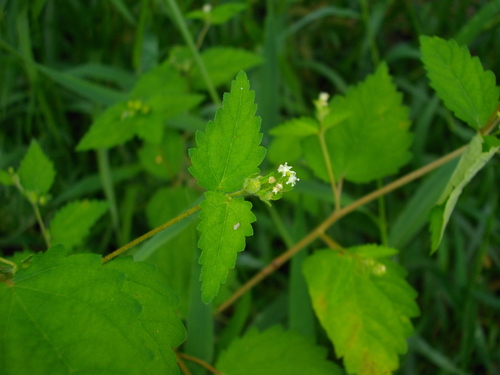
(c) Christian Grenier, some rights reserved (CC BY-NC)
iNaturalist· cc-by-nc
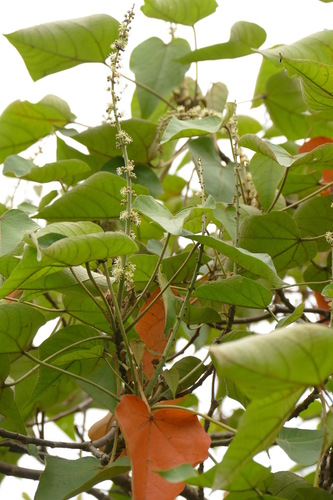
(c) Christian Grenier, some rights reserved (CC BY-NC)
iNaturalist· cc-by-nc
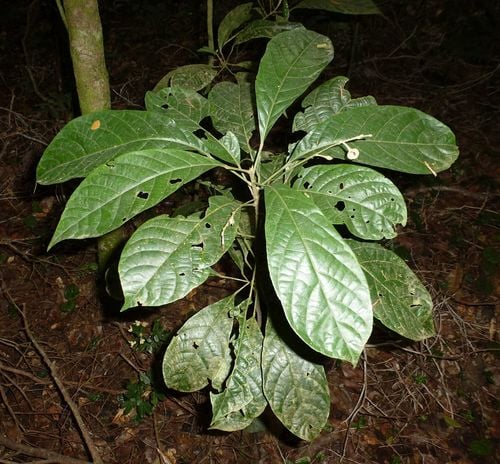
(c) Christian Grenier, some rights reserved (CC BY-NC)
Description
A succulent shrub. It grows 1.8 m tall. It has milky sap. It may or may not lose its leaves. The stems are fleshy and erect. They are zigzag in shape, bending at each node. The leaves are mid green and boat shaped. The leaves are 8 cm long. The flowers are like a group of laces and are red. The flowers are tube shaped and have red bracts.
Edible Uses
The flowers produce sweet juicy nectar which is eaten, and the plant can be made into tea.
Traditional Uses
The flowers have a sweet juicy nectar which is eaten. Caution: The milky sap can be poisonous.
This uses section is brief — help expand it
Medicinal Uses
The root is known to be a powerful emetic. A proteolytic enzyme known as pedilanthain can be extracted from the plant's latex, and has been shown in experiments to be effective against intestinal worms and to reduce inflammation when ingested. In 1995, a galactose-specific lectin was purified from the plant's latex, and indications are that it might be useful in combatting diabetes mellitus. In folk medicine, tea has been brewed from the leaves which has been used to treat asthma, persistent coughing, laryngitis, mouth ulcers, and venereal disease. Tea brewed from the root has been used as an abortifacient. The latex has been used topically to treat calluses, ear ache, insect stings, ringworm, skin cancer, toothache, umbilical hernias, and warts. None of these uses has been scientifically verified as effective. In the West Indies, a few drops of the latex is added to milk and used as an emetic.
Known Hazards
The roots, stems, and leaves of the plant are known to be toxic. These parts of the plant contain euphorbol (a complex terpene) and other diterpene esters. These are also known carcinogens. The plant's leaves and stems also contain beta-sitosterol, cycloartenone, octacosanol, and oxime, all of which have known medicinal as well as toxic properties. Even minor amounts (a few drops) of the juice of the Euphorbia tithymaloides root can irritate mucosal membranes. When ingested, the irritation of the mucosal membranes of the stomach and intestines will cause nausea and vomiting. Topical application causes skin irritation, inflammation, and even blisters. If introduced topically to the eye, severe pain, keratoconjunctivitis, and reduced visual acuity occur. Ingesting even a few seeds can cause violent and persistent vomiting and extreme diarrhea. If latex or root juice gets on the skin, the victim should immediately wash with soap and warm water. If latex or juice gets in the eye, continuous rinsing with fresh water should be the first course of action. Topical steroids are indicated for skin or eye contact. Intravenous fluids are often administered to counteract the fluid loss due to vomiting and diarrhea.
Distribution
It is a tropical plant. It grows in drier tropical rainforest and open areas. It grows up to 700 m above sea level. It suits hardiness zones 9-11.
Where It Grows
Asia, Australia, British Indian Ocean Terr., BIOT, Caribbean, Central America*, China, Costa Rica, East Africa, Fiji, Guiana, Guianas, Guyana, Hawaii, India, Indonesia, Kiribati, Guyana, Malaysia, Mexico, Mozambique, Myanmar, Nicaragua, North America, Pacific, Rotuma, SE Asia, South America, Sri Lanka, Suriname, Tuvalu, USA, Venezuela, West Indies,
Cultivation
It is grown from seeds or cuttings. It can be grown as a hedge.
Other Information
It is sold in local markets in China. It is cultivated.
Notes
Used as a medicine in Indonesia. There are about 14 Pedilanthus species.
Synonyms
Also Known As
Airi, Belati-sij, Birdflower, Devil's backbone, Gongaman, Japanese poinsettia, Kayek, Lakau toto, Nag-phani, Nagdaman, Pedilantus zig-zag, Pedong, Penawar lipan, Pohon sig-sag, Pokok lalipan, Redbird cactus, Sweetie, Tentulang jantan, Vilayti-sher, Yu dai gen
References (16)
- Ambasta, S.P. (Ed.), 2000, The Useful Plants of India. CSIR India. p 436
- Ann. Mus. Natl. Hist. Nat. 19:390, t. 19. 1812
- Burkill, I.H., 1966, A Dictionary of the Economic Products of the Malay Peninsula. Ministry of Agriculture and Cooperatives, Kuala Lumpur, Malaysia. Vol 2 (I-Z) p 1712
- Coe, F.G., and Anderson, G.J., 1996, Ethnobotany of the Garifuna of Eastern Nicaragua. Economic Botany 50(1) pp 71-107
- Coe, F. G. & Anderson, G. J., 1997, Ethnobotany of the Miskitu of Eastern Nicaragua. Journal of Ethnobiology 17(2): 171-214
Show all 16 references Hide references
- Cundall, P., (ed.), 2004, Gardening Australia: flora: the gardener's bible. ABC Books. p 994
- Etherington, K., & Imwold, D., (Eds), 2001, Botanica's Trees & Shrubs. The illustrated A-Z of over 8500 trees and shrubs. Random House, Australia. p 514
- Hibbert, M., 2002, The Aussie Plant Finder 2002, Florilegium. p 220
- Kermath, B. M., et al, 2014, Food Plants in the Americas: A survey of the domesticated, cultivated and wild plants used for Human food in North, Central and South America and the Caribbean. On line draft. p 624
- Li, D. et al, 2017, Ethnobotanical survey of herbal tea plants from the traditional markets in Chaoshan, China. Journal of Ethnopharmacology. 205 (2017) 195-206
- Omawale, 1973, Guyana's edible plants. Guyana University, Georgetown p 51
- Staples, G.W. and Herbst, D.R., 2005, A tropical Garden Flora. Bishop Museum Press, Honolulu, Hawaii. p 292 (Drawing)
- Sukarya, D. G., (Ed.) 2013, 3,500 Plant Species of the Botanic Gardens of Indonesia. LIPI p 1128
- Thaman, R. R., 1987, Plants of Kiribati: A listing and analysis of vernacular names. Atoll Research Bulletin No. 296
- Topp, J. M. W., 1988, An Annotated Check List of the Flora of Diego Garcia, British Ocean Territory. Atoll Research Bulletin No. 313
- Wijayakusuma, H.M.H., et al, 1996, Tanaman Berkhasiat Obat Di Indonesia. Pustaka Kartini. p 106