Cassia grandis
L.f.
Coral shower, Horse Cassia
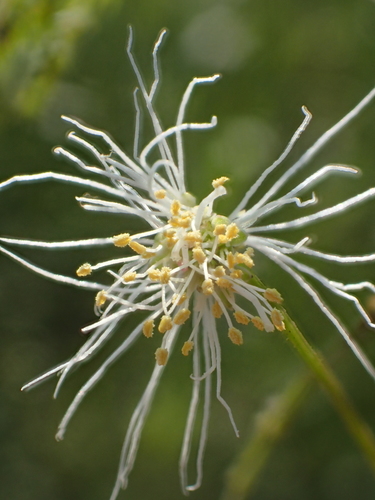
iNaturalist· cc-by-nc-sa
(c) Mauricio Mercadante, some rights reserved (CC BY-NC-SA)
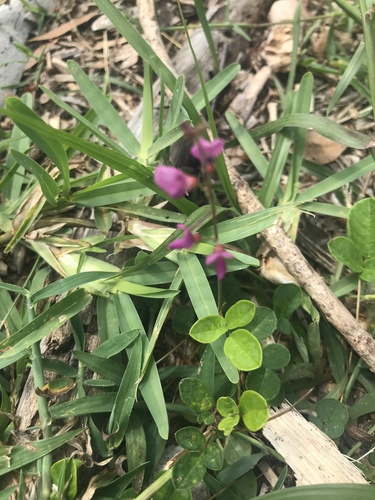
iNaturalist· cc-by-nc
(c) lucapassalacqua, some rights reserved (CC BY-NC)
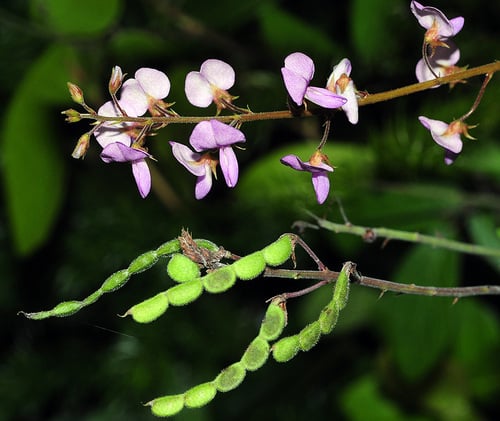
iNaturalist· cc-by-nc
(c) Steve Davis, some rights reserved (CC BY-NC)
Summary
Source: WikipediaCassia grandis, one of several species called pink shower tree, and known as carao in Spanish, is a flowering plant in the family Fabaceae, native to the neotropics, that grows up to 30 m (98 ft). The species is distributed from southern Mexico, to Venezuela and Ecuador. It grows in forests and open fields at lower elevations, and is known to be planted as an ornamental. In at least Costa Rica, its pods are stewed into a molasses-like syrup, taken as a sweetener and for its nutritional and medicinal effects, called Jarabe (or Miel) de Carao.
Description
A semi-evergreen tree. It loses some of its leaves in the dry season. It grows 20-30 m high. It spreads 5 m wide. The leaves are glossy olive green. They have a fringe of hairs along the edge. The leaves are made up of 14-42 leaflets. The flowers are in upright panicles. These are 20 cm long. They are pink. The fruit are large swollen black pods. These can be 45 cm long.
Edible Uses
The pulp surrounding the seeds inside the pods is edible. It is sugary but malodorous and has purgative properties if eaten in quantity.
Traditional Uses
The pulp of the fruit is eaten. It is used in a drink made by cooking the pulp with milk. CAUTION: It can be a laxative. It should only be eaten in small amounts.
Medicinal Uses
The bitter fruit pulp is used as a laxative and purgative similar to Cassia fistula, and is reported to be more powerful. Drunk with milk, it is said to fight anaemia and add iron to the blood. The ripe pods and seeds are also used as a laxative. A decoction of the leaves serves as a laxative and in the treatment of lumbago. Fresh leaf juice is applied externally for ringworm. An ointment made from lard and crushed leaves is commonly used to treat cutaneous diseases, especially mange and other skin conditions in dogs.
Distribution
It is a tropical plant. It is native to C. and S. America. It is best in rich, moist, well-drained soils. It needs a protected sunny position. In Central America it grows from sea level to 800 m altitude. It suits hardiness zones 11-12.
Where It Grows
Africa, Antilles, Australia, Belize, Bolivia, Brazil, Central America*, Colombia, Congo DR, Costa Rica, Côte d'Ivoire, Cuba, Dominican Republic, East Africa, El Salvador, Guatemala, Guiana, Guianas, Guyana, Haiti, Hawaii, Honduras, India, Indochina, Indonesia, Ivory Coast, Laos, Malaysia, Marquesas, Mexico, Myanmar, Nauru, Nicaragua, North America, Pacific, Panama, Puerto Rico, SE Asia, Sierra Leone, South America, Sri Lanka, Suriname, Tanzania, Thailand, Uganda, USA, Venezuela, Vietnam, West Indies, Zimbabwe,
Cultivation
It is found in areas where the mean annual rainfall is in the range 1,000 - 2,800 mm, and the mean annual temperature is 21 - 26c with a mean maximum of 24 - 30c and a mean minimum of 17 - 25c. Prefers a sunny position. Succeeds in a wide range of soils. The plant is common as an ornamental and garden escape in Malaysia, Java and New Guinea. A fast-growing plant. The fruit takes 10 - 12 months to mature from flowering.
Propagation
Seed has a hard seedcoat and may benefit from scarification. Pour a small amount of nearly boiling water over the seeds (taking care not to cook them), then soak in warm water for 12–24 hours. If seeds have not swollen by then, nick the seedcoat carefully without damaging the embryo and soak for a further 12 hours before sowing. Sow in a partially shaded nursery seedbed; germination rates above 60% can be expected, with sprouting within 8–12 days. Pot seedlings individually when 4–6 cm tall; they should be ready to plant out 5–6 months later. Seed can be stored for prolonged periods without loss of viability. Cuttings can also be used. In Costa Rica, the plant is propagated via large epicormic shoot cuttings: vertical shoots 15 cm in diameter are trimmed to 2.5 m, laid in shade for one week, stacked vertically for three weeks, then planted with the lower 50 cm buried in soil. Layering is also possible.
Other Uses
The seeds are a potential commercial source of gums usable as a pharmaceutical binder. Wood ash is used in soap-making. The wood is brownish yellow, rather hard and heavy, coarse-textured and not durable; it is used for building construction (mainly internal finishing), agricultural implements and fence posts, and as fuel. The tree is an important bee plant and, as a fast-growing species, can serve as a pioneer when re-establishing woodland.
Notes
There are 100 Cassia species. This group has been revised to a smaller more consistent group. Also as Caesalpinaceae.
Synonyms
Also Known As
Appleblossom cassia, Canadonga, Canafistula, Carao, Kalaa-phruek, Kotek mamak, Ngu-padamya, Nguzat-gyi, O moi, Pink shower, Sandal, Sandalo, Stinking toe, Trembalo-wang-wang
References (31)
- Altschul, S.V.R., 1973, Drugs and Foods from Little-known Plants. Notes in Harvard University Herbaria. Harvard Univ. Press. Massachusetts. no. 1691
- Barwick, M., 2004, Tropical and Subtropical Trees. A Worldwide Encyclopedic Guide. Thames and Hudson p 94
- Bortolotto, I. M., et al, 2015, Knowledge and use of wild edible plants in rural communities along Paraguay River, Pantanal, Brazil. Journal or Ethnobiology and Ethnomedicine. 11:46
- Bortolotto, I. M., et al, 2018, Lista preliminar das plantas alimenticias nativas de Mato Grosso do Sul, Brasil. Iheringia, Serie Botanica, Porto Alegre, 73 (supl.):101-116
- Chizmar Fernandez, C., et al, 2009, Plantas comestibles de Centroamerica. Instituto de Biodiversidad, Costa Rica. p 176
Show all 31 references Hide references
- Coe, F.G., and Anderson, G.J., 1996, Ethnobotany of the Garifuna of Eastern Nicaragua. Economic Botany 50(1) pp 71-107
- Coe, F. G. & Anderson, G. J., 1997, Ethnobotany of the Miskitu of Eastern Nicaragua. Journal of Ethnobiology 17(2): 171-214
- Condit, R., et al, 2011, Trees of Panama and Costa Rica. Princeton Field Guides. p 178
- Ekman Herbarium records Haiti
- Engel, D.H., & Phummai, S., 2000, A Field Guide to Tropical Plants of Asia. Timber Press. p 38
- Etherington, K., & Imwold, D., (Eds), 2001, Botanica's Trees & Shrubs. The illustrated A-Z of over 8500 trees and shrubs. Random House, Australia. p 187
- Facciola, S., 1998, Cornucopia 2: a Source Book of Edible Plants. Kampong Publications, p 67
- Grandtner, M. M., 2008, World Dictionary of Trees. Wood and Forest Science Department. Laval University, Quebec, Qc Canada. (Internet database http://www.WDT.QC.ca)
- Grandtner, M. M. & Chevrette, J., 2013, Dictionary of Trees, Volume 2: South America: Nomenclature, Taxonomy and Ecology. Academic Press p 108
- Hibbert, M., 2002, The Aussie Plant Finder 2002, Florilegium. p 61
- Kermath, B. M., et al, 2014, Food Plants in the Americas: A survey of the domesticated, cultivated and wild plants used for Human food in North, Central and South America and the Caribbean. On line draft. p 196
- Krishen P., 2006, Trees of Delhi, A Field Guide. DK Books. p 232
- Lopez-Diago, D. & Garcia, N., 2021, Wild edible fruits of Colombia. Biota ColomBiana 22 (2) p 37
- Miguel, E., et al, 1989, A checklist of the cultivated plants of Cuba. Kulturpflanze 37. 1989, 211-357
- Mutchnick, P. A. and McCarthy, B. C., 1997, An Ethnobotanical Analysis of the Tree Species Common to the Subtropical Moist Forests of the Peten, Guatemala. Economic Botany, Vol. 51, No. 2, pp. 158-183
- NYBG Herbarium "edible"
- Plants of Haiti Smithsonian Institute http://botany.si.edu/antilles/West Indies
- Reis, S. V. and Lipp, F. L., 1982, New Plant Sources for Drugs and Foods from the New York Botanical Garden herbarium. Harvard. p 122
- Roa, J. A. G. & Boada, D. S. G., 2018, Fundación para el Fortalecimiento de la Fruticultura y Plantas Alimenticias no Convencionales en Colombia.
- Segura, S., et al, 2018, The edible fruit species in Mexico. Genet Resour Crop Evol (2018) 65:1767–1793
- Staples, G.W. and Herbst, D.R., 2005, A tropical Garden Flora. Bishop Museum Press, Honolulu, Hawaii. p 311
- Suppl. pl. 230. 1782 ("1781")
- World Checklist of Useful Plant Species 2020. Royal Botanic Gardens, Kew
- www.colecionandofrutas.org
- www.worldagroforestrycentre.org/treedb/
- Zuchowski W., 2007, Tropical Plants of Costa Rica. A Zona Tropical Publication, Comstock Publishing. p 31