Astrocaryum jauari
Mart.
Jauari
iNaturalist· cc-by-nc
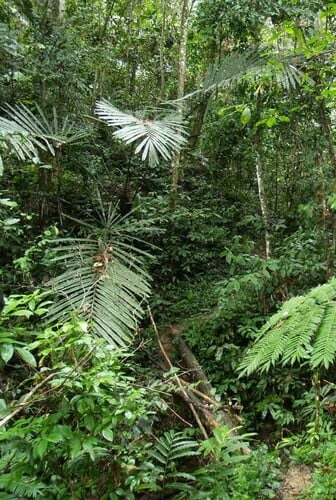
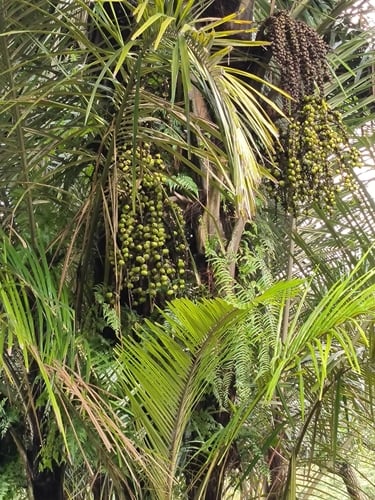
(c) Guillaume Léotard, some rights reserved (CC BY-NC), uploaded by Guillaume Léotard
iNaturalist· cc-by-nc
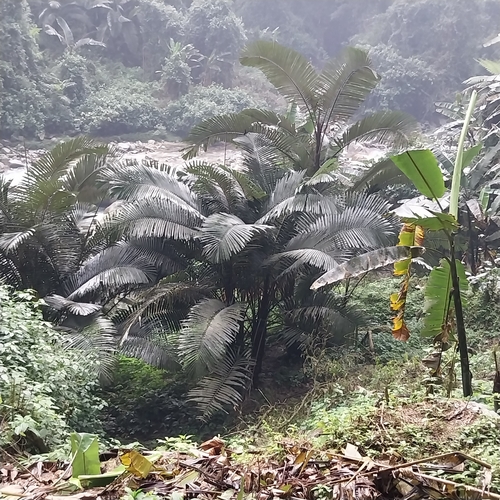
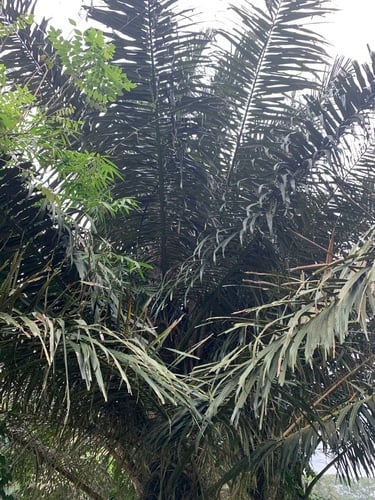
(c) Marcus Athaydes, some rights reserved (CC BY-NC), uploaded by Marcus Athaydes
Summary
Source: WikipediaAstrocaryum jauari is the most frequently encountered palm native to Amazon rainforest vegetation in the floodplains of the Rio Negro, in Brazil. The fruit is edible. This plant has further commercial value because it may be used in the production of heart of palm. It is one of the most common palms in the flood forests of the Amazon.
Description
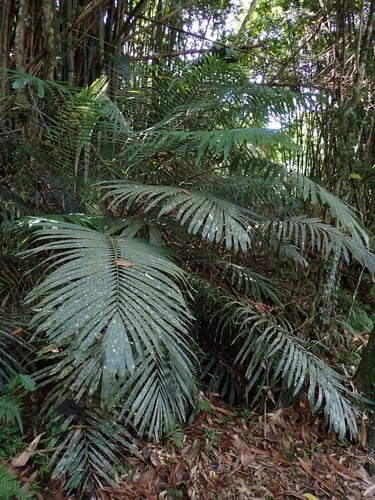
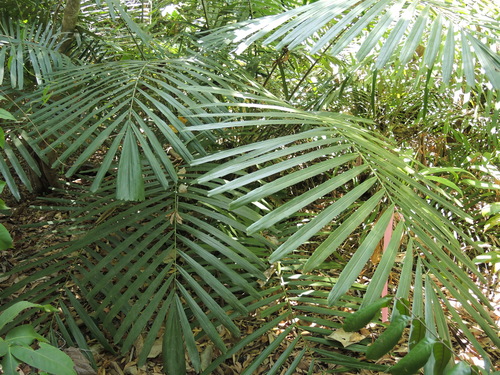
A spiny palm. It mostly forms clusters but can occur singly. They are 5-13 m tall. The stems are 9-30 cm across. There are 6-15 leaves. They are stiffly erect. They are 4-5 m long. There are 56-148 leaflets on each side. They are arranged irregularly in clusters. They spread in different planes. The flowering stalks are erect and among the leaves. The male and female flowers are separate on the same plant. There are 3-5 female flowers at the base. The fruit are round to oval and 2.5-3.5 cm long by 1.7-2.5 cm across.
Edible Uses
The fruit endosperm is eaten. The kernel is a source of edible oil (the fruit contains 37% oil). The fruit is processed into flour. The palm heart is also edible and is commercially canned.
Traditional Uses
The kernel is a source of edible oil. The fruit endosperm is eaten. The fruit have been used to make flour.
This uses section is brief — help expand it
Distribution
A tropical plant. It grows along the edges of rivers. It is often in areas which are flooded.
Where It Grows
Amazon, Bolivia, Brazil, Colombia, Ecuador, French Guiana, Guianas, Guyana, Peru, South America, Suriname, Venezuela,
Cultivation
A plant of the moist, lowland tropics, where it is found at elevations up to 230 metres. It grows best in areas where annual daytime temperatures are within the range 24 - 28°c, but can tolerate 20 - 32°c. It can be killed by temperatures of 8°c or lower. It prefers a mean annual rainfall in the range 1,800 - 2,300mm, but tolerates 1,500 - 2,600mm. Requires a shady, moist position that can be inundated for much of the year. In the wild, it can only compete successfully in seasonally flooded forests, where it has been found in areas flooded from 30 - 240 days per year. Prefers a pH in the range 4.5 - 5.5, tolerating 3.2 - 7. Young plants are tolerant of being submerged for up to 300 days per year. Fruiting occurs at the height of the wet season and the seeds are spread by fish (who eat the fruit). Thus inundation may improve germination.
Other Uses
An oil is obtained from the kernels. The leaves and leaf stems are woven into a range of items such as baskets. Fibre extracted from the leaflets is used to make bags, hammocks and nets The seeds are used for making necklaces. The endocarp (seed shell)) is the raw material for the manufacture of rings, earrings and necklaces The trunks of the trees are rot resistant and are used locally for making houses.
Other Information
The palm heart is canned commercially.
Notes
There are about 40-50 Astrocaryum species. The fruit is 37% oil.
Synonyms
Also Known As
Alvarico, Awarra, Chambirilla, Guiridima, Huiririma, Liba awara, Sauarai, Yavari
References (18)
- Balick, M.J. and Beck, H.T., (Ed.), 1990, Useful palms of the World. A Synoptic Bibliography. Colombia p 90, 401,
- Bircher, A. G. & Bircher, W. H., 2000, Encyclopedia of Fruit Trees and Edible Flowering Plants in Egypt and the Subtropics. AUC Press. p 46
- Grandtner, M. M. & Chevrette, J., 2013, Dictionary of Trees, Volume 2: South America: Nomenclature, Taxonomy and Ecology. Academic Press p 50
- Haynes, J., & McLaughlin, J., 2000, Edible palms and Their Uses. University of Florida Fact sheet MCDE-00-50-1 p 2
- Henderson, A., Galeano, G and Bernal, R., 1995, Field Guide to the Palms of the Americas. Princeton. p 205
Show all 18 references Hide references
- Hist. nat. palm. 2:76. 1824
- Janick, J. & Paul, R. E. (Eds.), 2008, The Encyclopedia of Fruit & Nuts. CABI p 89
- Kermath, B. M., et al, 2014, Food Plants in the Americas: A survey of the domesticated, cultivated and wild plants used for Human food in North, Central and South America and the Caribbean. On line draft. p 100
- Marcia, M. J., et al, 2011, Palm Uses in Northwestern South America: A Quantitative Review. Bot. Rev. (2011) 77:462-570
- Paz, F. S., et al, 2021, Edible Fruit Plant Species in the Amazon Forest Rely Mostly on Bees and Beetles as Pollinators. Journal of Economic Entomology, XX(XX), 2021, 1–13
- Roa, J. A. G. & Boada, D. S. G., 2018, Fundación para el Fortalecimiento de la Fruticultura y Plantas Alimenticias no Convencionales en Colombia.
- Torre, de la L., et al, 2008, Enciclopedia de las Plantas Útiles del Ecuador. Herbario QCA. Pontificia Universidad Católica del Ecuador. p 194
- USDA, ARS, National Genetic Resources Program. Germplasm Resources Information Network - (GRIN). [Online Database] National Germplasm Resources Laboratory, Beltsville, Maryland. Available: www.ars-grin.gov/cgi-bin/npgs/html/econ.pl (10 April 2000)
- van Roosmalen, M.G.M., 1985, Fruits of the Guianan Flora. Utrecht Univ. & Wageningen Univ. p 338
- Vasquez, R. and Gentry, A. H., 1989, Use and Misuse of Forest-harvested Fruits in the Iquitos Area. Conservation Biology 3(4): 350f
- Wickens, G.E., 1995, Edible Nuts. FAO Non-wood forest products. FAO, Rome. p163
- Wiersema, J. H. & Leon, B., 2013, World Economic Plants. A Standard Reference CRC Press. 2nd Ed. p 76
- World Checklist of Useful Plant Species 2020. Royal Botanic Gardens, Kew