Alpinia elegans
(Presl.) K. Schumann
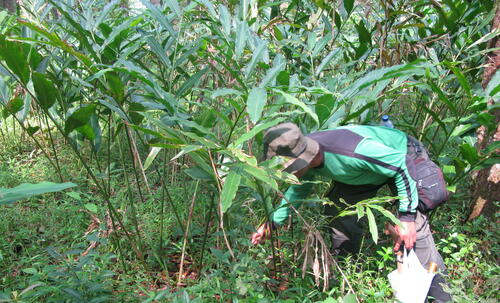
iNaturalist· cc-by-nc
(c) Myan Babes Oquendo, some rights reserved (CC BY-NC), uploaded by Myan Babes Oquendo
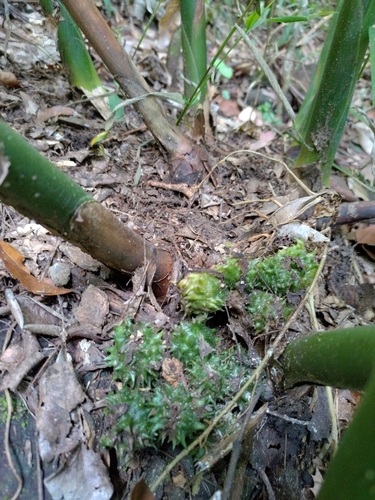
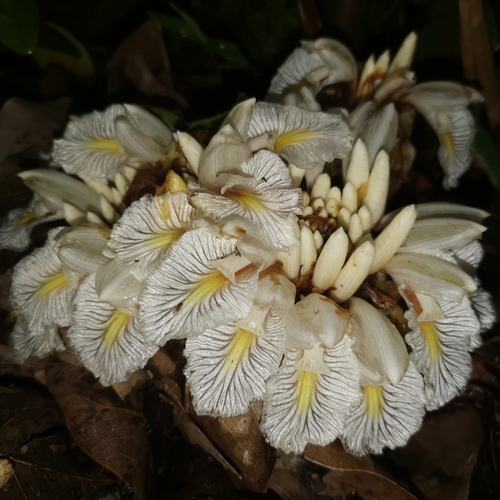
iNaturalist· cc-by-nc
(c) Myan Babes Oquendo, some rights reserved (CC BY-NC)
Summary
Source: WikipediaAlpinia elegans is a species of flowering plants in the ginger family, Zingiberaceae. It is found in Asia (the Philippines, Indonesia).
Description
A tropical herb in the ginger family (Zingiberaceae), one of about 200–230 Alpinia species found mainly in tropical and subtropical regions.
This description is brief — help expand it
Edible Uses
The pulp around the seeds is eaten. The rhizomes are used as a spice, and the roots, seeds, and fruit are consumed as vegetables.
Traditional Uses
The pulp around the seeds is eaten.
This uses section is brief — help expand it
Medicinal Uses
A decoction of the rhizomes is taken as a treatment for haemoptysis.The young rhizomes are soaked in water and the infusion is drunk as a remedy for headache. The leaves, pounded with a little salt, are rubbed on paralyzed parts of a patient. The juice expressed from young stems is used as a treatment for urticaria.
Distribution
A tropical plant.
Where It Grows
Asia, Pacific, Philippines, SE Asia,
Cultivation
Plants in this genus generally grow best in a sunny or partially sunny position in a moist, fertile soil. Plants flower all year round.
Propagation
Seed - Division of the rhizome.
Notes
There are about 200-230 Alpinia species. They are mostly tropical and subtropical.
Synonyms
References (6)
- Altschul, S.V.R., 1973, Drugs and Foods from Little-known Plants. Notes in Harvard University Herbaria. Harvard Univ. Press. Massachusetts. no. 442
- Bircher, A. G. & Bircher, W. H., 2000, Encyclopedia of Fruit Trees and Edible Flowering Plants in Egypt and the Subtropics. AUC Press. p 21
- Burkill, I.H., 1966, A Dictionary of the Economic Products of the Malay Peninsula. Ministry of Agriculture and Cooperatives, Kuala Lumpur, Malaysia. Vol 2 (I-Z) p 1325
- Reis, S. V. and Lipp, F. L., 1982, New Plant Sources for Drugs and Foods from the New York Botanical Garden herbarium. Harvard. p 31 (As Kolowratia elegans)
- Siemonsma, J. S. & Kasem Piluek, eds. 1993. Vegetables. In: Plant Resources of South-East Asia (PROSEA) 8:312
Show all 6 references Hide references
- World Checklist of Useful Plant Species 2020. Royal Botanic Gardens, Kew