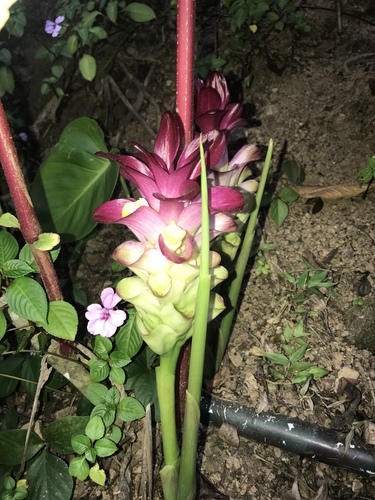
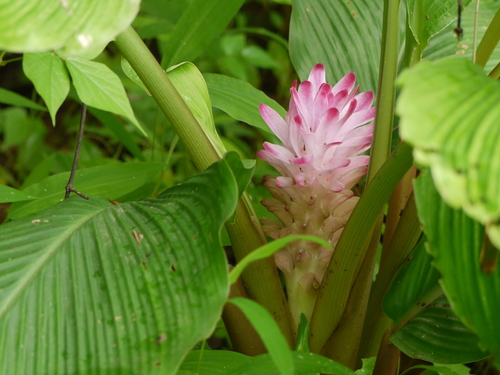
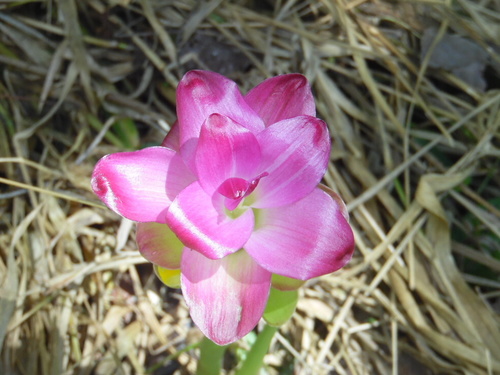
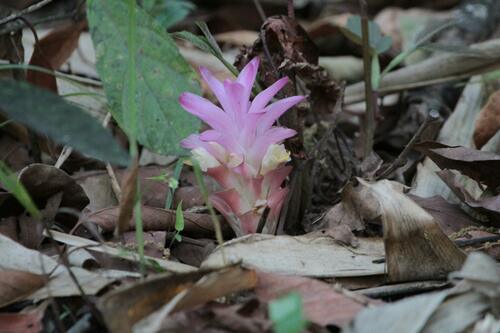
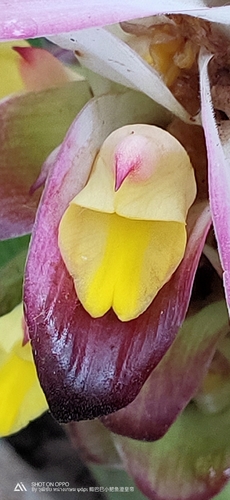
Alpinia mutica
Roxb.
False cardamom ginger
iNaturalist· cc-by-nc-sa
(c) Ahmad Fuad Morad, some rights reserved (CC BY-NC-SA)
iNaturalist· cc-by-nc
(c) whyeo_b00, some rights reserved (CC BY-NC)
Description
A ginger family herb. It grows up to 2 m tall. The flowers are in sprays and are white.
This description is brief — help expand it
Edible Uses
The shoots are boiled and eaten as a vegetable.
Traditional Uses
The shoots are boiled and eaten as a vegetable.
This uses section is brief — help expand it
Medicinal Uses
An infusion of the rhizome is taken as a stomachic and as a remedy for abdominal trouble.
Distribution
It is a tropical plant. It is best in rich, well-drained soil.
Where It Grows
Asia, Australia, Cambodia, Fiji, Hawaii, India, Indochina, Indonesia, Malaysia, Myanmar, Pacific, Samoa, SE Asia, Thailand, USA, Vietnam,
Cultivation
Plants in this genus generally grow best in a sunny or partially sunny position in a moist, fertile soil.
Propagation
Seed - Division of the rhizome.
Synonyms
Also Known As
Kha nam
References (3)
- Eiadthong, W., et al, 2010, Management of the Emerald Triangle Protected Forests Complex. Botanical Consultant Technical Report. p 23
- Malek, S. N. A., et al, 2011, Phytochemical and Cytotoxic Investigations of Alpinia mutica Rhizomes. Molecules 16:583-589
- Phang, C., et al, 2011, Antioxidant properties of crude and fractionated extracts of Alpinia mutica rhizomes and their total phenolic content. African Journal of Pharmacy and Pharmacology Vol. 5(7). pp. 842-852, July 2011