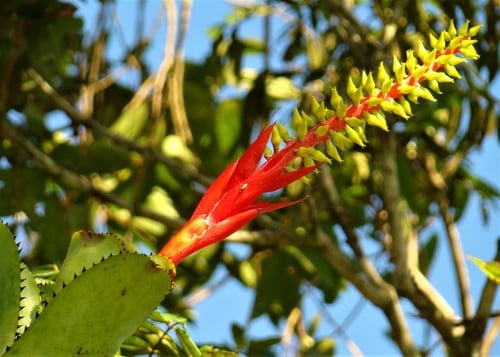
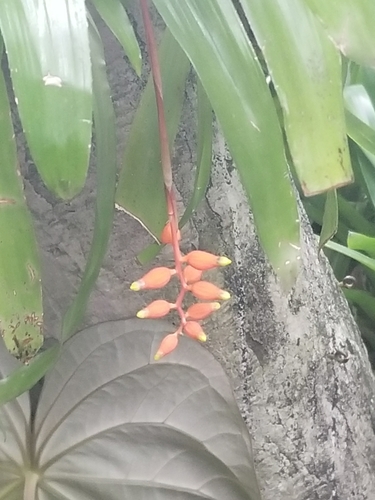
Puya hamata
L. B. Smith
Aguarongo
iNaturalist· cc-by-nc
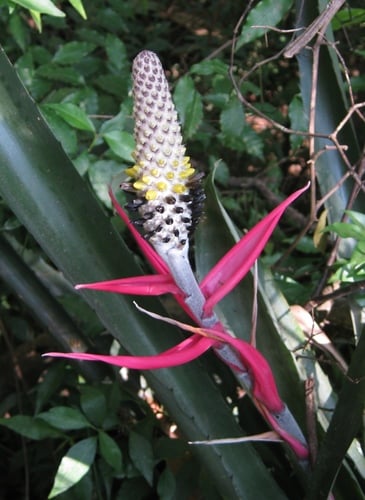
(c) Jens Mutke, some rights reserved (CC BY-NC), uploaded by Jens Mutke
iNaturalist· cc-by-nc
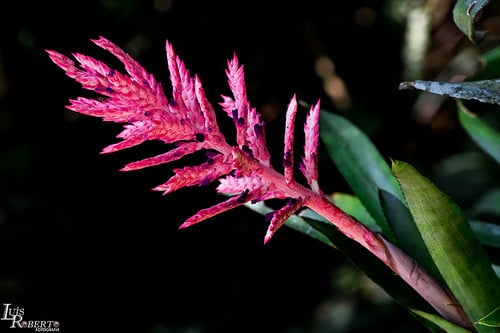
(c) Mario Humberto Yánez-Muñoz, some rights reserved (CC BY-NC), uploaded by Mario Humberto Yánez-Muñoz
iNaturalist· cc-by-nc-sa
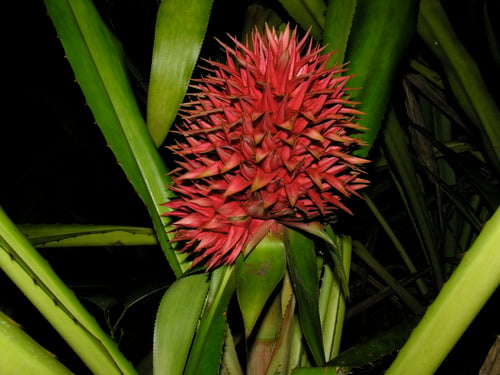
(c) Andreas Kay, some rights reserved (CC BY-NC-SA)
Description
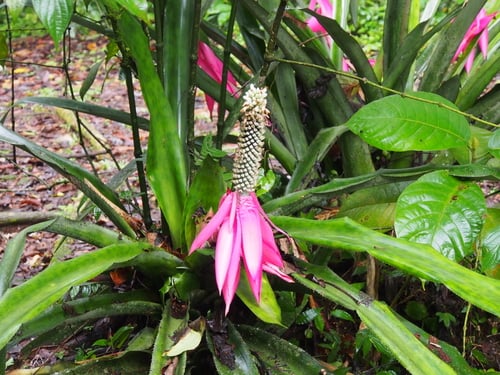
A pineapple family herb. It grows 2.5-4 m tall. The leaves are in dense rings. The leaves are 70-150 cm long. They have teeth towards the tip. The leaf blades are 2-3 cm wide. The flower spikes can be 5 m tall. The fruit are on the upper 2 m of the spikes.
Edible Uses
The tender leaf bases are eaten raw in salads or cooked in stew, and the juice from the leaf bases is made into a sweet drink.
Traditional Uses
It is cooked in stew. The tender leaf bases are eaten in salads. The juice from the leaf bases is made into a sweet drink.
This uses section is brief — help expand it
Distribution
A tropical plant. It grows between 3,150-4,100 m above sea level.
Where It Grows
Colombia, Ecuador, Peru, South America,
Also Known As
Achupalla, Awarunku
References (4)
- Kermath, B. M., et al, 2014, Food Plants in the Americas: A survey of the domesticated, cultivated and wild plants used for Human food in North, Central and South America and the Caribbean. On line draft. p 729
- Kew Plants of the World onLine
- Torre, de la, L., et al, 2008, Enciclopedia de las Plantas Útiles del Ecuador. Herbario QCA. Pontificia Universidad Católica del Ecuador. p 261
- Van den Eynden, V., et al, 2003, Wild Foods from South Ecuador. Economic Botany 57(4): 576-603