Cyamopsis tetragonoloba
(L.) Taubert
Guar bean, Clusterbean
iNaturalist· cc-by-sa
(c) Ramesh NG, some rights reserved (CC BY-SA)
iNaturalist· cc-by-sa
(c) Ton Rulkens, some rights reserved (CC BY-SA)
iNaturalist· cc-by-nc
(c) Sonii, Ashish-K., some rights reserved (CC BY-NC), uploaded by Sonii, Ashish-K.
gbif· cc-by-sa
krp bhadrajun
gbif· cc-by-sa
krp bhadrajun
gbif· cc-by-sa
krp bhadrajun
Summary
Source: WikipediaEvergreen perennial reaching 2 m tall by 1 m wide at fast growth rate. Self-fertile and nitrogen-fixing. Hardy to UK zone 10; frost tender. Grows in light sandy and medium loamy well-drained soils across mildly acidic to very alkaline and saline pH ranges. Requires full sun and tolerates drought. Cannot grow in shade.
Description
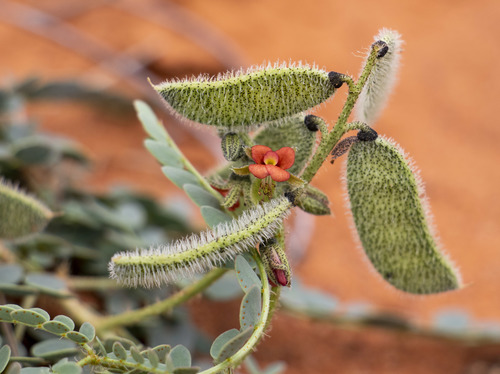
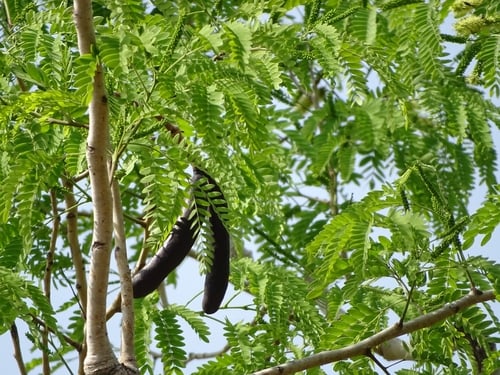
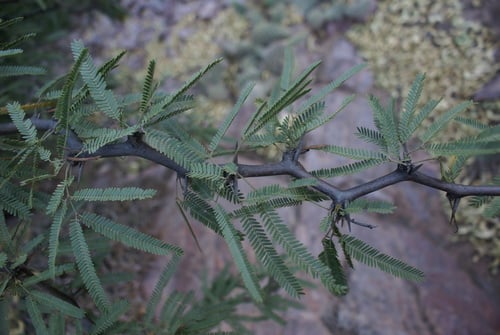
A herb. It is an upright bushy plant often only 1 m high. Some kinds grow 3 m high. The branches are stiff and usually with white hairs. The branches stick upwards and are angled and with grooves. The leaves are produced alternately and have 3 leaflets. The leaflets are oval and with slight saw teeth around the edge. The leaf stalks have grooves. The flowers are small in clusters in the axils of leaves. The flowers are white with pink wings. It produces clusters of thick fleshy pods. They are stiff and straight. There is a double ridge along the top of the pod and a single one below. There are also 2 ridges along the flat sides. The pods have a beak at the end. There are 8-10 small oval seeds inside.
Edible Uses
Leaves cooked as vegetable. Seeds cooked or sprouted (approximately 5 mm long); rich in protein. Unripe seedpods (4–10 cm long) eaten in curries, fried, salted, or dried; must be thoroughly cooked to destroy toxic principle, with only traces remaining in mature pods. Seeds processed into guar gum for food industry use as stabilizer and thickener in ice creams, bakery goods, and gluten-free foods.
Traditional Uses
The green immature pods are eaten cooked. They are added to curries. They can be fried in oil, salted or dried for later use. The seeds are eaten. The seeds contain a gum used as a thickening agent. It is used in ice cream, baked goods, gluten free foods and salad dressing. The sprouted seeds are also eaten.
Medicinal Uses
Seeds dried and ground into powder mixed with water to form guar gum, comprising about 86% water-soluble mucilage of galactomannin. Gently laxative, lowers blood cholesterol, and acts as digestive tonic. Delays stomach emptying and slows carbohydrate absorption, stabilizing blood sugar levels for diabetics and pre-diabetics.
Known Hazards
The immature seedpods contain high contents of hydrocyanic acid, though by the time the pods mature this has been reduced to a trace.
Distribution
A tropical plant. It is a hardy, drought resistant plant. It suits dry areas. It grows well on alluvial and sandy soils. It grows well in areas with high summer temperatures and low rainfall. It can tolerate an alkaline soil with pH 7.5-8. In Yunnan.
Where It Grows
Afghanistan, Africa, Arabia, Asia, Australia, Bangladesh, Cameroon, Central Africa, Chad, China, Congo DR, East Africa, Ethiopia, Fiji, Himalayas, India*, Indochina, Indonesia, Kenya, Laos, Malaysia, Mali, Middle East, Mozambique, Myanmar, Nauru, Nepal, Northeastern India, Pacific, Pakistan, Papua New Guinea, PNG, Philippines, SE Asia, Sierra Leone, Somalia, South Africa, Southern Africa, Sri Lanka, Tanzania, Thailand, Trinidad-Tobago, USA, Vietnam, Yemen, West Africa, Zambia, Zimbabwe,
Cultivation
They are grown from seed. Often they are grown in mixed cropping situations. It requires 15-24 kg of seed to sow a hectare. Seeds are sown 2-3 cm deep. They are often put 20-30 cm apart in rows 65 cm apart. Seed germinate within one week.
Propagation
Sow seed 2–3 cm deep in situ; scarification promotes rapid germination. Inoculation with Rhizobium may be necessary. Typically spaced 20–30 cm apart in rows 65 cm apart. Requires 15–24 kg seed per hectare. Germination occurs within one week. Often grown in mixed cropping situations.
Other Uses
Used as green manure and cover crop to improve soil fertility through nitrogen fixation. Intercropping systems compatible. Guar gum serves as industrial filter, paper sizing agent, and cosmetic ingredient. Used in hydraulic fracturing for oil and gas. Flowers rich in nectar and pollen attract pollinators. Pods and seeds provide wildlife food; foliage offers minimal cover.
Production
Plants mature in 3 to 3.5 months.
Other Information
It is a commercially cultivated vegetable. This bean has only been tried in small trial plots in Papua New Guinea.
Nutrition
| Part | Moisture | kJ | kcal | Protein | Vit A | Vit C | Iron | Zinc |
|---|---|---|---|---|---|---|---|---|
| Seeds | 9.9 | 1452 | 347 | 30.5 | — | — | — | — |
| Fresh Pods | 82 | — | — | 3.7 | 198 | 49 | 5.8 | — |
Synonyms
Also Known As
Bakuchi, Bavachi gowar, Calcutta-lucerne, Dridhabija, Gawar, Goraksha, Gorani, Gorchikuda, Gorikayi, Gowar, Guar, Guwar, Gwaar ki phalli, Jhuppe simi, Kothaveray, Kulti, Kuwara, Pe-pazun, Pe-wali, Phalini, Siam-bean
References (32)
- Ambasta, S.P. (Ed.), 2000, The Useful Plants of India. CSIR India. p 152
- Arora, R. K., 2014, Diversity in Underutilized Plant Species - An Asia-Pacific Perspective. Bioversity International. p 48, 112
- Brouk, B., 1975, Plants Consumed by Man. Academic Press, London. p 262
- Burkill, H. M., 1985, The useful plants of west tropical Africa, Vol. 3. Kew.
- Burkill, I.H., 1966, A Dictionary of the Economic Products of the Malay Peninsula. Ministry of Agriculture and Cooperatives, Kuala Lumpur, Malaysia. Vol 1 (A-H) p 726 (As Cyamopsis psoralioides)
Show all 32 references Hide references
- Cobley, L.S. (rev. Steele, W.M.) 2nd Ed., 1976, An Introduction to the Botany of Tropical Crops. Longmans. p 104
- H. G. A. Engler & K. A. E. Prantl, Nat. Pflanzenfam. 3(3):259. 1894
- Facciola, S., 1998, Cornucopia 2: a Source Book of Edible Plants. Kampong Publications, p 103
- Flora of Pakistan. www.eFloras.org
- French, B.R., 1986, Food Plants of Papua New Guinea, A Compendium. Asia Pacific Science Foundation p 52
- Grubben, G. J. H. and Denton, O. A. (eds), 2004, Plant Resources of Tropical Africa 2. Vegetables. PROTA, Wageningen, Netherlands. p 560
- Hedrick, U.P., 1919, (Ed.), Sturtevant's edible plants of the world. p 254 (As Cyamopsis psoraloides)
- ILDIS Legumes of the World http:www:ildis.org/Legume/Web
- Jardin, C., 1970, List of Foods Used In Africa, FAO Nutrition Information Document Series No 2.p 73
- Kays, S. J., and Dias, J. C. S., 1995, Common Names of Commercially Cultivated Vegetables of the World in 15 languages. Economic Botany, Vol. 49, No. 2, pp. 115-152
- Kew Plants of the World Online
- Kiple, K.F. & Ornelas, K.C., (eds), 2000, The Cambridge World History of Food. CUP p 1782
- Lazarides, M. & Hince, B., 1993, Handbook of Economic Plants of Australia, CSIRO. p 71
- Macmillan, H.F. (Revised Barlow, H.S., et al) 1991, Tropical Planting and Gardening. Sixth edition. Malayan Nature Society. Kuala Lumpur. p 323
- Pham-Hoang Ho, 1999, An Illustrated Flora of Vietnam. Nha Xuat Ban Tre. p 915
- Purseglove, J.W., 1968, Tropical Crops Dicotyledons, Longmans. p 255
- Shah, G.L. et al, 1981, An account of the Ethnobotany of Saurashtra in Gujarat State (India). J. Econ. Tax. Bot. Vol 2 pp 173-182
- Shah, S. K., 2014, Dietary contribution of underutilized minor crops and indigenous plants collected from uncultivated lands and forests in Nepal. in Promotion of Underutilized Indigenous Food Resources for Food Security and Nutrition in Asia and Pacific. FAO. Bangkok p 64
- Sharma, B.B., 2005, Growing fruits and vegetables. Publications Division. Ministry of Information and broadcasting. India. p 148
- Smith, A.C., 1985, Flora Vitiensis Nova, Lawaii, Kuai, Hawaii, Volume 3 p 185
- Smith, P.M., 1979, Guar, Cluster Bean, in Simmonds, N.W., (ed), Crop Plant Evolution. Longmans. London. p 311
- Tindall, H.D., 1983, Vegetables in the Tropics, Macmillan p 263
- van Wyk, B., 2005, Food Plants of the World. An illustrated guide. Timber press. p 166
- van Wyk, Ben-Erik, 2019, The diversity and multiple uses of southern African legumes. Australian Systematic Botany, 2019, 32, 519–546
- Wiersema, J. H. & Leon, B., 2013, World Economic Plants. A Standard Reference CRC Press. 2nd Ed. p 221
- World Checklist of Useful Plant Species 2020. Royal Botanic Gardens, Kew
- Zeven, A. C. & de West, J. M. J., 1982, Dictionary of cultivated plants and their regions of diversity. Wageningen. p 76