Micropholis crotonoides
(Pierre) Pierre
Caimitillo, Croton like micropholis
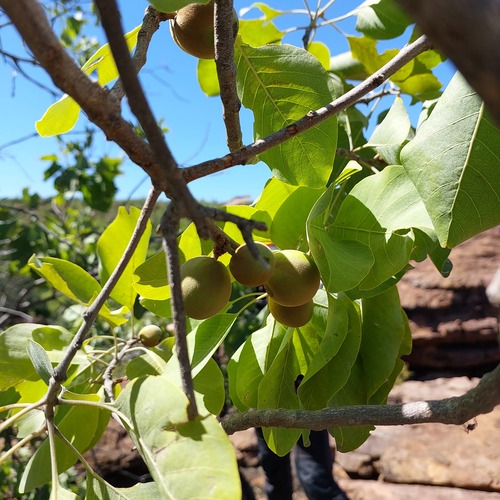
iNaturalist· cc-by-nc-sa
(c) Reinaldo Aguilar, some rights reserved (CC BY-NC-SA)
iNaturalist· cc-by-nc
(c) Leo R Quirós, some rights reserved (CC BY-NC)
Description
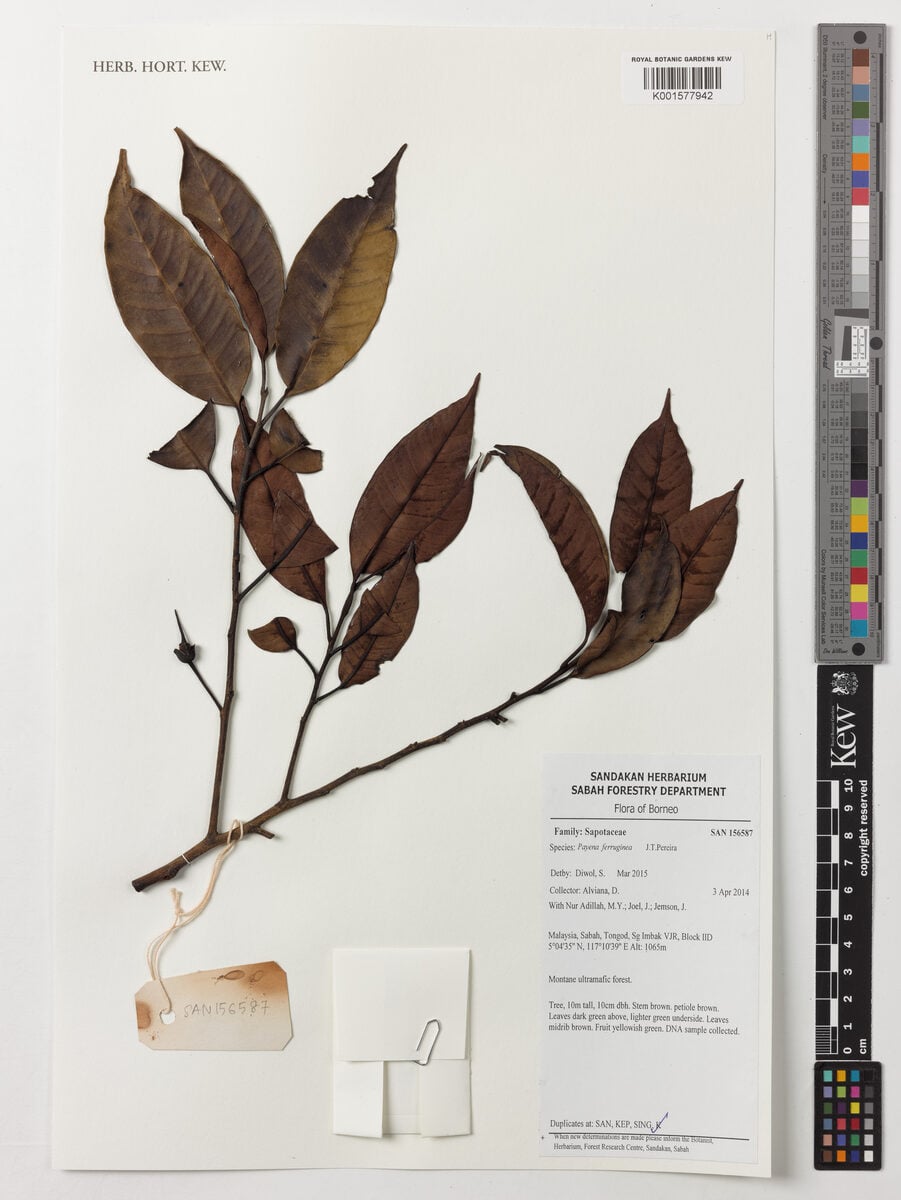
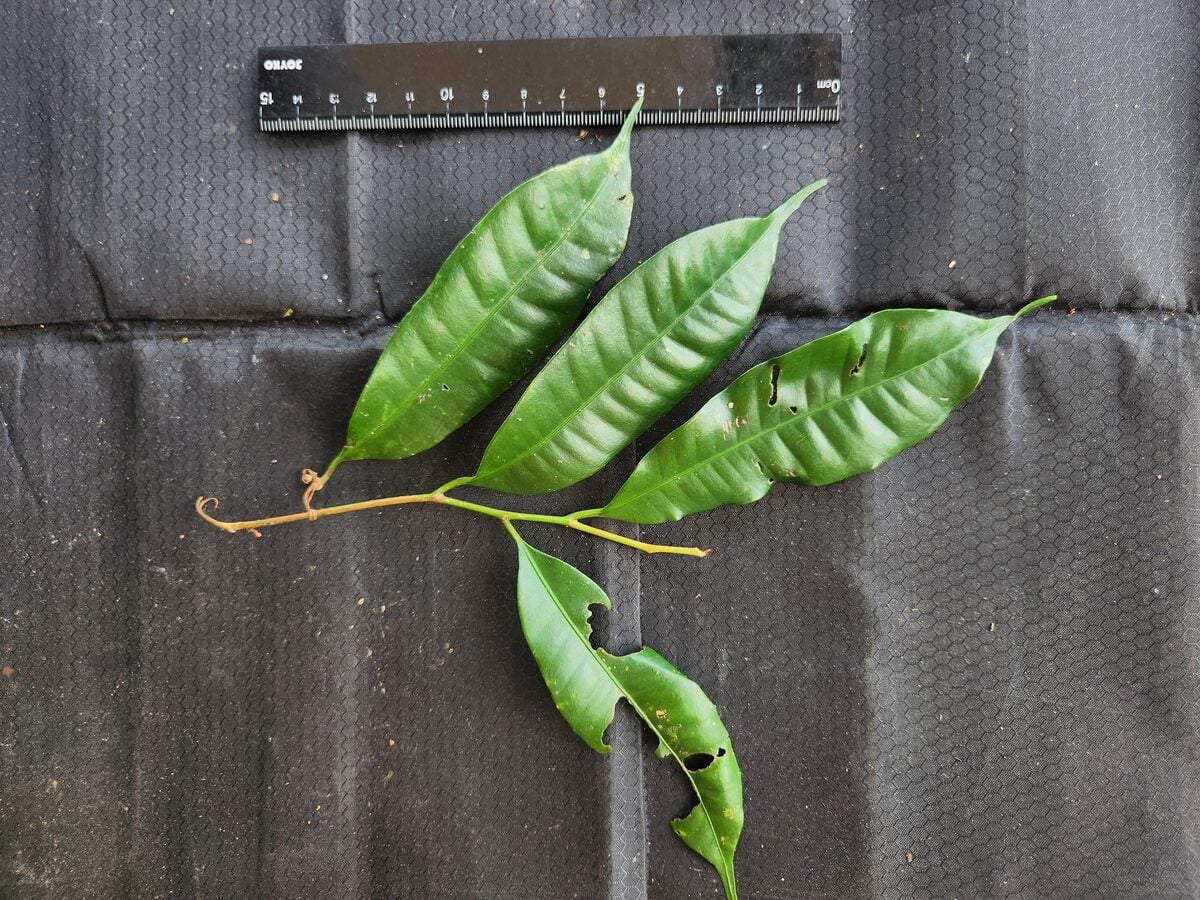
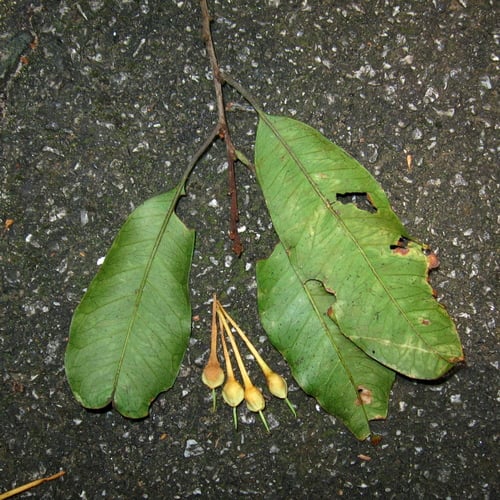
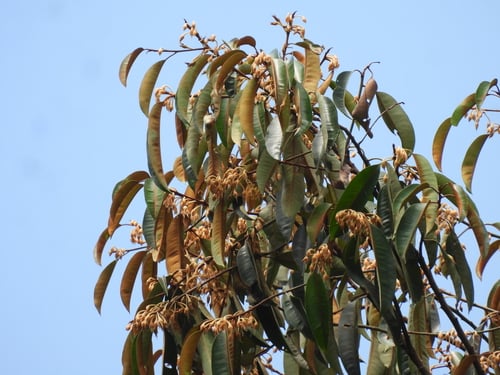
A tree. It grows 40 m high. The trunk can be 80 cm across. It has narrow buttresses. The young shoots have fine hairs at first. The bark becomes greyish-brown and rough and cracked. The leaves are spaced and alternate. They can be arranged in spirals. They are 5.3-19 cm long by 1.9-9.2 cm wide. They are oval or sword shaped. The lower surface is usually silvery. There are 12-25 pairs of secondary veins. The leaf stalk is 1-2.8 cm long. The flowers have only one sex but both are on the same plant. There are 3-20 flowers in a tuft near the axils of leaves. The flowers are yellowish-green. The fruit are 1.6-3.5 cm long and oval. The fruit are purple to black at maturity. The fruit is edible. There is one seed. It is 1.4-2.3 cm long. It has a hard, smooth, shiny coat.
Edible Uses
The fruit is edible.
Distribution
A tropical plant. It grows in wet mountain and cloud forest. It grows between 1,300 - 2,600 m altitude. It can grow down to sea level.
Where It Grows
Central America, Colombia, Costa Rica, Ecuador, Panama, Peru, South America, St Lucia, Venezuela,
Notes
There are 38 Micropholis species in tropical America.
Synonyms
Also Known As
Balata chien, Vara de mar
References (5)
- Grandtner, M. M., 2008, World Dictionary of Trees. Wood and Forest Science Department. Laval University, Quebec, Qc Canada. (Internet database http://www.wdt.qc.ca)
- Grandtner, M. M. & Chevrette, J., 2013, Dictionary of Trees, Volume 2: South America: Nomenclature, Taxonomy and Ecology. Academic Press p 412
- Kermath, B. M., et al, 2014, Food Plants in the Americas: A survey of the domesticated, cultivated and wild plants used for Human food in North, Central and South America and the Caribbean. On line draft. p 538
- Pennington, T.D., 1990, Sapotaceae in Flora Neotropica Monograph 52. New York Botanical Gardens. p 181
- Smith, N., Mori, S.A., et al, 2004, Flowering Plants of the Neotropics. Princeton. p 342