Sideroxylon tepicense
(Standley) Pennington
Tepic jungleplum
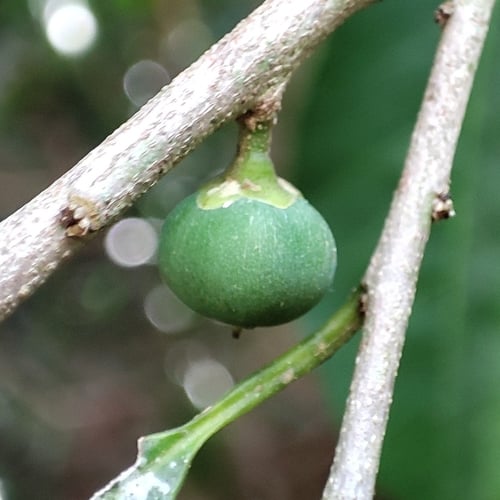
iNaturalist· cc-by
(c) Neptalí Ramírez Marcial, some rights reserved (CC BY), uploaded by Neptalí Ramírez Marcial
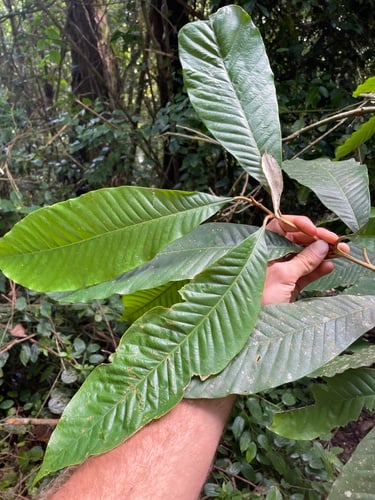
iNaturalist· cc-by-nc
(c) Gustavo Castañeda, some rights reserved (CC BY-NC)
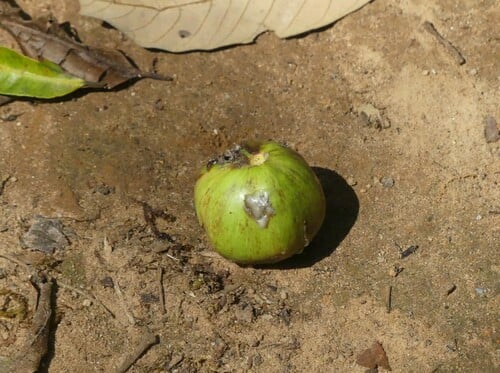
iNaturalist· cc-by-nc
(c) Gustavo Castañeda, some rights reserved (CC BY-NC)
Description
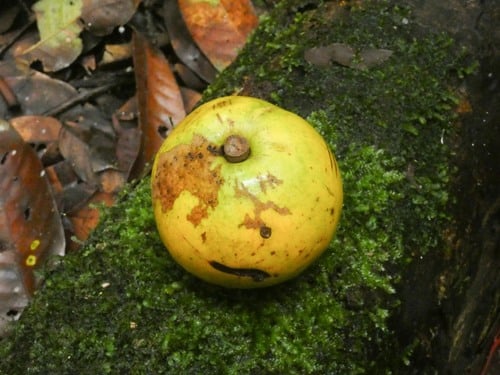
A spreading tree. It grows up to 25 m high. The young branches are hairy. The trees do not have spines. The leaves are arranged in spirals. They are clustered at the tip of the stems. The leaves are 8.5-16.6 cm long and 2.7-6.5 cm wide. They are narrow or broadly oblong. The leaf stalk is 1-2.6 cm long. The flowers are white. The flowers have both sexes. They occur in tufts of 2-10 flowers. The fruit are 3-3.5 cm long by 1.8-2 cm wide. The fruit are yellow. There is one or occasionally two seeds. They are 2 cm long. The fruit are edible.
Edible Uses
Fruit - raw or cooked. The fruit is eaten raw, though a few quickly cauterize the mouth. It is also made into a sweet jam. The yellow, ellipsoid fruit is around 30 - 35mm long and 18 - 20mm wide, containing a single large seed.
Traditional Uses
The fruit are eaten, fresh or cooked.
This uses section is brief — help expand it
Distribution
A tropical plant. It grows in mountains and shady valleys. It grows between 500-1,500 m altitude.
Where It Grows
Central America, El Salvador, Guatemala, Mexico, North America,
Synonyms
Also Known As
Tempisque
References (6)
- Altschul, S.V.R., 1973, Drugs and Foods from Little-known Plants. Notes in Harvard University Herbaria. Harvard Univ. Press. Massachusetts. no. 3244 (As Mastichodendron angustifolium)
- Grandtner, M. M., 2008, World Dictionary of Trees. Wood and Forest Science Department. Laval University, Quebec, Qc Canada. (Internet database http://www.wdt.qc.ca)
- Kermath, B. M., et al, 2014, Food Plants in the Americas: A survey of the domesticated, cultivated and wild plants used for Human food in North, Central and South America and the Caribbean. On line draft. p 805
- Pennington, T.D., 1990, Sapotaceae in Flora Neotropica Monograph 52. New York Botanical Gardens. p 159
- Segura, S., et al, 2018, The edible fruit species in Mexico. Genet Resour Crop Evol (2018) 65:1767–1793
Show all 6 references Hide references
- Yetman, D., 2002, The Guarijios of the Sierra Madre: Hidden People of Northwestern Mexico. University of New Mexico Press. p 224
More from Sapotaceae
Chrysophyllum gonocarpum
Aguai chico, Angledfruit starapple
Chrysophyllum gorungosanum
Brown-berry fluted milkwood
Chrysophyllum lanceolatum var. stellatocarpon
Chrysophyllum lucentifolium
Shining leaf starapple
Chrysophyllum lucentifolium subsp. pachycarpum
Thick fruit shining starapple
Chrysophyllum macoucou