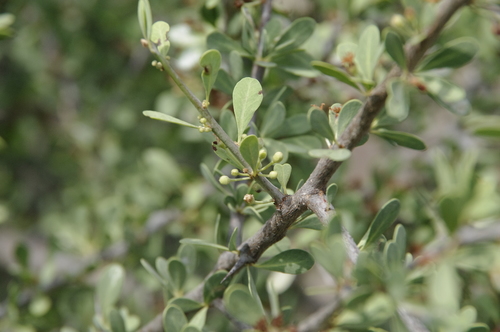
Sarcaulus brasiliensis
(A. de Candolle) Eyma
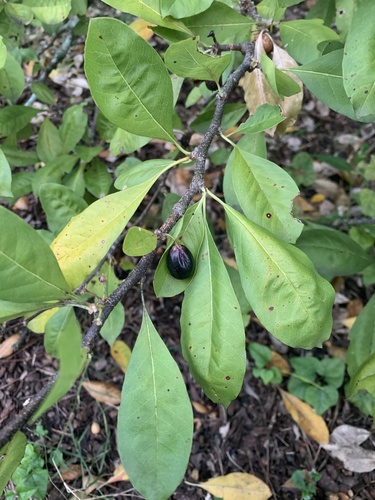
Cambuca, Brazil sarcaulus
iNaturalist· cc-by-nc
(c) Leonardo Álvarez-Alcázar, some rights reserved (CC BY-NC), uploaded by Leonardo Álvarez-Alcázar
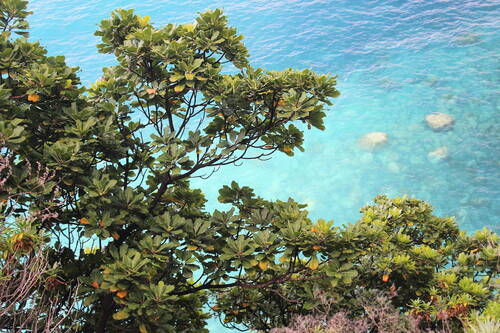
iNaturalist· cc-by-nc
(c) Leonardo Álvarez-Alcázar, some rights reserved (CC BY-NC)
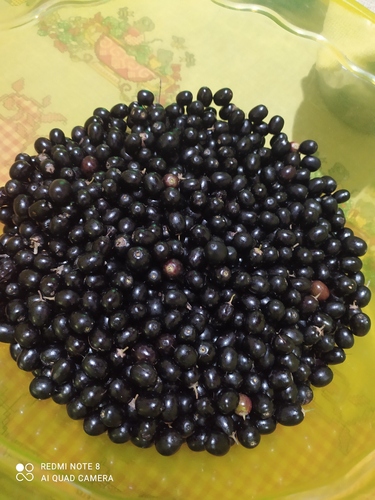
iNaturalist· cc-by-nc
(c) Leonardo Álvarez-Alcázar, some rights reserved (CC BY-NC)
Description
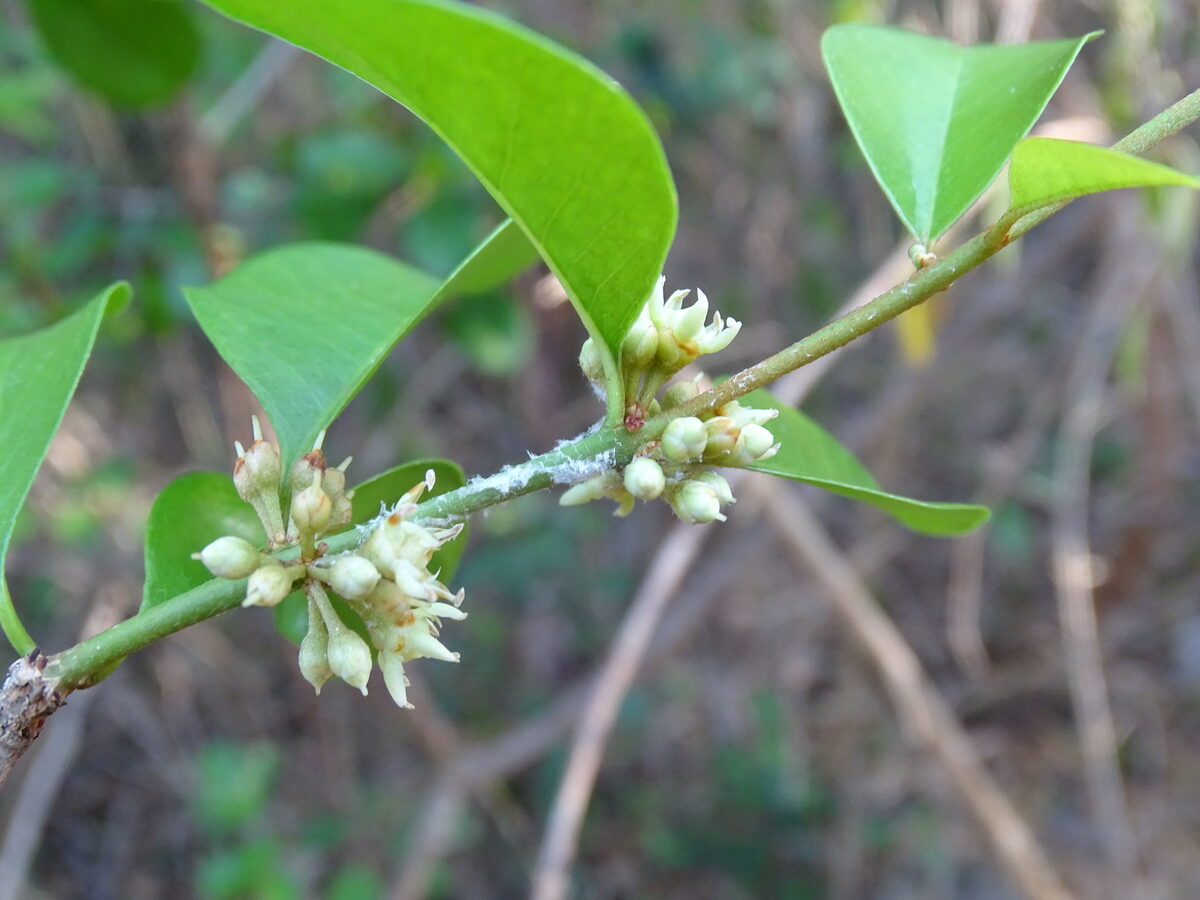
A tree. It grows to 20-30 m high. The trunk can be 35 cm across. It does not have buttresses. The bark is smooth or slightly scaly and pale grey. The young shoots have soft hairs. The bark is whitish-brown and smooth. The leaves are arranged in spirals or alternate. The leaves are 10-24 cm long by 2.3-9.4 cm wide. They are narrowly oval to sword shaped. There are 8-12 pairs of secondary veins. The leaf stalk is 0.2-1.3 cm long. The flowers are of one sex with both sexes on the one plant. The flowers are in tufts of 1-8 flowers in the axils of leaves and below leaves. The flowers are yellowish-white. The fruit stalk is 1-1.5 cm long. The fruit is 1.8-3.2 cm long. The fruit are yellow. They are almost round or oval. The fruit are edible. There are 1-2 seeds inside. These are 1.2-1.7 cm long. There is a sticky white pulp around the seeds.
Edible Uses
Fruit. A sweet-tasting pulp. The yellow, globose fruit can be 25mm in diameter, containing 1 - 2 seeds.
Distribution
It is a tropical plant. They grow in lowland rainforest. It can be on land which floods occasionally as well as on non flooded land. It grows up to 750 m altitude.
Where It Grows
Amazon, Bolivia, Brazil, Central America, Colombia, Costa Rica, Colombia, Ecuador, French Guiana, Guianas, Guyana, Panama, Peru, South America*, Suriname,
Cultivation
Plants are grown from seeds. The seeds are collected from ripe fruit that have fallen. The fruit are put in piles to allow them to decompose so that the seeds can be easily removed. The seeds are washed under running water and need to be planted fresh. Seedlings emerge in 2-3 months.
Propagation
Seed - best sown as soon as it is ripe in a partially shaded position in a nursery seedbed. A low germination rate can usually be expected, with the seed sprouting within 60 - 90 days.
Other Uses
The wood is medium-textured, irregular-grained, light in weight, hard, with a good resistance to the attacks of wood-eating organisms. It can be used in general carpentry, for turned objects and tool handles.
Synonyms
Also Known As
Cambuca, Guajara, Guajara do igapo, Ikum kamwi, Menegoe, Meningowe, Meyguhue, Sacha wayusa, Ujukam yaas, Wai
References (8)
- Galeano, G., 2000, Forest Use at the Pacific Coast of Choco, Colombia: A Quantitative Approach. Economic Botany, Vol. 54, No. 3, pp. 358-376 (As Sarcaulus)
- Grandtner, M. M. & Chevrette, J., 2013, Dictionary of Trees, Volume 2: South America: Nomenclature, Taxonomy and Ecology. Academic Press p 583
- Kermath, B. M., et al, 2014, Food Plants in the Americas: A survey of the domesticated, cultivated and wild plants used for Human food in North, Central and South America and the Caribbean. On line draft. p 784
- Lopez-Diago, D. & Garcia, N., 2021, Wild edible fruits of Colombia. Biota ColomBiana 22 (2) p 52
- Lorenzi, H., 2009, Brazilian Trees. A Guide to the Identification and Cultivation of Brazilian Native Trees. Instituto Plantarum de Estuados da Flora Ltda. Vol. 3 p 347
Show all 8 references Hide references
- Pennington, T.D., 1990, Sapotaceae in Flora Neotropica Monograph 52. New York Botanical Gardens. p 233
- Torre, de la, L., et al, 2008, Enciclopedia de las Plantas Útiles del Ecuador. Herbario QCA. Pontificia Universidad Católica del Ecuador. p 574
- Van Roosmalen, M.G.M., & Garcia, O. M., 2000, Fruits of the Amazonian Forest. Part 2: Sapotaceae. Acta Amazonica 30(2): 187-290