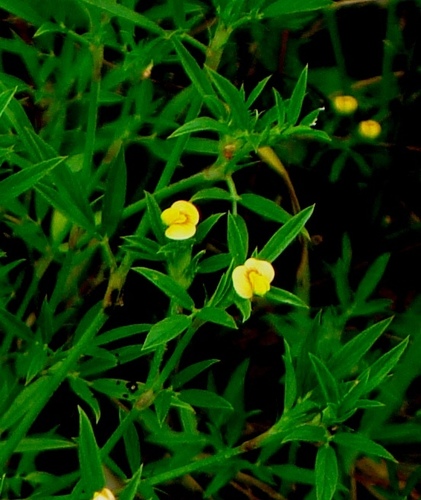
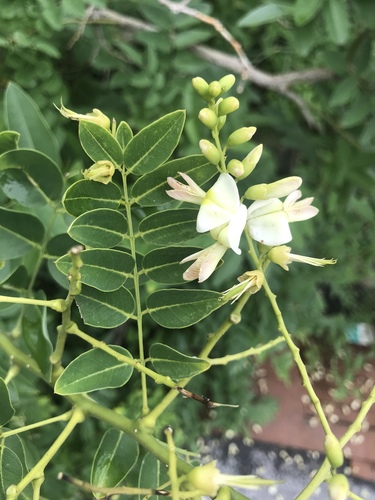
Astragalus canadensis
L.
Canadian milk vetch
iNaturalist· cc-by-nc
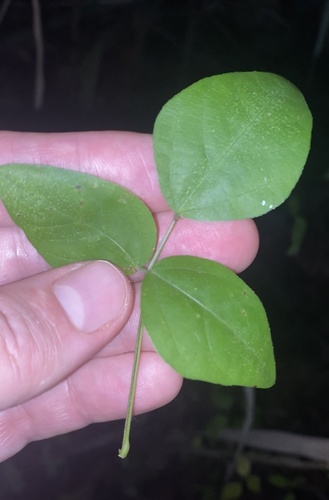
(c) Nathan Grosse, some rights reserved (CC BY-NC), uploaded by Nathan Grosse
iNaturalist· cc-by
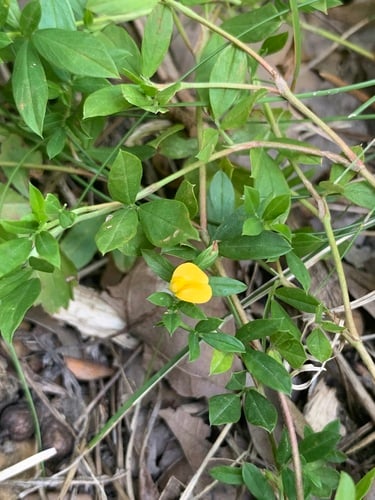
(c) Jim Morefield, some rights reserved (CC BY), uploaded by Jim Morefield
iNaturalist· cc-by-nc-sa
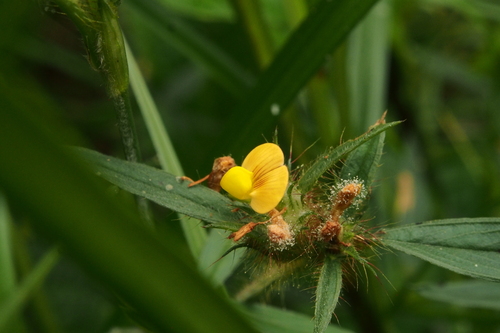
(c) Lee Elliott, some rights reserved (CC BY-NC-SA), uploaded by Lee Elliott
Summary
Source: WikipediaAstragalus canadensis is a common and widespread member of the milkvetch genus in the legume family, known commonly as Canadian milkvetch. The plant is found throughout Canada and the United States in many habitats including wetlands, woodlands, and prairies. This species has three subspecies: Astragalus canadensis var. canadensis native to eastern and central US, especially around a strip from Louisiana to Ontario. Astragalus canadensis var. mortonii native to northwest US, especially eastern Washington and western Idaho. Astragalus canadensis var. brevidens native to northwest US, including north California.
Description
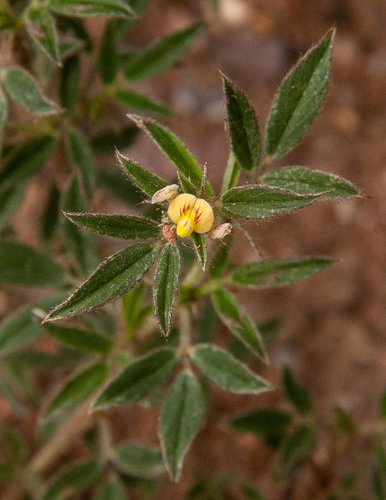
A tall herb. It keeps growing from year to year. The stems are branching. The leaves are compound. There are 12-15 bluish green leaflets. The flowers are creamy yellow. They are in dense spikes.
Edible Uses
Edible Parts: Root Edible Uses: Root - raw or boiled. They were often used in a broth. The roots are gathered in spring or autumn. Some caution is advised, if the root is bitter it could be due to the presence of toxic alkaloids.
Traditional Uses
The root is eaten raw or boiled as a vegetable.
This uses section is brief — help expand it
Medicinal Uses
Analgesic Febrifuge Haemostatic The root is analgesic and antihaemorrhagic. It can be chewed or used as a tea to treat chest and back pains, coughs and the spitting up of blood. A decoction of the root is used as a febrifuge for children. A poultice made from the chewed root has been used to treat cuts.
Known Hazards
Like other Astragalus species, A. canadensis is somewhat toxic, but it has been used medicinally by Native American groups such as the Blackfoot and Lakota people, particularly the roots. The roots were eaten raw or boiled, and used in broth. The roots were usually gathered in spring and fall.
Distribution
It is a temperate plant. It suits hardiness zones 3-8.
Where It Grows
Canada, North America, USA,
Cultivation
Requires a dry well-drained soil in a sunny position. This species is not hardy in the colder areas of the country, it tolerates temperatures down to between -5 and -10°c. Plants are intolerant of root disturbance and are best planted in their final positions whilst still small. This species has a symbiotic relationship with certain soil bacteria, these bacteria form nodules on the roots and fix atmospheric nitrogen. Some of this nitrogen is utilized by the growing plant but some can also be used by other plants growing nearby. Many members of this genus can be difficult to grow, this may be due partly to a lack of their specific bacterial associations in the soil. For polyculture design as well as the above-ground architecture (form - tree, shrub, etc. and size shown above), information on the habit and root pattern is also useful and given here if available. Milk Vetch generally has a moderate growth rate, establishing within the first year and often reaching full maturity in two to three years. The leaves and young shoots can be harvested in spring and early summer. The seeds are typically harvested in late summer to early autumn. Milk Vetch usually flowers from late spring to mid-summer.
Propagation
Seed - best sown as soon as it is ripe in a cold frame. A period of cold stratification may help stored seed to germinate. Stored seed, and perhaps also fresh seed, should be pre-soaked for 24 hours in hot water before sowing - but make sure that you do not cook the seed. Any seed that does not swell should be carefully pricked with a needle, taking care not to damage the embryo, and re-soaked for a further 24 hours. Germination can be slow and erratic but is usually within 4 - 9 weeks or more at 13°c if the seed is treated or sown fresh. As soon as it is large enough to handle, prick the seedlings out into individual pots and grow them on in the greenhouse for their first winter, planting them out into their permanent positions in late spring or early summer, after the last expected frosts.
Other Uses
Nitrogen fixer. Milk Vetch is often used as a cover crop and for erosion control. It improves soil fertility through nitrogen fixation and can be used in mixed plantings to enhance biodiversity. 1. Nectary - Flowers rich in nectar and pollen: Yes – Milk Vetch species produce flowers that are rich in nectar, making them attractive to pollinators such as bees and butterflies. 2. Wildlife - Food (Fruit, Seeds, Leaf litter, Shelter, Nesting, Roosting): Yes – The seeds of Milk Vetch are edible and can serve as food for various wildlife. The plant’s foliage may also cover small animals, although it is not typically used for nesting. 3. Invertebrate Shelter (Overwintering sites, Leaf litter, Groundcover): Yes – Milk Vetch can provide a habitat for invertebrates, and its leaves contribute to leaf litter that supports beneficial insects. Some species may spread out enough to offer ground cover. 4. Pest Confuser (Smell): No – Milk Vetch is not specifically recognized for its ability to confuse pests through its scent. Special Uses Food Forest Nitrogen Fixer
Notes
There are 2,000 Astragalus species.
Synonyms
References (6)
- Beckstrom-Sternberg, Stephen M., and James A. Duke. "The Foodplant Database." http://probe.nalusda.gov:8300/cgi-bin/browse/foodplantdb.(ACEDB version 4.0 - data version July 1994) (As Astragalus carolinianus)
- Bircher, A. G. & Bircher, W. H., 2000, Encyclopedia of Fruit Trees and Edible Flowering Plants in Egypt and the Subtropics. AUC Press. p 46
- Jackes, D. A., Edible Forest Gardens
- Kermath, B. M., et al, 2014, Food Plants in the Americas: A survey of the domesticated, cultivated and wild plants used for Human food in North, Central and South America and the Caribbean. On line draft. p 98
- Plants for a Future database, The Field, Penpol, Lostwithiel, Cornwall, PL22 0NG, UK. http://www.scs.leeds.ac.uk/pfaf/
Show all 6 references Hide references
- Sp. pl. 2:757. 1753