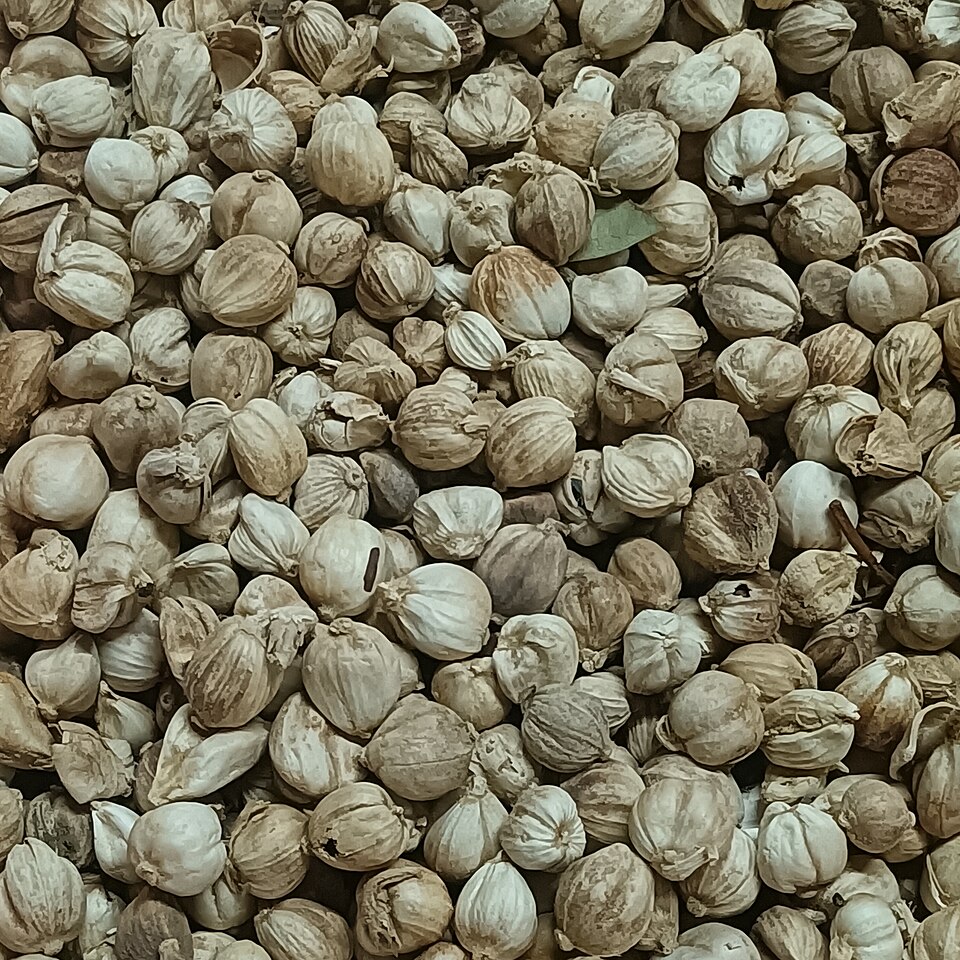
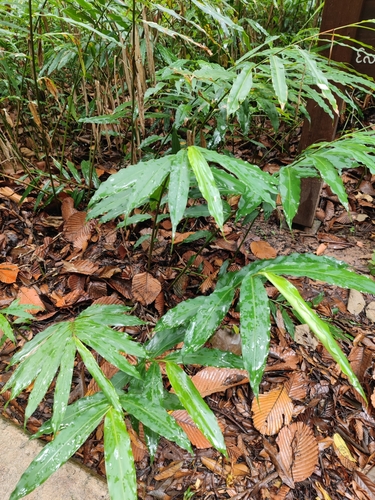
Curcuma parviflora
Wallich
iNaturalist· cc-by-nc-sa
(c) Tony Rodd, some rights reserved (CC BY-NC-SA)
iNaturalist· cc-by-nc
(c) Wich’yanan (Jay) Limparungpatthanakij, some rights reserved (CC BY-NC)
Description
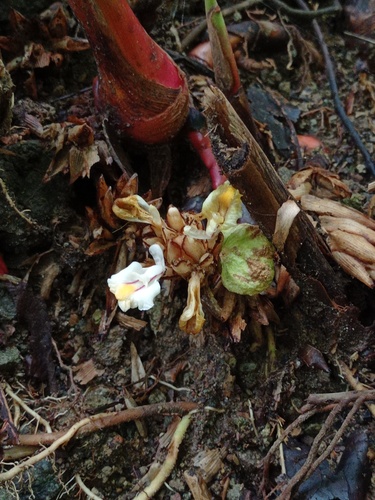
A ginger family herb. It grows 30-40 cm high. There are 3-5 leaves. The are oval and long and up to 23 cm long by 8 cm wide. The leaf stalk is smooth and 10 cm long. The flower arrangement is cylindrical and at the end of the shoot. It is 6 cm long by 2-3 cm wide. The bracts are like pouches and join together for half their length. They are 3 cm long by 1-1.2 cm wide. Each bract surrounds two flowers. The flowers are 1.5 cm long. The fruit is a capsule which is long and oval.
Edible Uses
Young leaves are served blanched with chili sauce. Flowers are boiled and eaten with shrimp paste and chili sauce.
Traditional Uses
Young leaves are served blanched and with chili sauce. The flowers are boiled and eaten with shrimp paste and chili sauce.
This uses section is brief — help expand it
Distribution
A tropical plant. It grows in shady deciduous forests.
Where It Grows
Asia, India, Indochina, Indonesia, Laos, Malaysia, Myanmar, SE Asia, Thailand,
Cultivation
Plants in this genus generaly prefer a humus-rich, moist but well-drained soil in partial shade.
Propagation
Seed - best sown as soon as it is ripe. Germinates best at temperatures around 20°c. Division of the rhizome when the plant is dormant.
Notes
There are about 50 Curcuma species. They are mostly in SE Asia.
Synonyms
Also Known As
Dork grajeaw, Krachieo khaao, Mai-ta-raw-thing, Phu-ya-bawmg
References (9)
- Anderson, E. F., 1993, Plants and people of the Golden Triangle. Dioscorides Press. p 208
- Facciola, S., 1998, Cornucopia 2: a Source Book of Edible Plants. Kampong Publications, p 248
- Jacquat, C., 1990, Plants from the Markets of Thailand. D.K. Book House p 116
- Kachenchart, B., et al, 2008, Phenology of Edible Plants at Sakaerat Forest. In Proceedings of the FORTROP II: Tropical Forestry Change in a Changing World. Bangkok, Thailand.
- Kuhnlein, H. V., et al, 2009, Indigenous Peoples' food systems. FAO Rome p 171
Show all 9 references Hide references
- Sirirugsa, P., 1999, Thai Zingiberaceae: Species Diversity and their Uses. http://www.iupac.org/symposia/proceedings/phuket 97
- Somnasang, P., Moreno, G and Chusil K., 1998, Indigenous knowledge of wild hunting and gathering in north-east Thailand. Food and Nutrition Bulletin 19(4) p 359f
- Somnasang, P., et al, 2000, Knowing gathering and eating: Knowledge and attitudes about wild food in an Isan Village in north eastern Thailand. Journal of Ethnobiology 20(2):197-216
- Thitiprasert, W., et al, 2007, Country report on the State of Plant Genetic Resources for Food and Agriculture in Thailand (1997-2004). FAO p 95