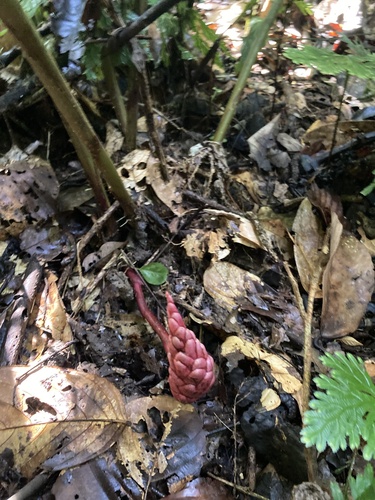
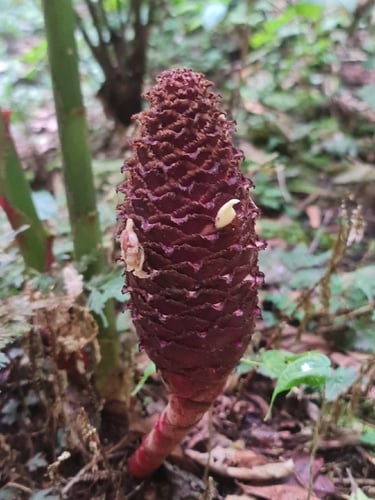
Etlingera elatior
(Jack) R.M. Smith
Red torch Ginger, Philippine waxflower
iNaturalist· cc-by-nc
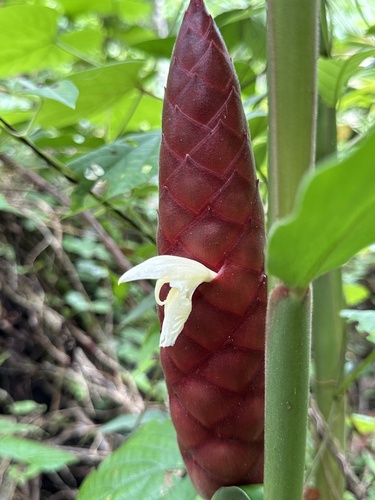
(c) Steven Kurniawidjaja, some rights reserved (CC BY-NC), uploaded by Steven Kurniawidjaja
iNaturalist· cc-by-nc
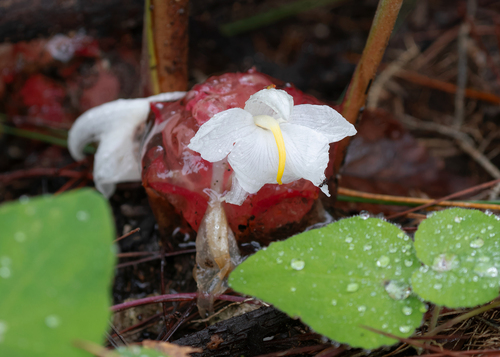
(c) John C., some rights reserved (CC BY-NC), uploaded by John C.
iNaturalist· cc-by-nc
(c) Kyle Finn, some rights reserved (CC BY-NC), uploaded by Kyle Finn
Summary
Source: WikipediaEtlingera elatior (also known as torch ginger, among other names) is a species of herbaceous perennial plant in the family Zingiberaceae, native to the Malay Peninsular, the islands of Indonesia and New Guinea of the Malesia bioregion. The showy pink flowers are used in decorative arrangements and are an important ingredient in food across Southeast Asia.
Description
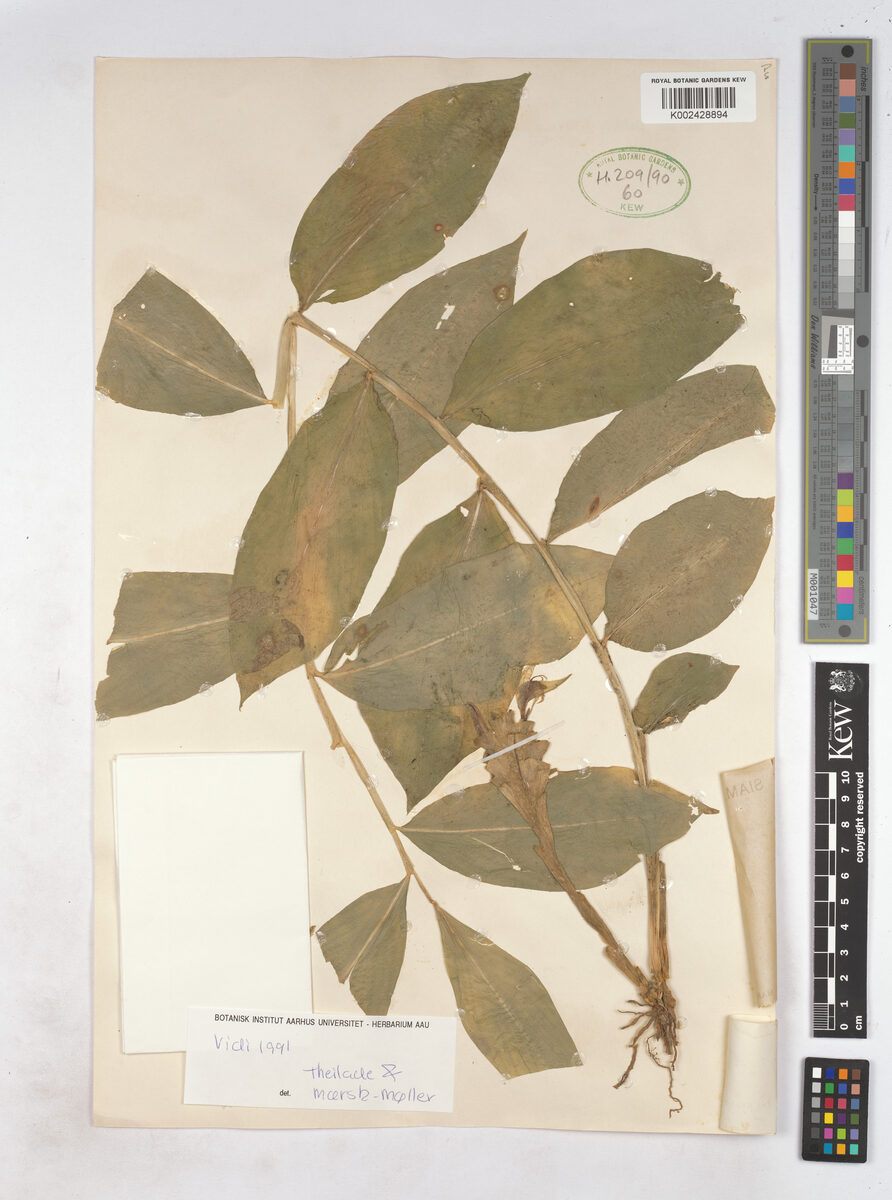
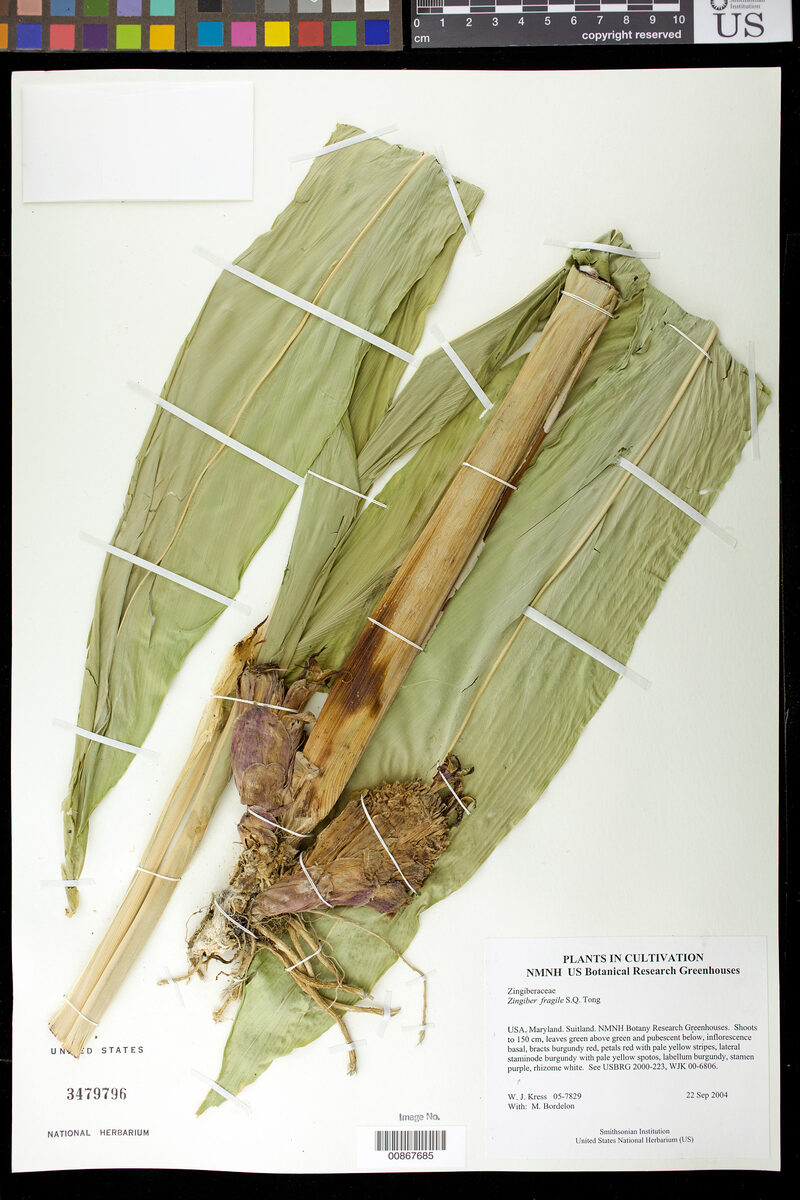
An erect ginger family herb. A herb which keeps growing from year to year. The rhizome is creeping. The false stem is robust. They are closely grouped and can be 5 m high. The leaves are arranged in two vertical rows. The leaf stalk is short. The leaf stalk is 3-4 cm long. The leaf blade is sword shaped and 80 cm long by 18 cm wide. The flowers are on a leafless shoot. The flower stalk is raised well above the ground. It can be 0.8-1.5 m tall. The flower clusters are surrounded by large coloured bracts. Then narrow sterile bracts surround each flower. The flower is pink to red but can also be white. The fruiting head is greenish or reddish. It is round and 2.5 cm across. The fruit are oval. There are many seeds which are black.
Edible Uses
The flower buds are edible. In North Sumatra (especially among the Karo people), the flower buds are used in a stewed fish dish called Arsik ikan mas (Andaliman-spiced carp). In Bali, people use the white part of the bottom part of the trunk for cooking chilli sauce called "Sambal Bongkot", and use the flower buds to make chilli sauce called "Sambal Kecicang". In Thailand, it is eaten in a kind of Thai salad preparation. In Malaysia, the flower is an essential ingredient in cooking the fish broth for a kind of spicy sour noodle soup called "asam laksa" (also known as "Penang laksa"), in the preparation of a kind of salad called kerabu and many other Malay dishes. The fruit is also used in Indonesian cooking. In Karo, it is known as asam cekala (asam meaning 'sour'), and the flower buds, but more importantly the ripe seed pods, which are packed with small black seeds, are an essential ingredient of the Karo version of sayur asam, and are particularly suited to cooking fresh fish. In Sundanese, it is known as Honje.
Traditional Uses
The flowers have a spicy flavour. They taste similar to Vietnamese mint. The flowers are chopped and served raw as a vegetable. The unopened flower buds are eaten in Asia. They are used to flavour curries. The young shoots and flowers are eaten raw. The flowers can also be cut into small pieces and mixed with cooked dishes and curries. The fruit are sour and mixed with other vegetables for flavouring. The ripe seeds are eaten uncooked.
Medicinal Uses
The fruits and leaves are utilized medicinally.
Distribution
A tropical plant. It suits places with a seasonally moist and dry climate or a continuously moist climate. It needs a fertile, humus-rich, well-drained soil. It suits bright shade. In China it is cultivated as an ornament. It suits hardiness zones 10-12. At MARDI. In Yunnan. In the Cairns Botanical Gardens.
Where It Grows
Africa, Asia, Australia, Caribbean, Central America, China, Colombia, Costa Rica, Ghana, Hawaii, Honduras, Indochina, Indonesia, Malaysia*, Marquesas, Mauritius, Mexico, Myanmar, North America, Pacific, Papua New Guinea, PNG, Philippines, Puerto Rico, SE Asia, Singapore, Sri Lanka, Thailand, Trinidad and Tobago, USA, West Africa, West Indies,
Cultivation
Plants can be grown by seed or division. It can be grown from sections of the rhizome that have formed shoots. They need to be spaced 1-2 m apart.
Propagation
Seed - Division of the rhizomes.
Other Uses
The shoots are made into mats. A very fine fibre is obtained from the leaves.
Other Information
The flowers are sold in markets. It is cultivated.
Notes
There are about 60-70 Etlingera species.
Synonyms
Also Known As
Bua salleh, Bunga kantan, Chumbrang, Combrang, Dalaa, Ginger flower, Honje, Huo ju jiang, Kaalaa, Kantan, Kecala, Kechala, Kechombrang, Kechumbrang, Kecombrang, Kelu, Kimcong, Kimcuang, Miebumienai, Ondje, Petikala, Plastic-pan, Potok, Sambuang, Tepus kampong, Ubud udat
References (52)
- Andarwulan, N., et al, 2010, Flavonoid content and antioxidant activity of vegetables from Indonesia. Food Chemistry 121: 1231-1235
- Arora, R. K., 2014, Diversity in Underutilized Plant Species - An Asia-Pacific Perspective. Bioversity International. p 103
- Benvenuti, S. & Mazzoncini, M., 2021, The Biodiversity of Edible Flowers: Discovering New Tastes and New Health Benefits. Frontiers in Plant Science Article 569499.
- Brickell, C. (Ed.), 1999, The Royal Horticultural Society A-Z Encyclopedia of Garden Plants. Convent Garden Books. p 421
- Burkill, H. M., 1985, The useful plants of west tropical Africa, Vol. 5. Kew.
Show all 52 references Hide references
- Burkill, I.H., 1966, A Dictionary of the Economic Products of the Malay Peninsula. Ministry of Agriculture and Cooperatives, Kuala Lumpur, Malaysia. Vol 2 (I-Z) p 1731
- Chai, P. P. K. (Ed), et al, 2000, A checklist of Flora, Fauna, Food and Medicinal Plants. Lanjak Entimau Wildlife Sanctuary, Sarawak. Forestry Malaysia & ITTO. p 164
- Chin, H. F., 1999, Malaysian Vegetables in Colour. Tropical Press. p 88
- Ching, L. S. & Mohamed, S., 2001, Alpha-Tocopherol Content in 62 Edible Tropical Plants. J. Agric. Food Chem. 2001, 49, 3101−3105 (As Phaeomeria speciosa)
- Cundall, P., (ed.), 2004, Gardening Australia: flora: the gardener's bible. ABC Books. p 567
- Exkurs.-Fl. Java 1:332. 1911
- Facciola, S., 1998, Cornucopia 2: a Source Book of Edible Plants. Kampong Publications, p 247 (As Nicolaia elatior)
- Foo, J.T.S.(ed), 1996, A Guide to Common Vegetables. Singapore Science Foundation. p 152
- Grubben, G. J. H. and Denton, O. A. (eds), 2004, Plant Resources of Tropical Africa 2. Vegetables. PROTA, Wageningen, Netherlands. p 561
- Hariyadi, B., 2008, The Entwined Tree: Traditional Natural Resource Management of Serampas, Jambi, Indonesia. Ph. D thesis. Univ. or Hawaii. p 402
- Hemphill, I, 2002, Spice Notes Macmillan. p 195
- Hibbert, M., 2002, The Aussie Plant Finder 2002, Florilegium. p 95, 210
- Hoare, A., 2003, Food use of the Lundayeh SW Sabah. Borneo Research Council.
- Hutton, W., 1997, Tropical Herbs and Spices of Indonesia. Periplus. p 56
- Irawan, D., et al, 2006, Ethnobotanical study and nutrient potency of local traditional vegetables in Central Kalimantan. Tropics Vol. 15(4)
- Jacquat, C., 1990, Plants from the Markets of Thailand. D.K. Book House p 118 (As Nicolaia elatior)
- Jiwajinda, S., et al, 2002, Suppressive Effects of Edible Thai Plants on Superoxide and Nitric Oxide Generation. Asian Pacific Journal of Cancer Prevention, Vol 3, 2002 (As Nicolaia speciosa)
- Kiple, K.F. & Ornelas, K.C., (eds), 2000, The Cambridge World History of Food. CUP p 1871 (As Phaeomeria magnifica)
- Larsen, K., Ibrahim, H., Khaw, S.H., & Saw, L.G., 1999, Gingers of Peninsula Malaysia and Singapore. Natural History Publications (Borneo). Facing Preface. p 9, 82, 83
- Llamas, K.A., 2003, Tropical Flowering Plants. Timber Press. p 368
- Macmillan, H.F. (Revised Barlow, H.S., et al), 1991, Tropical Planting and Gardening. Sixth edition. Malayan Nature Society. Kuala Lumpur. p 355
- Miean, K. H. & Mohamed, S., 2001, Flavonoid (Myricetin, Quercetin, Kaempferol, Luteolin, and Apigenin) Content of Edible Tropical Plants. Journal of Agricultural and Food Chemistry. 49:3016-3112
- Martin, F.W. & Ruberte, R.M., 1979, Edible Leaves of the Tropics. Antillian College Press, Mayaguez, Puerto Rico. p 225
- Milow, P., et al, 2013, Malaysian species of plants with edible fruits or seeds and their evaluation. International Journal of Fruit Science. 14:1, 1-27
- Ng, X. N., et al, 2012, Nutritional profile and antioxidative properties of selected tropical vegetables. International Food Research Journal 19(4): 1487-1496
- Notes Roy. Bot. Gard. Edinburgh 43:244. 1986
- Ochse, J. J. et al, 1931, Vegetables of the Dutch East Indies. Asher reprint. p 757
- Pawera, L., et al, 2020, Wild Food Plants and Trends in Their Use: From Knowledge and Perceptions to Drivers of Change in West Sumatra, Indonesia, Foods. 2020, 9, 1240
- Perry, F., and Hay, R., 1982, Guide to Tropical and Subtropical Plants. Sun Books p 126 (As Nicolaia elatior)
- Poulsen, A. D., 2006, Gingers of Sarawak. Natural History Publications, Borneo. p 50
- Priyadi, H., et al, Five hundred plant species in Gunung Halimun Salak National Park West Java. A checklist including Sundanese names, distribution and use. CIFOR, FFPRI, SLU p 53
- Purseglove, J.W., 1972, Tropical Crops. Monocotyledons. Longmans p 521
- Sakunpak, A. & Panichayupakaranant, P., 2012, Antibacterial activity of Thai edible plants against gastrointestinal pathogenic bacteria and isolation of a new broad spectrum antibacterial polyisoprenylated benzophenone, chamuangone. Food Chemistry 130 (2012) 826–831
- Seidemann J., 2005, World Spice Plants. Economic Usage, Botany, Taxonomy. Springer. p 148
- Shaffiq, A. M., A., et al, 2013, Marketable wild fruits of Sarawak, Borneo: Their mode of consumption, uses and sugar profiles. Indian Journal of Traditional Knowledge. Vol 12(2): 195-201
- Sirirugsa, P., 1999, Thai Zingiberaceae: Species Diversity and their Uses. http://www.iupac.org/symposia/proceedings/phuket 97
- Solomon, C., 2001, Encyclopedia of Asian Food. New Holland. p 173
- Staples, G.W. and Herbst, D.R., 2005, A tropical Garden Flora. Bishop Museum Press, Honolulu, Hawaii. p 764 (Drawing)
- Sukarya, D. G., (Ed.) 2013, 3,500 Plant Species of the Botanic Gardens of Indonesia. LIPI p 1107
- Sukenti, K., et al, 2016, Ethnobotanical study on local cuisine of the Sasak tribe in Lombok Island, Indonesia. Journal of Ethnic Foods. 3 (2016) 189-200 p 198
- Terra, G.J.A., 1973, Tropical Vegetables. Communication 54e Royal Tropical Institute, Amsterdam, p 65
- Ulian, T., et al, 2020, Unlocking plant resources to support food security and promote sustainable agriculture. Plants, People, Planet. 2020;2:421–445.
- Woodward, P., 2000, Asian Herbs and Vegetables. Hyland House. p 73
- World Checklist of Useful Plant Species 2020. Royal Botanic Gardens, Kew
- Wu Delin, Larsen, K., Zingiberaceae. Flora of China.
- Xu, You-Kai, et al, 2004, Wild Vegetable Resources and Market Survey in Xishuangbanna, Southwest China. Economic Botany. 58(4): 647-667.
- Zeven, A. C. & de West, J. M. J., 1982, Dictionary of cultivated plants and their regions of diversity. Wageningen. p 64 (As Phaeomeria magnifica)