Marsdenia glabra
Cost.
Phak saeo
gbif· cc0
President and Fellows of Harvard College
Description
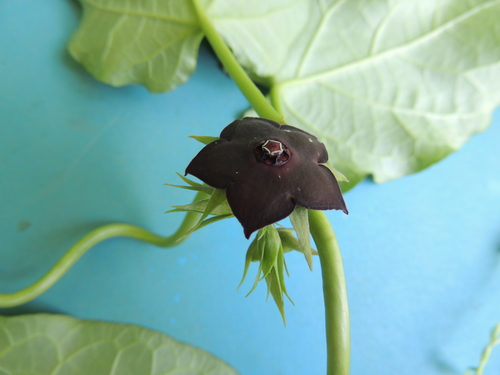
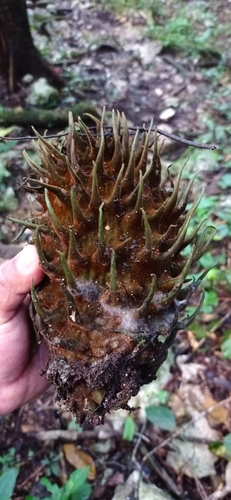
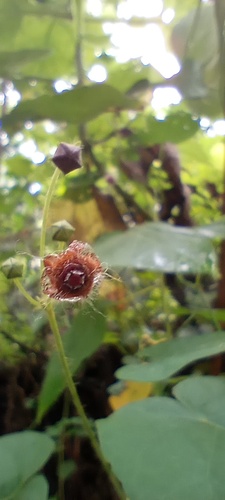
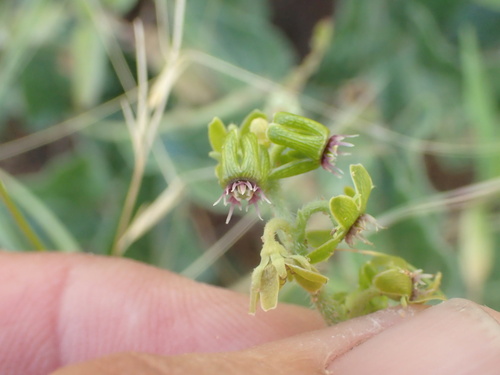
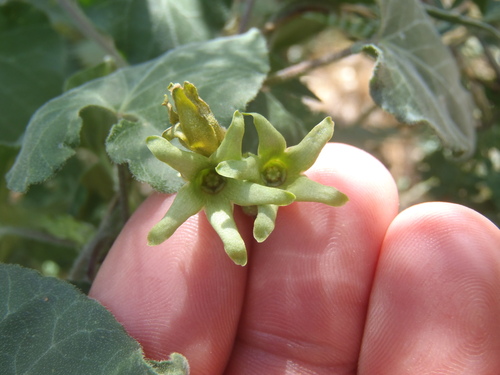
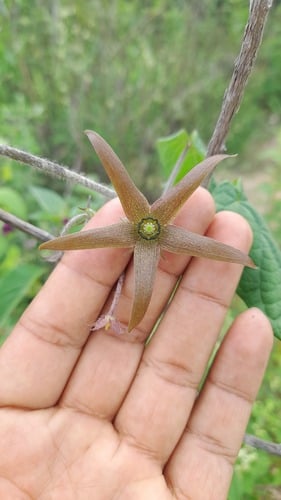
A thin climber. The leaves are opposite. They are oval. The leaves are 4-9 cm long and 1.5-4.5 cm wide. The leaf stalk is hairy. It is 1-2 cm long. The flowers occur as a cluster of short stalked flowers. These occur in the axils of leaves. They are 1.5 cm long. The flowers are bell-shaped. They are 3-4 mm long. They are white. The many seeded dry fruit is dagger shaped. They are 5 cm long by 6 mm wide. The seeds have a beak. They are 8 mm long by 3-4 mm wide.
Edible Uses
The tender shoots and young leaves are eaten blanched.
Traditional Uses
The tender shoots and young leaves are eaten blanched.
This uses section is brief — help expand it
Distribution
A tropical plant. It grows in mountain forest between 500–800 m altitude in China. It occurs in evergreen or mixed deciduous forests. In Yunnan.
Where It Grows
Asia, China, Indochina, Laos, SE Asia, Thailand, Vietnam,
Notes
The bark, leaves and flowers are used to make blue dye. There are about 25 Marsdenia species. They are mostly tropical.
Also Known As
Guang ye lan ye teng, Paksaew
References (5)
- Jacquat, C., 1990, Plants from the Markets of Thailand. D.K. Book House p 86
- Jiwajinda, S., et al, 2002, Suppressive Effects of Edible Thai Plants on Superoxide and Nitric Oxide Generation. Asian Pacific Journal of Cancer Prevention, Vol 3, 2002
- Li Ping-tao; Michael G. Gilbert, W. Douglas Stevens, ASCLEPIADACEAE Flora of China.
- Maisuthisakul, P., 2012, Phenolic Constituents and Antioxidant Properties of some Thai Plants. Chp. 9 in Book Phytochemicals - A Global Perspective of Their Role in Nutrition and Health
- Nakahara, K. et al, 2002, Antimutagenicity of Some Edible Thai Plants, and a Biocative Carbazole Alkaloid, Mahanine, Isolated from Micromelum minutum. Journal of Agricultural and Food Chemistry. 50: 4796-4892