Agaricus silvaticus
Schaeffer
Brown wood mushroom, Sylvan mushroom
Wikipedia· cc-by-sa
Wikimedia Commons - Agasil0big.jpg
iNaturalist· cc-by-nc
(c) Antton Meléndez, some rights reserved (CC BY-NC)
iNaturalist· cc-by-nc
(c) Taylor Routledge, some rights reserved (CC BY-NC)
Summary
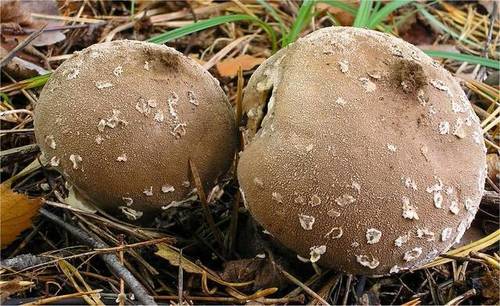
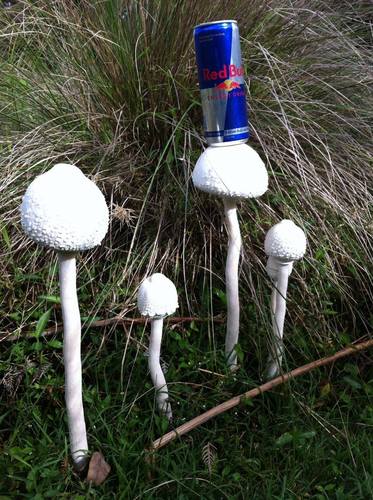
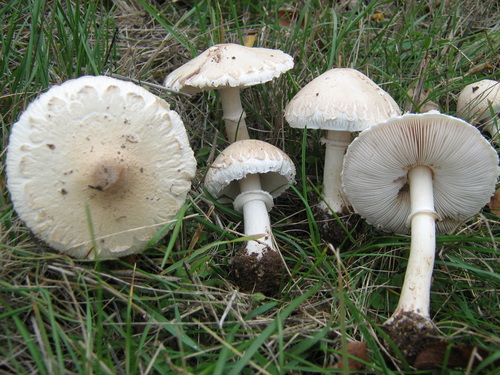
Source: WikipediaAgaricus silvaticus (or Agaricus sylvaticus), otherwise known as the scaly wood mushroom, blushing wood mushroom, or pinewood mushroom, is a species of mushroom.
Description
A mushroom.
This description is brief — help expand it
Edible Uses
The species is edible cooked, but resembles inedible mushrooms.
Traditional Uses
The fruiting bodies are eaten. It can be eaten raw or grilled, used in sauces or fried with eggs.
This uses section is brief — help expand it
Distribution
It is a temperate and tropical plant. In Sikkim it grows up to 1,300 m above sea level.
Where It Grows
Alaska, Armenia, Asia, Balkans, Bavaria, Britain, Bulgaria, Canada, Caucasus, Central America, China, Costa Rica, Czech Republic, Europe, Hong Kong, Hungary, India, Mexico, Northeastern India, Japan, North America, Pakistan, Russia, Sikkim, USA,
Other Information
It is sold in local markets.
Notes
There are about 300 Agaricus species.
Synonyms
Also Known As
Bleeding mushroom, Forest mushroom, Gavilan, Hongo de zacate, Kalunge chew, Lindi mogu, Scaly wood mushroom, Totolita
References (19)
- Bhaben, T., et al, 2010, Wild edible fungal resources by ethnic tribes of nagaland, India. Indian Journal of Traditional Knowledge. Vol 10(3) p 513
- Boa, E. R., 2004, Wild edible fungi and their importance to people. FAO Non Wood Forest Products Booklet 17
- Chettri, N. & Sharma, E., Non-timber Forest Produce: Utilization, Distribution and Status in the Khangchendzonga Biosphere Reserve, Sikkim, India.
- Cortes, L. E. U., et al, 2018, Ethnomycology and mushroom selling in a market from Northwest Puebla, México. Scientia Fungorum Vol. 47:47-55
- Facciola, S., 1998, Cornucopia 2: a Source Book of Edible Plants. Kampong Publications, p 249
Show all 19 references Hide references
- Guild, B., 1979, The Alaskan Mushroom Hunter's Guide. Alaska Northwest Publishing Company. p 152
- Hall, I. R., et al, 2003, Edible and Poisonous Mushrooms of the World. Timber Press. p 312 (As sylvaticus)
- Imai, S., 1938, Studies on the Agaricaceae of Hokkaido. 2. Jour. Facul. Agr., Hokkaido Imp. Univ., Sapporo, Vol. XLIII, Pt. 2, August, 1938
- Jordan, P., 2000, The Mushroom Guide and Identifier, Hermes House, p 33
- Kalac, P. and Svoboda, L., 1999, A review of trace element concentrations in edible mushrooms. Food Chemistry 69: 273-281
- Kaufmann, B. et al, 1999, The Great Encyclopedia of Mushrooms. Konemann. p 164
- Kiple, K.F. & Ornelas, K.C., (eds), 2000, The Cambridge World History of Food. CUP p 318
- Pace, G., 1998, Mushrooms of the world. Firefly books. p 44 (As Psalliota silvatica)
- Perez-Moreno, J. et al, 2008, Wild Mushroom Markets in Central Mexico and a Case Study at Ozumba. Economic Botany, 62(3), 2008, pp. 425–436
- Rila Monastery Nature Park Management Plan 2004 - 2013 (Bulgaria) p 380
- Siemonsma, J. S. & Kasem Piluek, eds. 1993. Vegetables. In: Plant Resources of South-East Asia (PROSEA) 8:311
- Tanaka,
- Vetner, J., 2004, Arsenic content of some edible mushroom species. Eur. Food Res. Technol. 219: 71-74
- www.plantnames.unimelb.edu.au